Limpet mine
Limpet mine is a type of naval mine designed to be attached to the hull of a ship, typically by a diver, hence the name "limpet", after the aquatic snail that clings tightly to rocks or other hard surfaces. Limpet mines are usually used in sabotage operations, due to their ability to cause significant damage to a vessel with a relatively small amount of explosive.
History[edit]
The concept of a limpet mine originated during World War II, when the British Royal Navy developed a series of such devices for use by its SOE and Royal Marines. These early limpet mines were typically attached to the target by magnets, and were detonated by a time fuse.
Design[edit]
A typical limpet mine consists of a small, flat, oval-shaped charge of explosive, enclosed in a waterproof casing. The mine is attached to the target by means of magnets or adhesive, and is detonated either by a time fuse or by a remote control. Some modern limpet mines are also designed to be attached by a robotic submarine, eliminating the need for a diver.
Use[edit]
Limpet mines have been used in a number of notable naval operations, including the sinking of several Japanese ships in Singapore Harbour during Operation Jaywick in 1943, and the sinking of the Greenpeace ship Rainbow Warrior in 1985. They have also been used in several instances of terrorism, such as the attack on the USS Cole in 2000.
See also[edit]
References[edit]
| Naval warfare | ||||||||||
|---|---|---|---|---|---|---|---|---|---|---|
This naval warfare-related article is a stub. You can help WikiMD by expanding it.
|
| Explosives | ||||||||||
|---|---|---|---|---|---|---|---|---|---|---|
This Explosives related article is a stub.
|
| Terrorism | ||||||||||
|---|---|---|---|---|---|---|---|---|---|---|
This terrorism-related article is a stub.
|
 | This military-related article is a stub. You can help WikiMD by expanding the page. |
Limpet mine[edit]
-
 Clarke with limpet mine in swimming position
 -
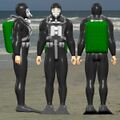 IDA71 3 on beach
 -
 Chitgar Naval Exhibition - Iranian limpet mine


Sponsored Health Resource

W8MD Weight Loss, Sleep & MedSpa
Looking for physician-supervised weight loss, semaglutide, tirzepatide, or GLP-1 receptor agonist options? W8MD helps eligible patients in New York City, Brooklyn, New Jersey, Connecticut, Pennsylvania, Delaware, and greater Philadelphia with medical weight loss, sleep medicine, and long-term maintenance support.
GLP-1 specials: Affordable GLP-1 injections NYC and Philadelphia starting from $29.99/week and up for semaglutide with insurance accepted for qualifying visits, and $45/week and up for tirzepatide with insurance accepted for qualifying visits. Self-pay options start from $59.99/week and up for semaglutide and $69.99/week and up for tirzepatide.
Medical weight loss NYC | Affordable GLP-1 injections NYC | Budget GLP-1 weight loss shots Philadelphia | New Jersey medical weight loss | NYC medical weight loss | Philadelphia medical weight loss | Sleep clinic NYC | W8MD's Philadelphia GLP-1 doctor | Weight loss prescriptions NYC
Book a W8MD appointment · View GLP-1 specials
Paid promotional message. Eligibility, pricing, insurance coverage, medication availability, and results vary. Medical evaluation required.

Medical Disclaimer: WikiMD is for informational purposes only and is not a substitute for professional medical advice. Content may be inaccurate or outdated and should not be used for diagnosis or treatment. Always consult your healthcare provider for medical decisions. Verify information with trusted sources such as CDC.gov and NIH.gov. By using this site, you agree that WikiMD is not liable for any outcomes related to its content. See full disclaimer.
Credits:Most images are courtesy of Wikimedia commons, and templates, categories Wikipedia, licensed under CC BY SA or similar.
Translate page: - East Asian
中文,
日本,
한국어,
South Asian
हिन्दी,
தமிழ்,
తెలుగు,
Urdu,
ಕನ್ನಡ,
Southeast Asian
Indonesian,
Vietnamese,
Thai,
မြန်မာဘာသာ,
বাংলা
European
español,
Deutsch,
français,
Greek,
português do Brasil,
polski,
română,
русский,
Nederlands,
norsk,
svenska,
suomi,
Italian
Middle Eastern & African
عربى,
Turkish,
Persian,
Hebrew,
Afrikaans,
isiZulu,
Kiswahili,
Other
Bulgarian,
Hungarian,
Czech,
Swedish,
മലയാളം,
मराठी,
ਪੰਜਾਬੀ,
ગુજરાતી,
Portuguese,
Ukrainian

