Goldspur
Goldspur is a variety of apple that was developed in the late 20th century. It is known for its golden color and sweet flavor, and is often used in cooking and baking due to its ability to retain its shape and flavor when heated.
History
Goldspur was first developed in the 1970s by the University of Minnesota's apple breeding program. The goal of the program was to create a variety of apple that could withstand the harsh winters of the Midwest, while still producing a fruit that was flavorful and appealing to consumers. The result was Goldspur, a hardy apple with a sweet, rich flavor.
Characteristics
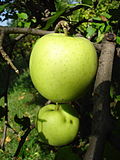
Goldspur apples are medium-sized, with a round shape and a golden yellow color. They have a crisp texture and a sweet flavor, with a slight hint of tartness. The skin of the Goldspur apple is thin and smooth, making it easy to eat raw. The flesh of the apple is firm and juicy, making it ideal for cooking and baking.
Cultivation
Goldspur apples are grown primarily in the Midwest, but can be found in other parts of the United States as well. They are typically harvested in late September to early October. Goldspur trees are hardy and can withstand cold temperatures, making them ideal for growing in regions with harsh winters.
Uses
Goldspur apples are versatile and can be used in a variety of dishes. They are excellent for baking, as they retain their shape and flavor when heated. They can also be eaten raw, or used in salads, sauces, and preserves.
See also
| Apple Inc. | ||||||||||||||||||||||||||||||||||||||||||
|---|---|---|---|---|---|---|---|---|---|---|---|---|---|---|---|---|---|---|---|---|---|---|---|---|---|---|---|---|---|---|---|---|---|---|---|---|---|---|---|---|---|---|
* Italics indicate discontinued products, services, or defunct companies.
|

-
 Goldspur

Ad. Transform your life with W8MD's
GLP-1 weight loss injections special from $29.99 with insurance
|
WikiMD Medical Encyclopedia |
Medical Disclaimer: WikiMD is for informational purposes only and is not a substitute for professional medical advice. Content may be inaccurate or outdated and should not be used for diagnosis or treatment. Always consult your healthcare provider for medical decisions. Verify information with trusted sources such as CDC.gov and NIH.gov. By using this site, you agree that WikiMD is not liable for any outcomes related to its content. See full disclaimer.
Credits:Most images are courtesy of Wikimedia commons, and templates, categories Wikipedia, licensed under CC BY SA or similar.
Translate this page: - East Asian
中文,
日本,
한국어,
South Asian
हिन्दी,
தமிழ்,
తెలుగు,
Urdu,
ಕನ್ನಡ,
Southeast Asian
Indonesian,
Vietnamese,
Thai,
မြန်မာဘာသာ,
বাংলা
European
español,
Deutsch,
français,
Greek,
português do Brasil,
polski,
română,
русский,
Nederlands,
norsk,
svenska,
suomi,
Italian
Middle Eastern & African
عربى,
Turkish,
Persian,
Hebrew,
Afrikaans,
isiZulu,
Kiswahili,
Other
Bulgarian,
Hungarian,
Czech,
Swedish,
മലയാളം,
मराठी,
ਪੰਜਾਬੀ,
ગુજરાતી,
Portuguese,
Ukrainian
