Honeycrisp: Difference between revisions
CSV import |
CSV import |
||
| Line 22: | Line 22: | ||
{{food-stub}} | {{food-stub}} | ||
{{No image}} | {{No image}} | ||
<gallery> | |||
File:Honeycrisp-Apple.jpg|Honeycrisp | |||
</gallery> | |||
Revision as of 01:48, 20 February 2025
Honeycrisp is a cultivar of apple that was developed at the University of Minnesota's Horticultural Research Center in the 1960s. It was introduced to the market in 1991 and has since gained popularity due to its sweet taste, firm texture, and long shelf life.
History
The Honeycrisp apple was developed by the University of Minnesota's apple breeding program, which began in the 1930s. The program aimed to develop new apple varieties that could withstand the harsh Minnesota winters. The Honeycrisp was created by crossing a Macoun with a Honeygold, both of which are descendants of the McIntosh apple.
Characteristics
Honeycrisp apples are known for their sweet, slightly tart flavor and crisp, juicy texture. They are medium to large in size and have a round shape. The skin is a distinctive mottled red over a yellow background, while the flesh is cream-colored. Honeycrisp apples are also known for their long shelf life, remaining fresh for up to seven months in refrigerated storage.
Cultivation
Honeycrisp apples are grown in various regions of the United States, including the Midwest, New England, and the Pacific Northwest. They are also grown in Canada, New Zealand, and parts of Europe. The trees are hardy and resistant to many common apple diseases, but they require careful management to produce high-quality fruit.
Uses
Honeycrisp apples are primarily eaten fresh, but they can also be used in cooking and baking. They make excellent applesauce and apple pie, and their sweet flavor and crisp texture make them a popular choice for salads and cheese plates.
Market
Since its introduction in 1991, the Honeycrisp apple has gained a significant share of the apple market. Its popularity is due in part to its flavor and texture, but also to its longer shelf life compared to other apple varieties. The Honeycrisp is often sold at a premium price, reflecting its high demand and relatively low supply.
| Apple Inc. | ||||||||||||||||||||||||||||||||||||||||||
|---|---|---|---|---|---|---|---|---|---|---|---|---|---|---|---|---|---|---|---|---|---|---|---|---|---|---|---|---|---|---|---|---|---|---|---|---|---|---|---|---|---|---|
* Italics indicate discontinued products, services, or defunct companies.
|

-
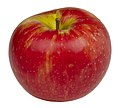 Honeycrisp

