Meat alternative: Difference between revisions
CSV import |
No edit summary |
||
| Line 1: | Line 1: | ||
[[File:Tempe Burger.jpg|thumb|A [[tempeh]] burger]] | |||
[[File:BuddhistcuisineTofuMeat.jpg|thumb|right|Chinese style [[tofu]] from [[Buddhist cuisine]] is prepared as an alternative to meat.]] | |||
[[File:Veggie "bacon" breakfast (cropped).jpg|thumb|Two slices of [[vegetarian bacon]]]] | |||
A '''meat alternative''', also known as a '''meat substitute''', '''meat analogue''', '''plant-based meat''', '''faux meat''', or '''vegan meat''', is a food product that replicates the taste, texture, and nutritional value of meat using plant-based or other non-animal products. These alternatives are often consumed by individuals following a [[vegetarian]] or [[vegan]] diet, but are also becoming increasingly popular among omnivores due to environmental, ethical, and health concerns associated with meat consumption. | A '''meat alternative''', also known as a '''meat substitute''', '''meat analogue''', '''plant-based meat''', '''faux meat''', or '''vegan meat''', is a food product that replicates the taste, texture, and nutritional value of meat using plant-based or other non-animal products. These alternatives are often consumed by individuals following a [[vegetarian]] or [[vegan]] diet, but are also becoming increasingly popular among omnivores due to environmental, ethical, and health concerns associated with meat consumption. | ||
==History== | ==History== | ||
[[File:Vegan Tofu Schnitzel.png|Vegan tofu schnitzel|thumb|left]] | |||
The concept of meat alternatives is not new and can be traced back to ancient civilizations. For example, [[tofu]], a soy-based product, has been a staple in Asian cuisine for centuries. However, the modern meat alternative industry began to take shape in the 20th century, with companies such as [[Quorn]] and [[Tofurky]] pioneering the market. | The concept of meat alternatives is not new and can be traced back to ancient civilizations. For example, [[tofu]], a soy-based product, has been a staple in Asian cuisine for centuries. However, the modern meat alternative industry began to take shape in the 20th century, with companies such as [[Quorn]] and [[Tofurky]] pioneering the market. | ||
| Line 27: | Line 29: | ||
While meat alternatives can be a good source of protein and other nutrients, they are not without controversy. Some products are highly processed and contain additives, which can raise health concerns. However, many people choose meat alternatives for their potential health benefits, such as lower levels of saturated fat and cholesterol. | While meat alternatives can be a good source of protein and other nutrients, they are not without controversy. Some products are highly processed and contain additives, which can raise health concerns. However, many people choose meat alternatives for their potential health benefits, such as lower levels of saturated fat and cholesterol. | ||
=== A === | |||
* '''[[Alternative protein]]''' – A category of proteins derived from non-traditional sources such as [[plant-based]] ingredients, [[cultivated meat]], [[insects]], or [[fermentation]]. | |||
* '''[[Analog meat]]''' – Another term for meat substitutes, designed to mimic the flavor, texture, and appearance of conventional meat. | |||
* '''[[Assorted vegetarian mock meats]]''' – Mock meats made from various ingredients, such as [[soy]], [[wheat gluten]], or [[mushrooms]]. | |||
[[File:Assorted vegetarian mock meat (Hong Kong).jpg|thumb|Assorted vegetarian mock meats]] | |||
=== B === | |||
* '''[[Bean steaks]]''' – Steaks made from [[beans]], providing a high-protein alternative to meat. | |||
* '''[[Beyond Meat]]''' – A popular brand offering [[plant-based meat]] alternatives such as burgers, sausages, and meatballs. | |||
* '''[[Braised mock meat]]''' – A type of mock meat prepared by braising, often found in [[Asian cuisine]]. | |||
=== C === | |||
* '''[[Cultivated meat]]''' – Also known as [[lab-grown meat]], it is produced by culturing animal cells in a controlled environment without the need to raise animals. | |||
[[File:Good Meat Cultivated Chicken pasta dish.jpg|thumb|Cultivated chicken pasta dish]] | |||
* '''[[Cuisine of Macau]]''' – Includes traditional and modern mock meat dishes, reflecting the fusion of [[Chinese]] and [[Portuguese]] influences. | |||
=== D === | |||
* '''[[Doner kebab]] (vegan)''' – A plant-based version of the traditional doner kebab, made with mock meat slices, vegetables, and sauces. | |||
[[File:Vegan Doner Kebab at Vöner (35741227085).jpg|thumb|Vegan doner kebab]] | |||
=== H === | |||
* '''[[Herbivorous Butcher]]''' – A vegan butcher shop known for its wide array of plant-based meat alternatives, including ham, sausages, and steaks. | |||
[[File:The Herbivorous Butcher - Meat-Free Meat Samples (22501331400).jpg|thumb|Meat-free samples from The Herbivorous Butcher]] | |||
=== L === | |||
* '''[[Lupin protein]]''' – Derived from the lupin bean, used as a high-protein ingredient in plant-based meat alternatives. | |||
[[File:Lupinenprodukte.jpg|thumb|Lupin-based meat alternative products]] | |||
* '''[[Leafu]]''' – A leafy green vegetable often used as a base for vegetarian dishes. | |||
[[File:Leafu.jpg|thumb|Leafu used in plant-based cuisine]] | |||
=== M === | |||
* '''[[Mock meat]]''' – A general term for plant-based products designed to replicate the taste and texture of meat. Common ingredients include [[soy]], [[wheat gluten]], and [[mushrooms]]. | |||
* '''[[Mashed potatoes and schnitzel (vegan)]]''' – A traditional meal made vegan using plant-based schnitzel. | |||
[[File:Mashed potatoes, vegan schnitzel, brussel sprouts, mushroom sauce (3076343497).jpg|thumb|Vegan schnitzel with mashed potatoes]] | |||
=== P === | |||
* '''[[Plant-based meat]]''' – Meat substitutes made entirely from plant-derived ingredients such as [[peas]], [[soybeans]], and [[mushrooms]]. | |||
[[File:Vegetarian Pork.jpg|Vegetarian pork|thumb]] | |||
=== S === | |||
* '''[[Schnitzel (vegan)]]''' – A plant-based alternative to the traditional meat schnitzel, often made from [[tofu]] or [[seitan]]. | |||
* '''[[Smart Tenders]]''' – A brand of plant-based chicken alternative resembling chicken tenders. | |||
=== T === | |||
* '''[[Tartex]]''' – A vegetarian pâté made from plant-based ingredients, popular as a spread. | |||
* '''[[Textured vegetable protein]] (TVP)''' – A processed soy product used as a meat extender or substitute. | |||
== | === V === | ||
* '''[[Vegetarian chicken nuggets]]''' – Plant-based nuggets mimicking chicken in taste and texture. | |||
* [[ | * '''[[Vegetarian pork]]''' – A mock meat product designed to replicate the flavor and texture of pork. | ||
[[ | * '''[[Vegetarian goose]]''' – A mock meat product resembling goose, popular in Asian vegetarian cuisine. | ||
{{Food | === Remaining Images === | ||
<gallery> | |||
File:17-11-22-vegetarischer-Fleischsalat-RalfR.jpg|Vegetarian meat salad | |||
File:419vegetalien.jpg|Vegetarian menu options | |||
File:Bezirkskammer für Land- und Forstwirtschaft, Murau 01.jpg|Mock meat selection | |||
File:Saigon Vegetarian food.jpg|Vegetarian dishes from Saigon | |||
File:Two slices of mock meat or vegetarian bacon.jpg|Mock meat resembling bacon | |||
File:Vegan Holiday Ham from The Herbivorous Butcher (31903617665).jpg|Vegan holiday ham | |||
File:Vegetarischer Schinken Spicker.jpg|Vegetarian ham | |||
File:A pack of Vegetarian Chicken Nuggets 2.jpg|Vegetarian chicken nuggets | |||
File:Plant based meat on sale at Safeway.jpg|Plant-based meat on sale | |||
File:Smart Tenders 1.jpg|Smart Tenders plant-based chicken | |||
File:Tartex - natural.jpg|Tartex vegetarian pâté | |||
File:VegetarianGoose.jpg|Vegetarian goose | |||
</gallery> | |||
{{Vegetarianism}} | |||
{{Food Substitutes}} | |||
[[Category:Meat substitutes| ]] | |||
[[Category:American inventions]] | |||
[[Category:Buddhist cuisine]] | |||
[[Category:Chinese inventions]] | |||
[[Category:Imitation foods]] | |||
[[Category:Lent]] | |||
[[Category:Vegetarian cuisine]] | |||
{{nt}} | |||
Revision as of 03:11, 12 January 2025


.jpg)
A meat alternative, also known as a meat substitute, meat analogue, plant-based meat, faux meat, or vegan meat, is a food product that replicates the taste, texture, and nutritional value of meat using plant-based or other non-animal products. These alternatives are often consumed by individuals following a vegetarian or vegan diet, but are also becoming increasingly popular among omnivores due to environmental, ethical, and health concerns associated with meat consumption.
History

The concept of meat alternatives is not new and can be traced back to ancient civilizations. For example, tofu, a soy-based product, has been a staple in Asian cuisine for centuries. However, the modern meat alternative industry began to take shape in the 20th century, with companies such as Quorn and Tofurky pioneering the market.
Types of Meat Alternatives
There are several types of meat alternatives available, each with its own unique properties and preparation methods. Some of the most common include:
- Soy-based products: These include tofu, tempeh, and products made from textured vegetable protein. Soy-based products are often used to mimic the texture of meat and are a good source of protein.
- Seitan: Also known as wheat meat, seitan is made from gluten, the main protein in wheat. It has a chewy texture similar to that of meat.
- Mycoprotein: This is a type of fungus that is fermented and used to create products like Quorn. Mycoprotein is high in protein and fiber.
- Plant-based meats: These are products that are designed to taste, look, and cook like meat. They are typically made from a combination of plant proteins, fats, and other ingredients.
Production
The production of meat alternatives involves various processes, depending on the type of product. For example, tofu is made by curdling soy milk and pressing the curds into blocks, while seitan is made by washing wheat flour dough to remove the starch, leaving behind the gluten.
Environmental Impact
Meat alternatives are often touted for their lower environmental impact compared to traditional meat. Producing plant-based meats requires less land, water, and energy, and generates fewer greenhouse gas emissions.
Health Benefits and Concerns
While meat alternatives can be a good source of protein and other nutrients, they are not without controversy. Some products are highly processed and contain additives, which can raise health concerns. However, many people choose meat alternatives for their potential health benefits, such as lower levels of saturated fat and cholesterol.
A
- Alternative protein – A category of proteins derived from non-traditional sources such as plant-based ingredients, cultivated meat, insects, or fermentation.
- Analog meat – Another term for meat substitutes, designed to mimic the flavor, texture, and appearance of conventional meat.
- Assorted vegetarian mock meats – Mock meats made from various ingredients, such as soy, wheat gluten, or mushrooms.
.jpg)
B
- Bean steaks – Steaks made from beans, providing a high-protein alternative to meat.
- Beyond Meat – A popular brand offering plant-based meat alternatives such as burgers, sausages, and meatballs.
- Braised mock meat – A type of mock meat prepared by braising, often found in Asian cuisine.
C
- Cultivated meat – Also known as lab-grown meat, it is produced by culturing animal cells in a controlled environment without the need to raise animals.

- Cuisine of Macau – Includes traditional and modern mock meat dishes, reflecting the fusion of Chinese and Portuguese influences.
D
- Doner kebab (vegan) – A plant-based version of the traditional doner kebab, made with mock meat slices, vegetables, and sauces.
.jpg)
H
- Herbivorous Butcher – A vegan butcher shop known for its wide array of plant-based meat alternatives, including ham, sausages, and steaks.
.jpg)
L
- Lupin protein – Derived from the lupin bean, used as a high-protein ingredient in plant-based meat alternatives.

- Leafu – A leafy green vegetable often used as a base for vegetarian dishes.

M
- Mock meat – A general term for plant-based products designed to replicate the taste and texture of meat. Common ingredients include soy, wheat gluten, and mushrooms.
- Mashed potatoes and schnitzel (vegan) – A traditional meal made vegan using plant-based schnitzel.
.jpg)
P
- Plant-based meat – Meat substitutes made entirely from plant-derived ingredients such as peas, soybeans, and mushrooms.

S
- Schnitzel (vegan) – A plant-based alternative to the traditional meat schnitzel, often made from tofu or seitan.
- Smart Tenders – A brand of plant-based chicken alternative resembling chicken tenders.
T
- Tartex – A vegetarian pâté made from plant-based ingredients, popular as a spread.
- Textured vegetable protein (TVP) – A processed soy product used as a meat extender or substitute.
V
- Vegetarian chicken nuggets – Plant-based nuggets mimicking chicken in taste and texture.
- Vegetarian pork – A mock meat product designed to replicate the flavor and texture of pork.
- Vegetarian goose – A mock meat product resembling goose, popular in Asian vegetarian cuisine.
Remaining Images
-
 Vegetarian meat salad
 -
 Vegetarian menu options
 -
 Mock meat selection
 -
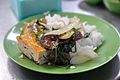 Vegetarian dishes from Saigon
 -
 Mock meat resembling bacon
 -
 Vegan holiday ham
 -
 Vegetarian ham
 -
 Vegetarian chicken nuggets
 -
 Plant-based meat on sale
 -
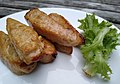 Smart Tenders plant-based chicken
 -
 Tartex vegetarian pâté
 -
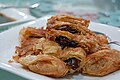 Vegetarian goose


.jpg)


| Artificial foods | ||||||||||
|---|---|---|---|---|---|---|---|---|---|---|
|
