Soy yogurt
Soy yogurt, also referred to as soya yogurt, is a dairy-free alternative to traditional milk-based yogurt. It is made from soy milk, a liquid derived from the soybean.
History[edit]
The origins of soy yogurt are linked to the discovery and cultivation of the soybean in East Asia over 2,000 years ago. The process of fermenting soy milk into yogurt is believed to have been developed in China and later spread to other parts of the world.
Production[edit]
Soy yogurt is produced by fermenting soy milk with specific types of bacteria, typically Lactobacillus and Streptococcus thermophilus. The bacteria convert the sugars in the soy milk into lactic acid, which thickens the milk and gives it a tangy flavor.
Nutrition[edit]
Soy yogurt is a good source of protein, calcium, and vitamin B12. It is also often fortified with other vitamins and minerals, such as vitamin D and iron. Because it is made from soy milk, it is naturally lactose-free, making it a suitable option for those with lactose intolerance or a milk allergy.
Varieties[edit]
There are many different varieties of soy yogurt available, including plain, flavored, and dessert-style yogurts. Some brands also offer probiotic-enhanced versions, which contain additional beneficial bacteria.
See also[edit]

~~~ has given you a bowl of 
yoghurt yogurt! Yogurt is delicious and promotes memory improvement, awareness and WikiLove. Hopefully, this treat has added some flavor to your day.
Spread the goodness of yogurt by adding {{subst:Yogurt}} to someone's Talk page with a friendly message! Give yogurt out liberally to someone you've had disagreements with in the past, or to a good friend.
| Soy (Glycine max) | ||||||||||
|---|---|---|---|---|---|---|---|---|---|---|
|
| Vegan cuisine | ||||||||||
|---|---|---|---|---|---|---|---|---|---|---|
This veganism-related article is a stub.
|

Soy_yogurt[edit]
-
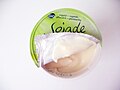 Sojade organic lactose-free vegan additive-free soy yogurt from Germany
 -
 Vegan yogurt, March 2012


Medical Disclaimer: WikiMD is for informational purposes only and is not a substitute for professional medical advice. Content may be inaccurate or outdated and should not be used for diagnosis or treatment. Always consult your healthcare provider for medical decisions. Verify information with trusted sources such as CDC.gov and NIH.gov. By using this site, you agree that WikiMD is not liable for any outcomes related to its content. See full disclaimer.
Credits:Most images are courtesy of Wikimedia commons, and templates, categories Wikipedia, licensed under CC BY SA or similar.
Translate page: - East Asian
中文,
日本,
한국어,
South Asian
हिन्दी,
தமிழ்,
తెలుగు,
Urdu,
ಕನ್ನಡ,
Southeast Asian
Indonesian,
Vietnamese,
Thai,
မြန်မာဘာသာ,
বাংলা
European
español,
Deutsch,
français,
Greek,
português do Brasil,
polski,
română,
русский,
Nederlands,
norsk,
svenska,
suomi,
Italian
Middle Eastern & African
عربى,
Turkish,
Persian,
Hebrew,
Afrikaans,
isiZulu,
Kiswahili,
Other
Bulgarian,
Hungarian,
Czech,
Swedish,
മലയാളം,
मराठी,
ਪੰਜਾਬੀ,
ગુજરાતી,
Portuguese,
Ukrainian

