Buddhist cuisine
Buddhist cuisine is a type of cuisine that is followed by monks and many believers from areas historically influenced by Buddhism. It is vegetarian or vegan, and it is based on the Dharmic concept of Ahimsa (non-violence). Buddhist cuisine varies by the different sects of Buddhism and according to the country in which it is practiced.
Origins[edit]
Buddhist cuisine originated from the Buddha's teachings. The Buddha taught that killing animals is a violation of the first precept of Buddhist moral code. Therefore, many Buddhists follow a vegetarian or vegan diet.
Principles[edit]
The main principles of Buddhist cuisine are non-violence and mindfulness. Non-violence is practiced by not killing any living beings. Mindfulness is practiced by being aware of the effects of one's dietary choices on oneself, other beings, and the environment.
Types of Buddhist Cuisine[edit]
There are several types of Buddhist cuisine, including:
- Chinese Buddhist cuisine - This is the most common type of Buddhist cuisine. It is vegetarian and often includes tofu and other soy products.
- Japanese Buddhist cuisine - Also known as shōjin ryōri, this type of cuisine is vegan and avoids the use of pungent vegetables like garlic and onion.
- Korean Buddhist cuisine - This type of cuisine is vegan and uses a variety of wild and cultivated vegetables.
See Also[edit]
References[edit]

This WikiMD article can only be edited by registered and verified editors. You can log in or register.
-
 Fukuchiin shojin ryori appetizer
 -
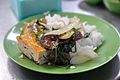 Saigon Vegetarian food


Medical Disclaimer: WikiMD is for informational purposes only and is not a substitute for professional medical advice. Content may be inaccurate or outdated and should not be used for diagnosis or treatment. Always consult your healthcare provider for medical decisions. Verify information with trusted sources such as CDC.gov and NIH.gov. By using this site, you agree that WikiMD is not liable for any outcomes related to its content. See full disclaimer.
Credits:Most images are courtesy of Wikimedia commons, and templates, categories Wikipedia, licensed under CC BY SA or similar.
Translate page: - East Asian
中文,
日本,
한국어,
South Asian
हिन्दी,
தமிழ்,
తెలుగు,
Urdu,
ಕನ್ನಡ,
Southeast Asian
Indonesian,
Vietnamese,
Thai,
မြန်မာဘာသာ,
বাংলা
European
español,
Deutsch,
français,
Greek,
português do Brasil,
polski,
română,
русский,
Nederlands,
norsk,
svenska,
suomi,
Italian
Middle Eastern & African
عربى,
Turkish,
Persian,
Hebrew,
Afrikaans,
isiZulu,
Kiswahili,
Other
Bulgarian,
Hungarian,
Czech,
Swedish,
മലയാളം,
मराठी,
ਪੰਜਾਬੀ,
ગુજરાતી,
Portuguese,
Ukrainian

