Cosmic Crisp: Difference between revisions
CSV import |
CSV import |
||
| Line 27: | Line 27: | ||
File:Cosmic_Crisp.jpg | File:Cosmic_Crisp.jpg | ||
File:Cosmic_Crisp_apples_for_sale.jpg | File:Cosmic_Crisp_apples_for_sale.jpg | ||
</gallery> | |||
<gallery> | |||
File:Cosmic_Crisp.jpg|Cosmic Crisp | |||
File:Cosmic_Crisp_apples_for_sale.jpg|Cosmic Crisp apples for sale | |||
</gallery> | </gallery> | ||
Latest revision as of 11:37, 25 February 2025
Cosmic Crisp is a cultivar of apple that was first commercially available in December 2019. It was developed by the Washington State University (WSU) Tree Fruit Research and Extension Center as part of the university's apple breeding program. The apple is a cross between the Enterprise and Honeycrisp varieties.
History[edit]
The Cosmic Crisp apple was first developed in 1997 by WSU's apple breeding program. The program aimed to create a new variety of apple that combined the best traits of the Enterprise and Honeycrisp apples. The name "Cosmic Crisp" was chosen due to the apple's dark red skin, which is covered in tiny white spots that are reminiscent of stars in the cosmos.
Characteristics[edit]
Cosmic Crisp apples are large and round, with a deep red color that is often speckled with small white lenticels (spots). The interior of the apple is crisp and juicy, with a sweet-tart flavor that has been described as similar to Honeycrisp. The apples are also known for their long shelf life, remaining fresh for up to a year in proper storage conditions.
Cultivation[edit]
Cosmic Crisp apples are primarily grown in Washington State, where the climate and soil conditions are ideal for this variety. The trees are vigorous and upright, with a high yield of fruit. They are also resistant to many common apple diseases, making them a popular choice for growers.
Reception[edit]
Since its commercial release, the Cosmic Crisp apple has been well-received by both consumers and growers. Its flavor, texture, and long shelf life have made it a popular choice in the marketplace, while its disease resistance and high yield have made it a favorite among growers.
See also[edit]
| Apple Inc. | ||||||||||||||||||||||||||||||||||||||||||
|---|---|---|---|---|---|---|---|---|---|---|---|---|---|---|---|---|---|---|---|---|---|---|---|---|---|---|---|---|---|---|---|---|---|---|---|---|---|---|---|---|---|---|
* Italics indicate discontinued products, services, or defunct companies.
|


-
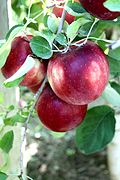 Cosmic Crisp
 -
 Cosmic Crisp apples for sale
