Pepes
Pepes is a traditional method of cooking used in the Indonesian cuisine. The term "pepes" refers to the process of cooking food ingredients, typically fish, inside a banana leaf that is then steamed or grilled. This method allows the ingredients to be cooked in their own juices, which are trapped by the banana leaf, resulting in a dish that is rich in flavors.
History[edit]
The origin of pepes is believed to be from the Sundanese people of West Java. The method of cooking in banana leaves is common in many parts of Indonesia, but the term "pepes" is specifically Sundanese. The technique has been passed down through generations and is a staple in many Indonesian households and restaurants.
Preparation and Cooking[edit]
The preparation of pepes involves marinating the main ingredient, usually fish, in a mixture of spices and herbs. Common ingredients used in the marinade include turmeric, galangal, lemongrass, chili peppers, and kaffir lime leaves. The marinated fish is then wrapped in a banana leaf and secured with a bamboo stick. The package is then either steamed or grilled over charcoal.
Variations[edit]
While fish is the most common ingredient used in pepes, other proteins such as chicken, tofu, and tempeh can also be used. There are also vegetarian versions of pepes that use mushrooms or other vegetables. The type of spices and herbs used in the marinade can also vary depending on the region and personal preference.
Cultural Significance[edit]
Pepes is not just a method of cooking, but also a part of Indonesian culture. It is often served during special occasions and celebrations. The process of preparing and cooking pepes is often a communal activity, bringing families and communities together.
See Also[edit]

-
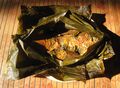 Pepes ikan emas
 -
Brengkes Tempoyak Iwak Lais
-
Palai bada
-
Pepes daging
-
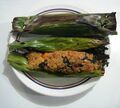 Pepes oncom
 -
Pepes jamur
-
Pepes telur kodok and pepes kodok
_Sunda.jpg)


Medical Disclaimer: WikiMD is for informational purposes only and is not a substitute for professional medical advice. Content may be inaccurate or outdated and should not be used for diagnosis or treatment. Always consult your healthcare provider for medical decisions. Verify information with trusted sources such as CDC.gov and NIH.gov. By using this site, you agree that WikiMD is not liable for any outcomes related to its content. See full disclaimer.
Credits:Most images are courtesy of Wikimedia commons, and templates, categories Wikipedia, licensed under CC BY SA or similar.
Translate page: - East Asian
中文,
日本,
한국어,
South Asian
हिन्दी,
தமிழ்,
తెలుగు,
Urdu,
ಕನ್ನಡ,
Southeast Asian
Indonesian,
Vietnamese,
Thai,
မြန်မာဘာသာ,
বাংলা
European
español,
Deutsch,
français,
Greek,
português do Brasil,
polski,
română,
русский,
Nederlands,
norsk,
svenska,
suomi,
Italian
Middle Eastern & African
عربى,
Turkish,
Persian,
Hebrew,
Afrikaans,
isiZulu,
Kiswahili,
Other
Bulgarian,
Hungarian,
Czech,
Swedish,
മലയാളം,
मराठी,
ਪੰਜਾਬੀ,
ગુજરાતી,
Portuguese,
Ukrainian


