Char kway teow
Char Kway Teow is a popular street food dish in Malaysia, Singapore, Brunei, and Indonesia. It is a stir-fried noodle dish, typically cooked with dark soy sauce, light soy sauce, chili, belachan (shrimp paste), whole prawns, deshelled cockles, bean sprouts, Chinese chives, and slices of Chinese sausage.
History[edit]
Char Kway Teow has its origins in Southeast Asia, and is believed to have been introduced by the Teochew people. It was originally a poor man's dish, often sold by fishermen, farmers, and cockle-gatherers who doubled as char kway teow hawkers in the evening to supplement their income.
Preparation[edit]
The dish is typically stir-fried over very high heat with light and dark soy sauce, chili, a small quantity of belachan, whole prawns, deshelled blood cockles, bean sprouts, and chopped Chinese chives. The dish is commonly stir-fried with egg, slices of Chinese sausage, and fishcake. Some variants might include other ingredients like fish balls.
Variations[edit]
There are many variations of Char Kway Teow in different regions. In Penang, Char Kway Teow is commonly served on a banana leaf, with extra prawns and cockles. In Singapore, the dish is stir-fried with more dark soy sauce and less oil, resulting in a darker color. The Singaporean version also includes fishcake and sometimes slices of fish. In Indonesia, particularly in Jakarta, Char Kway Teow is cooked with green chili and sweet soy sauce.
Health Concerns[edit]
Despite its popularity, Char Kway Teow is often criticized for its high saturated fat content. However, healthier versions have been developed using less oil and including more vegetables.
See Also[edit]
This Malaysia-food related article is a stub. You can help WikiMD by expanding it.

Char kway teow[edit]
-
Char kway teow
-
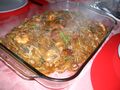 Char kway teow
 -
Char kway teow in Parit Buntar
-
Plates of Char kway teow


Medical Disclaimer: WikiMD is for informational purposes only and is not a substitute for professional medical advice. Content may be inaccurate or outdated and should not be used for diagnosis or treatment. Always consult your healthcare provider for medical decisions. Verify information with trusted sources such as CDC.gov and NIH.gov. By using this site, you agree that WikiMD is not liable for any outcomes related to its content. See full disclaimer.
Credits:Most images are courtesy of Wikimedia commons, and templates, categories Wikipedia, licensed under CC BY SA or similar.
Translate page: - East Asian
中文,
日本,
한국어,
South Asian
हिन्दी,
தமிழ்,
తెలుగు,
Urdu,
ಕನ್ನಡ,
Southeast Asian
Indonesian,
Vietnamese,
Thai,
မြန်မာဘာသာ,
বাংলা
European
español,
Deutsch,
français,
Greek,
português do Brasil,
polski,
română,
русский,
Nederlands,
norsk,
svenska,
suomi,
Italian
Middle Eastern & African
عربى,
Turkish,
Persian,
Hebrew,
Afrikaans,
isiZulu,
Kiswahili,
Other
Bulgarian,
Hungarian,
Czech,
Swedish,
മലയാളം,
मराठी,
ਪੰਜਾਬੀ,
ગુજરાતી,
Portuguese,
Ukrainian


