Bakkwa
Bakkwa is a type of Chinese salty-sweet dried meat product similar to jerky. Bakkwa is traditionally made with a meat preservation and preparation technique originating from China. The general method for production has remained virtually unchanged throughout the centuries, but the techniques and recipes have been gradually improved.
Etymology[edit]
The word "Bakkwa" is derived from the Hokkien language, where "Bak" means meat and "Kwa" means dried.
History[edit]
The production of Bakkwa has a long history in China. It was initially used as a method of preserving meat. The meat was preserved through salting and air drying to prevent spoilage. Over time, the process evolved into a culinary technique to produce a delicacy enjoyed by many.
Preparation[edit]
The preparation of Bakkwa involves the use of meat, typically pork, which is prepared by slicing or mincing. The meat is then marinated with sugar, soy sauce, and various spices. The marinated meat is then laid flat on a rack to be dried in the sun or in a controlled drying environment. The dried meat is then grilled or roasted to give it a smoky flavor.
Varieties[edit]
There are several varieties of Bakkwa, including pork, beef, and mutton. Some modern variations also include chicken and fish. The flavor of the Bakkwa can also vary depending on the marinade used, with some being sweeter and others more savory.
Cultural Significance[edit]
Bakkwa is particularly popular during the Chinese New Year festival where it is often given as a gift. It is considered a luxurious item and is a symbol of prosperity.
Health Concerns[edit]
While Bakkwa is a popular delicacy, it is high in sugar and sodium, which can lead to health issues such as diabetes and high blood pressure if consumed in excess.
See Also[edit]

This WikiMD article can only be edited by registered and verified editors. You can log in or register.
-
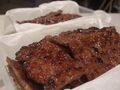 Bakkwa


Medical Disclaimer: WikiMD is for informational purposes only and is not a substitute for professional medical advice. Content may be inaccurate or outdated and should not be used for diagnosis or treatment. Always consult your healthcare provider for medical decisions. Verify information with trusted sources such as CDC.gov and NIH.gov. By using this site, you agree that WikiMD is not liable for any outcomes related to its content. See full disclaimer.
Credits:Most images are courtesy of Wikimedia commons, and templates, categories Wikipedia, licensed under CC BY SA or similar.
Translate page: - East Asian
中文,
日本,
한국어,
South Asian
हिन्दी,
தமிழ்,
తెలుగు,
Urdu,
ಕನ್ನಡ,
Southeast Asian
Indonesian,
Vietnamese,
Thai,
မြန်မာဘာသာ,
বাংলা
European
español,
Deutsch,
français,
Greek,
português do Brasil,
polski,
română,
русский,
Nederlands,
norsk,
svenska,
suomi,
Italian
Middle Eastern & African
عربى,
Turkish,
Persian,
Hebrew,
Afrikaans,
isiZulu,
Kiswahili,
Other
Bulgarian,
Hungarian,
Czech,
Swedish,
മലയാളം,
मराठी,
ਪੰਜਾਬੀ,
ગુજરાતી,
Portuguese,
Ukrainian

