Thapthim krop
Thapthim krop is a traditional Thai dessert known for its vibrant color and unique texture. The name 'Thapthim krop' translates to 'crunchy pomegranate seeds' in English, which is a reference to the dessert's appearance rather than its ingredients.
Ingredients[edit]
Thapthim krop is made from water chestnuts that are coated in tapioca flour and then boiled. The chestnuts are typically dyed with food coloring before being coated in the flour, which gives the dessert its distinctive red color. After boiling, the chestnuts are served in a sweet syrup made from sugar and coconut milk. Some variations of the recipe also include jackfruit or corn kernels.
History[edit]
The exact origins of Thapthim krop are unclear, but it is believed to have been introduced to Thailand during the Ayutthaya period (1350-1767). The dessert was likely influenced by Chinese cuisine, as many Thai desserts were during this time. Despite its long history, Thapthim krop remains a popular dessert in Thailand today.
Cultural Significance[edit]
Thapthim krop is often served at special occasions and festivals in Thailand, such as the Songkran festival and Loy Krathong. The dessert's bright color and sweet taste make it a festive addition to any celebration. In addition to its cultural significance, Thapthim krop is also enjoyed for its unique texture, which is both crunchy and soft.
Preparation[edit]
Preparing Thapthim krop involves several steps. First, the water chestnuts are dyed with food coloring and then coated in tapioca flour. The chestnuts are then boiled until they become translucent. While the chestnuts are boiling, a sweet syrup is made from sugar and coconut milk. Once the chestnuts are done boiling, they are drained and then served in the sweet syrup. The dessert can be served either hot or cold, depending on personal preference.
See Also[edit]
 Thai cuisine
 |
||||||||||
|---|---|---|---|---|---|---|---|---|---|---|
|

-
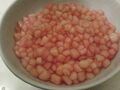 Thapthim krop


Medical Disclaimer: WikiMD is for informational purposes only and is not a substitute for professional medical advice. Content may be inaccurate or outdated and should not be used for diagnosis or treatment. Always consult your healthcare provider for medical decisions. Verify information with trusted sources such as CDC.gov and NIH.gov. By using this site, you agree that WikiMD is not liable for any outcomes related to its content. See full disclaimer.
Credits:Most images are courtesy of Wikimedia commons, and templates, categories Wikipedia, licensed under CC BY SA or similar.
Translate page: - East Asian
中文,
日本,
한국어,
South Asian
हिन्दी,
தமிழ்,
తెలుగు,
Urdu,
ಕನ್ನಡ,
Southeast Asian
Indonesian,
Vietnamese,
Thai,
မြန်မာဘာသာ,
বাংলা
European
español,
Deutsch,
français,
Greek,
português do Brasil,
polski,
română,
русский,
Nederlands,
norsk,
svenska,
suomi,
Italian
Middle Eastern & African
عربى,
Turkish,
Persian,
Hebrew,
Afrikaans,
isiZulu,
Kiswahili,
Other
Bulgarian,
Hungarian,
Czech,
Swedish,
മലയാളം,
मराठी,
ਪੰਜਾਬੀ,
ગુજરાતી,
Portuguese,
Ukrainian

