Kaeng hang le
Kaeng hang le (also known as Burmese-style pork curry) is a traditional dish originating from the Northern region of Thailand. It is a popular dish in Thai cuisine, particularly in the Chiang Mai region. The dish is known for its rich and aromatic flavors, which are derived from a unique blend of herbs and spices.
History[edit]
Kaeng hang le has its roots in the cuisine of Burma, and was brought to Thailand by the Tai Yai people, an ethnic group from Shan State, Burma. The dish has since been adapted to suit Thai tastes and has become a staple in Northern Thai cuisine.
Ingredients and Preparation[edit]
The main ingredient in kaeng hang le is pork, typically pork belly or shoulder. The meat is slow-cooked in a mixture of garlic, ginger, turmeric, tamarind juice, and palm sugar. Other key ingredients include pickled garlic, shallots, chili peppers, and a variety of spices such as coriander, cumin, and cardamom.
The dish is typically served with sticky rice, and may be garnished with fresh cilantro and spring onions.
Cultural Significance[edit]
Kaeng hang le is often served at special occasions and festivals in Northern Thailand, such as the Songkran festival. It is also a popular dish in local food markets and street food stalls.
See Also[edit]
 | This article about Thai cuisine is a stub. You can help WikiMD by expanding the page. |

-
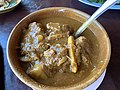 Kaeng hang le


Medical Disclaimer: WikiMD is for informational purposes only and is not a substitute for professional medical advice. Content may be inaccurate or outdated and should not be used for diagnosis or treatment. Always consult your healthcare provider for medical decisions. Verify information with trusted sources such as CDC.gov and NIH.gov. By using this site, you agree that WikiMD is not liable for any outcomes related to its content. See full disclaimer.
Credits:Most images are courtesy of Wikimedia commons, and templates, categories Wikipedia, licensed under CC BY SA or similar.
Translate page: - East Asian
中文,
日本,
한국어,
South Asian
हिन्दी,
தமிழ்,
తెలుగు,
Urdu,
ಕನ್ನಡ,
Southeast Asian
Indonesian,
Vietnamese,
Thai,
မြန်မာဘာသာ,
বাংলা
European
español,
Deutsch,
français,
Greek,
português do Brasil,
polski,
română,
русский,
Nederlands,
norsk,
svenska,
suomi,
Italian
Middle Eastern & African
عربى,
Turkish,
Persian,
Hebrew,
Afrikaans,
isiZulu,
Kiswahili,
Other
Bulgarian,
Hungarian,
Czech,
Swedish,
മലയാളം,
मराठी,
ਪੰਜਾਬੀ,
ગુજરાતી,
Portuguese,
Ukrainian

