Nam ngiao
Nam ngiao is a traditional dish originating from the Northern region of Thailand and the Shan State in Myanmar. It is a noodle soup that is known for its unique, tangy flavor and rich, thick broth. The dish is named after the ngiao flower, which is said to resemble the chunks of coagulated blood used in the soup.
Ingredients[edit]
The main ingredients in Nam ngiao include rice noodles, diced tomatoes, minced pork, dried red cotton tree flowers, and coagulated pig's blood. The soup is seasoned with a variety of spices such as chili powder, garlic, turmeric, and tamarind juice. The dish is typically garnished with chopped green onions, coriander, and fried garlic.
Preparation[edit]
The preparation of Nam ngiao involves several steps. First, the minced pork is sautéed with garlic and chili powder. Then, the diced tomatoes, dried red cotton tree flowers, and coagulated pig's blood are added to the pot. The mixture is simmered until the tomatoes are soft and the blood has fully coagulated. The soup is then seasoned with turmeric and tamarind juice. Finally, the soup is served over rice noodles and garnished with green onions, coriander, and fried garlic.
Cultural Significance[edit]
Nam ngiao is a popular dish in Northern Thailand and the Shan State in Myanmar. It is often served at special occasions and festivals. The dish is also commonly sold at street food stalls and local markets. The unique flavor and rich broth of Nam ngiao make it a favorite among locals and tourists alike.
See Also[edit]
 Thai cuisine
 |
||||||||||
|---|---|---|---|---|---|---|---|---|---|---|
|
| Myanmar cuisine | ||||||||||
|---|---|---|---|---|---|---|---|---|---|---|
This Myanmar cuisine-related article is a stub. You can help WikiMD by expanding it.
|

-
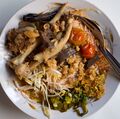 Khanom chin nam ngiao supoe
 -
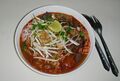 Nam ngiao
 -
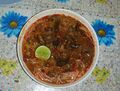 Nam ngiao
 -
Khanom chin nam ngiao
-
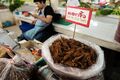 Dok ngiao
 -
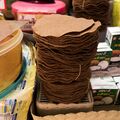 Tua nao


Advertise on WikiMD — 81,000+ full articles, ~900,000 total pages, ~250 million page views. Global reach, limited time promotional rates from $1/page/day. Learn more · View stats


Translate page: - East Asian
中文,
日本,
한국어,
South Asian
हिन्दी,
தமிழ்,
తెలుగు,
Urdu,
ಕನ್ನಡ,
Southeast Asian
Indonesian,
Vietnamese,
Thai,
မြန်မာဘာသာ,
বাংলা
European
español,
Deutsch,
français,
Greek,
português do Brasil,
polski,
română,
русский,
Nederlands,
norsk,
svenska,
suomi,
Italian
Middle Eastern & African
عربى,
Turkish,
Persian,
Hebrew,
Afrikaans,
isiZulu,
Kiswahili,
Other
Bulgarian,
Hungarian,
Czech,
Swedish,
മലയാളം,
मराठी,
ਪੰਜਾਬੀ,
ગુજરાતી,
Portuguese,
Ukrainian
About WikiMD • Contact • Disclaimer • Privacy • Copyright • Site statistics
Some content and images may originate from Wikimedia Commons or Wikipedia and remain subject to their stated licenses. Unless otherwise noted, eligible WikiMD content is available under CC BY-SA 4.0.
WikiMD Wellnesspedia — Free health & wellness information for patients, students, and health professionals.


