Hayashi rice
Hayashi Rice is a popular Japanese dish that is often considered a variant of Western-style Japanese cuisine. It is a type of Yōshoku, which refers to a style of Western-influenced cooking in Japan. Hayashi Rice is similar to beef stew, but it is typically served over rice.
History[edit]
Hayashi Rice is believed to have originated in Yokohama, a city in Kanagawa Prefecture, during the Meiji era. The dish was likely influenced by Western-style beef stews introduced to Japan during this period of rapid modernization and Westernization.
Preparation[edit]
The main ingredients of Hayashi Rice are beef, onions, and mushrooms, which are cooked in a red wine and demi-glace sauce. The sauce is typically thickened with roux, a mixture of fat and flour used in French cooking. The dish is served over a bed of steamed rice.
Variations[edit]
While the traditional recipe for Hayashi Rice calls for beef, variations of the dish may use other types of meat, such as chicken or pork. Some versions may also include additional vegetables, such as carrots or peas.
In Popular Culture[edit]
Hayashi Rice has been featured in various forms of Japanese popular culture, including anime, manga, and television dramas.
See Also[edit]
|
This article is part of the series |
|
Japanese cuisine |
|---|
|
Regional cuisines |
|
Ingredients |
|
Preparation and cooking |
|
Utensils |
|
Rituals and festivals |
|
|

-
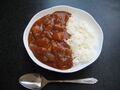 Hayashi rice
 -
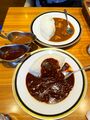 Hayashi rice and curry rice in Tokyo


Advertise on WikiMD — 81,000+ full articles, ~900,000 total pages, ~250 million page views. Global reach, limited time promotional rates from $1/page/day. Learn more · View stats

Translate page: - East Asian
中文,
日本,
한국어,
South Asian
हिन्दी,
தமிழ்,
తెలుగు,
Urdu,
ಕನ್ನಡ,
Southeast Asian
Indonesian,
Vietnamese,
Thai,
မြန်မာဘာသာ,
বাংলা
European
español,
Deutsch,
français,
Greek,
português do Brasil,
polski,
română,
русский,
Nederlands,
norsk,
svenska,
suomi,
Italian
Middle Eastern & African
عربى,
Turkish,
Persian,
Hebrew,
Afrikaans,
isiZulu,
Kiswahili,
Other
Bulgarian,
Hungarian,
Czech,
Swedish,
മലയാളം,
मराठी,
ਪੰਜਾਬੀ,
ગુજરાતી,
Portuguese,
Ukrainian
About WikiMD • Contact • Disclaimer • Privacy • Copyright • Site statistics
Some content and images may originate from Wikimedia Commons or Wikipedia and remain subject to their stated licenses. Unless otherwise noted, eligible WikiMD content is available under CC BY-SA 4.0.
WikiMD Wellnesspedia — Free health & wellness information for patients, students, and health professionals.

