Ofada rice
Ofada rice is a variety of rice that is indigenous to Nigeria. It is named after the town of Ofada in Ogun State, where it is most commonly grown. Ofada rice is known for its unique aroma, flavor, and nutritional value, making it a popular choice for traditional Nigerian dishes.
History[edit]
Ofada rice has been cultivated in Nigeria since the 1940s. It was originally considered a "poor man's" food due to its relatively low cost and availability. However, in recent years, it has gained popularity among all socioeconomic classes due to its unique taste and nutritional benefits.
Cultivation[edit]
Ofada rice is typically grown in small, family-owned farms in the southwestern region of Nigeria. The rice is harvested by hand, which helps to preserve its quality and flavor. After harvesting, the rice is milled to remove the husk, and then it is often parboiled to remove any remaining impurities.
Culinary Uses[edit]
Ofada rice is used in a variety of Nigerian dishes. It is often served with a spicy sauce made from palm oil, locust beans, and a variety of local spices. This dish, known as Ofada Rice and Sauce, is a staple in many Nigerian homes and restaurants.
Nutritional Value[edit]
Ofada rice is rich in protein, fiber, and vitamin B, making it a nutritious choice for any meal. It is also low in fat and cholesterol, making it a healthy option for those with dietary restrictions.
Economic Impact[edit]
The cultivation and sale of Ofada rice have a significant impact on the Nigerian economy. It provides a source of income for many small farmers and contributes to the country's food security. In recent years, the Nigerian government has implemented programs to promote the cultivation and consumption of Ofada rice, in an effort to boost the local economy and reduce dependence on imported rice.
See Also[edit]

-
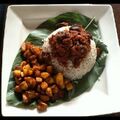 Ofada rice with fried plantain and beef
 -
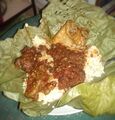 Ofada Rice


Medical Disclaimer: WikiMD is for informational purposes only and is not a substitute for professional medical advice. Content may be inaccurate or outdated and should not be used for diagnosis or treatment. Always consult your healthcare provider for medical decisions. Verify information with trusted sources such as CDC.gov and NIH.gov. By using this site, you agree that WikiMD is not liable for any outcomes related to its content. See full disclaimer.
Credits:Most images are courtesy of Wikimedia commons, and templates, categories Wikipedia, licensed under CC BY SA or similar.
Translate page: - East Asian
中文,
日本,
한국어,
South Asian
हिन्दी,
தமிழ்,
తెలుగు,
Urdu,
ಕನ್ನಡ,
Southeast Asian
Indonesian,
Vietnamese,
Thai,
မြန်မာဘာသာ,
বাংলা
European
español,
Deutsch,
français,
Greek,
português do Brasil,
polski,
română,
русский,
Nederlands,
norsk,
svenska,
suomi,
Italian
Middle Eastern & African
عربى,
Turkish,
Persian,
Hebrew,
Afrikaans,
isiZulu,
Kiswahili,
Other
Bulgarian,
Hungarian,
Czech,
Swedish,
മലയാളം,
मराठी,
ਪੰਜਾਬੀ,
ગુજરાતી,
Portuguese,
Ukrainian

