Dermatophytosis

Editor-In-Chief: Prab R Tumpati, MD
Obesity, Sleep & Internal medicine
Founder, WikiMD Wellnesspedia &
W8MD's weight loss doctor NYC
Philadelphia GLP-1 weight loss and GLP-1 clinic NYC
| Dermatophytosis | |
|---|---|
| File:Yeartinfection.JPG | |
| Synonyms | Tinea, ringworm |
| Pronounce | N/A |
| Specialty | N/A |
| Symptoms | Itching, redness, scaling, cracking of the skin |
| Complications | Secondary bacterial infection |
| Onset | Varies by type |
| Duration | Weeks to months |
| Types | N/A |
| Causes | Dermatophyte fungi |
| Risks | Humidity, sweating, immunocompromised state |
| Diagnosis | Clinical examination, KOH test, fungal culture |
| Differential diagnosis | Eczema, psoriasis, candidiasis |
| Prevention | Keeping skin dry, avoiding sharing personal items |
| Treatment | Antifungal medications (topical or oral) |
| Medication | Clotrimazole, terbinafine, griseofulvin |
| Prognosis | N/A |
| Frequency | Common |
| Deaths | N/A |
A common fungal infection of the stratum corneum of the skin, hair, or nails by a dermatophyte.
Other names[edit]
- Ringworm
- Tinea
- Athlete's foot (location specific)
Clinical features[edit]
It is characterized by itching, inflammation, redness of the skin, small papular vesicles, central clearing, fissures, scaling, and/or hair loss in the affected area.
Cause[edit]
Ringworm is a common skin infection that is caused by fungus. Areas of the body that can be affected by ringworm include:
- Feet (tinea pedis, commonly called “athlete’s foot”)
- Groin, inner thighs, or buttocks (tinea cruris, commonly called “jock itch”)
- Scalp (tinea capitis)
- Beard (tinea barbae)
- Hands (tinea manuum)
- Toenails or fingernails (tinea unguium, also called “onychomycosis”) Click here for more information about fungal nail infections.
- Other parts of the body such as arms or legs (tinea corporis)
Fungal species[edit]
- Approximately 40 different species of fungi can cause ringworm;
- The scientific names for the types of fungi that cause ringworm are Trichophyton, Microsporum, and Epidermophyton.
Diagnosis[edit]
Physical examination
- A thorough history and physical examination is often sufficient to diagnose tinea.
- The classic lesion is an erythematous, raised, scaly ring with central clearing.
- Multiple lesions may be present.
Microscopy
- Potassium hydroxide (KOH) stain a commonly-used method for diagnosing tinea because it is inexpensive, easy to perform, and has high sensitivity.
- Scrapings from the lesion(s) are placed in a drop of KOH and examined under a microscope for the presence of fungal hyphae.
Ultraviolet light (Wood’s lamp)
- Normally, ultraviolet light is not useful in the diagnosis of tinea with the exception of two species – Microsporum canis and audouinii.
- Although both species fluoresce blue-green under a Wood’s lamp, both species are uncommon causes of tinea infections.
- A Wood’s lamp may be useful to differentiate between erythrasma caused by Corynebacterium minutissimum (which fouresces coal-red) from tinea cruris, which is non-fluorescent.
Culture
- Fungal culture can be performed as a confirmatory test if results from a KOH stain are inconclusive.
- Hair and/or scrapings extracted from affected areas are placed on Sabouraud’s medium.
- Fungal culture is more specific than KOH stain, but it can take up to three weeks to become positive.
Treatment[edit]
- Some forms of ringworm can be treated with non-prescription (“over-the-counter”) antifungal creams, lotions, or powders.
- Other forms of ringworm need treatment with prescription antifungal medications depending on the type of fungus.
Tinea pedis: Athlete’s foot can usually be treated with over-the-counter topical antifungal products;
- terbinafine appears to be most effective, but other agents can also be used.
- Chronic or extensive tinea pedis may require treatment with oral antifungal agents such as terbinafine, itraconazole, or fluconazole.
- In addition, chronic tinea pedis may require adjunctive therapy such as foot powder or talcum powder to prevent skin maceration.
Tinea capitis: Treatment with systemic antifungal medication is required, as topical antifungal products are ineffective for treatment of tinea capitis.
- Many experts consider griseofulvin to be the drug of choice.
- Terbinafine is also FDA-approved for the treatment of tinea capitis in patients four years of age and older.
- Itraconazole and fluconazole have been shown to be safe and effective, but are not FDA-approved for this indication.
- Selenium sulfide shampoos can be used as adjunctive therapy.
Tinea corporis/Tinea cruris: Tinea corporis and tinea cruris can usually be treated with over-the-counter antifungal products.
- Patients who have tinea cruris should be advised to keep the groin area clean and dry and to wear cotton underwear.
- Persons who have extensive or recurrent infections may require systemic antifungal therapy.
Steroids should not be used[edit]
- People who have ringworm don’t always know what’s causing their rash, and people sometimes apply over-the-counter creams or ointments containing corticosteroids (or “steroids” for short) to their rash.
- Steroid creams don’t kill the fungus that causes ringworm.
- Steroid creams also can make ringworm worse because they weaken the skin’s defenses.
- In rare cases, steroid creams allow the fungus that causes ringworm to invade deeper into the skin and cause a more serious condition.
- Steroid creams can make ringworm infections spread to cover more of the body.
An Emerging International Problem in India[edit]
- Dermatologists in India have reported severe steroid-modified tinea associated with use of over-the-counter mid- to high-potency topical corticosteroids, which are commonly sold as fixed-dose combinations with an antifungal medication and one or two antibacterial medications.
- In India, a dermatophyte species often identified as Trichophyton mentagrophytes has been reported as the cause of these breakthrough infections.
Gallery[edit]
-
Dermatophytosis 1
-
Dermatophytosis 2
-
Dermatophytosis 3
-
Dermatophytosis 4
-
Dermatophytosis 5
-
Dermatophytosis 6
-
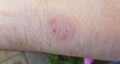 Dermatophytosis 7
 -
Athlete's foot


This WikiMD article can only be edited by registered and verified editors. You can log in or register.
Sponsored Health Resource

W8MD Weight Loss, Sleep & MedSpa
Looking for physician-supervised weight loss, semaglutide, tirzepatide, or GLP-1 receptor agonist options? W8MD helps eligible patients in New York City, Brooklyn, New Jersey, Connecticut, Pennsylvania, Delaware, and greater Philadelphia with medical weight loss, sleep medicine, and long-term maintenance support.
GLP-1 specials: Affordable GLP-1 injections NYC and Philadelphia starting from $29.99/week and up for semaglutide with insurance accepted for qualifying visits, and $45/week and up for tirzepatide with insurance accepted for qualifying visits. Self-pay options start from $59.99/week and up for semaglutide and $69.99/week and up for tirzepatide.
Medical weight loss NYC | Affordable GLP-1 injections NYC | Budget GLP-1 weight loss shots Philadelphia | New Jersey medical weight loss | NYC medical weight loss | Philadelphia medical weight loss | Sleep clinic NYC | W8MD's Philadelphia GLP-1 doctor | Weight loss prescriptions NYC
Book a W8MD appointment · View GLP-1 specials
Paid promotional message. Eligibility, pricing, insurance coverage, medication availability, and results vary. Medical evaluation required.

Medical Disclaimer: WikiMD is for informational purposes only and is not a substitute for professional medical advice. Content may be inaccurate or outdated and should not be used for diagnosis or treatment. Always consult your healthcare provider for medical decisions. Verify information with trusted sources such as CDC.gov and NIH.gov. By using this site, you agree that WikiMD is not liable for any outcomes related to its content. See full disclaimer.
Credits:Most images are courtesy of Wikimedia commons, and templates, categories Wikipedia, licensed under CC BY SA or similar.
Translate page: - East Asian
中文,
日本,
한국어,
South Asian
हिन्दी,
தமிழ்,
తెలుగు,
Urdu,
ಕನ್ನಡ,
Southeast Asian
Indonesian,
Vietnamese,
Thai,
မြန်မာဘာသာ,
বাংলা
European
español,
Deutsch,
français,
Greek,
português do Brasil,
polski,
română,
русский,
Nederlands,
norsk,
svenska,
suomi,
Italian
Middle Eastern & African
عربى,
Turkish,
Persian,
Hebrew,
Afrikaans,
isiZulu,
Kiswahili,
Other
Bulgarian,
Hungarian,
Czech,
Swedish,
മലയാളം,
मराठी,
ਪੰਜਾਬੀ,
ગુજરાતી,
Portuguese,
Ukrainian


