Synthetic cannabinoids
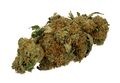
Synthetic cannabinoids, as the name indicates, are artificially manufactured chemicals that resemble chemicals from the plant cannabis.
Big list[edit]
There is a growing number of human-made mind-altering chemicals sprayed on dried, shredded plant material or vaporized to produce a high.
History[edit]
Synthetic cannabinoids were first synthesized in the 1980s and 1990s for research purposes, with the aim of understanding the cannabinoid system in the human body and potentially developing new therapeutic drugs. In the early 2000s, these compounds started appearing as recreational drugs, often sold as herbal smoking blends or as powders that can be dissolved in liquid.
Synthetic marijuana[edit]
Sometimes called synthetic marijuana, synthetic cannabinoids are sometimes misleadingly called synthetic marijuana (or fake weed) because they act on the same brain cell receptors as THC, the mind-altering ingredient in marijuana.
Effects on brain[edit]
- The effects of synthetic cannabinoids can be unpredictable and severe or even life-threatening.
- The only parts of synthetic cannabinoid products that are natural are the dried plant materials.
- Chemicals tests show that their active ingredients are human-made cannabinoid compounds.
Synthetic cannabinoid users report some effects similar to those produced by marijuana:
- elevated mood
- relaxation
- altered perception
- symptoms of psychosis
Health problems[edit]
Synthetic cannabinoids can also cause serious mental and physical health problems including:
- rapid heart rate
- vomiting
- violent behavior
- suicidal thoughts
- Synthetic cannabinoids can be addictive.
Behavior therapy[edit]
Behavioral therapies and medications have not specifically been tested for treatment of addiction to these products.
Overdosing[edit]
Overdoses can occur and can cause:
- toxic reactions
- raised blood pressure
- reduced blood supply to the heart
- kidney damage
- seizures
Risk of death[edit]
Deaths can occur when dangerous synthetic opioids, such as fentanyl, are added without the user knowing.
Legal Status[edit]
Many countries have implemented measures to regulate or ban the sale and possession of synthetic cannabinoids. In the United States, the Drug Enforcement Administration (DEA) has classified many synthetic cannabinoids as Schedule I controlled substances, meaning they are considered to have a high potential for abuse and no accepted medical use. However, due to the rapid development of new synthetic cannabinoid compounds, legislation struggles to keep pace with the market, and new, unregulated substances continue to emerge.

This WikiMD article can only be edited by registered and verified editors. You can log in or register.
| Cannabinoids | ||||||||||||||||||||
|---|---|---|---|---|---|---|---|---|---|---|---|---|---|---|---|---|---|---|---|---|
* See also: Cannabinoid receptor modulators (cannabinoids by pharmacology)
|
-
Synthetic_cannabinoids
-
 Synthetic_cannabinoids
 -
Synthetic_cannabinoids
-
 Synthetic_cannabinoids
 -
Synthetic_cannabinoids
-
Synthetic_cannabinoids
-
 Synthetic_cannabinoids
 -
Synthetic_cannabinoids
-
Synthetic_cannabinoids
-
Synthetic_cannabinoids
-
Synthetic_cannabinoids
-
 Synthetic_cannabinoids


Sponsored Health Resource

W8MD Weight Loss, Sleep & MedSpa
Looking for physician-supervised weight loss, semaglutide, tirzepatide, or GLP-1 receptor agonist options? W8MD helps eligible patients in New York City, Brooklyn, New Jersey, Connecticut, Pennsylvania, Delaware, and greater Philadelphia with medical weight loss, sleep medicine, and long-term maintenance support.
GLP-1 specials: Affordable GLP-1 injections NYC and Philadelphia starting from $29.99/week and up for semaglutide with insurance accepted for qualifying visits, and $45/week and up for tirzepatide with insurance accepted for qualifying visits. Self-pay options start from $59.99/week and up for semaglutide and $69.99/week and up for tirzepatide.
Medical weight loss NYC | Affordable GLP-1 injections NYC | Budget GLP-1 weight loss shots Philadelphia | New Jersey medical weight loss | NYC medical weight loss | Philadelphia medical weight loss | Sleep clinic NYC | W8MD's Philadelphia GLP-1 doctor | Weight loss prescriptions NYC
Book a W8MD appointment · View GLP-1 specials
Paid promotional message. Eligibility, pricing, insurance coverage, medication availability, and results vary. Medical evaluation required.

Medical Disclaimer: WikiMD is for informational purposes only and is not a substitute for professional medical advice. Content may be inaccurate or outdated and should not be used for diagnosis or treatment. Always consult your healthcare provider for medical decisions. Verify information with trusted sources such as CDC.gov and NIH.gov. By using this site, you agree that WikiMD is not liable for any outcomes related to its content. See full disclaimer.
Credits:Most images are courtesy of Wikimedia commons, and templates, categories Wikipedia, licensed under CC BY SA or similar.
Translate page: - East Asian
中文,
日本,
한국어,
South Asian
हिन्दी,
தமிழ்,
తెలుగు,
Urdu,
ಕನ್ನಡ,
Southeast Asian
Indonesian,
Vietnamese,
Thai,
မြန်မာဘာသာ,
বাংলা
European
español,
Deutsch,
français,
Greek,
português do Brasil,
polski,
română,
русский,
Nederlands,
norsk,
svenska,
suomi,
Italian
Middle Eastern & African
عربى,
Turkish,
Persian,
Hebrew,
Afrikaans,
isiZulu,
Kiswahili,
Other
Bulgarian,
Hungarian,
Czech,
Swedish,
മലയാളം,
मराठी,
ਪੰਜਾਬੀ,
ગુજરાતી,
Portuguese,
Ukrainian


.png)


