Banana


Edible fruit from the Musa plant
The banana is a popular, elongated, edible fruit produced by several species of large, herbaceous, flowering plants of the genus Musa. Botanically classified as a berry, bananas are cultivated primarily in tropical regions and are one of the most widely consumed fruits worldwide. They are known for their distinctive yellow skin when ripe, though some varieties can be red, green, or even purple.
Bananas serve as a staple food in many parts of the world due to their nutritional value, versatility, and natural sweetness. They are commonly eaten raw, blended into smoothies, used in baking, or processed into chips and other products.
Taxonomy and Classification
Bananas belong to the Musaceae family and are classified scientifically as follows:
- Kingdom: Plantae
- Order: Zingiberales
- Family: Musaceae
- Genus: Musa
- Species: Multiple species, including Musa acuminata and Musa balbisiana
Most commercially available bananas are hybrids of Musa acuminata and Musa balbisiana, resulting in the common cultivar known as Musa × paradisiaca.
History and Cultivation
Bananas are believed to have originated in Southeast Asia and the South Pacific, particularly in present-day Malaysia, Indonesia, and the Philippines. They were later spread to India, Africa, and the Americas through trade and colonization.
Today, major banana-producing countries include:
- India (Largest producer globally)
- Ecuador (Top exporter)
- Philippines
- Brazil
- Colombia
- Indonesia
- Costa Rica
Banana cultivation requires a warm, humid climate with well-drained soil. The plants grow from underground rhizomes and take approximately 9-12 months to produce fruit. The banana tree is not a true tree but rather a herbaceous plant with a pseudostem formed from tightly packed leaf bases.
Nutritional Value
Bananas are a rich source of essential nutrients and provide energy, fiber, and vitamins. Below is the nutritional profile per 100g of raw banana:
| Nutrient | Amount per 100g |
|---|---|
| Calories | 89 kcal |
| Carbohydrates | 22.8 g |
| Sugars | 12.2 g |
| Fiber | 2.6 g |
| Protein | 1.1 g |
| Fat | 0.3 g |
| Vitamin C | 8.7 mg |
| Potassium | 358 mg |
| Magnesium | 27 mg |
Health Benefits
- Energy Source: The high carbohydrate content makes bananas an excellent pre-workout snack.
- Digestive Health: Rich in dietary fiber, bananas aid in digestion and promote gut health.
- Heart Health: Potassium helps maintain normal blood pressure and reduces the risk of cardiovascular diseases.
- Mood Booster: Contains tryptophan, which the body converts into serotonin, known for enhancing mood and promoting sleep.
- Rich in Antioxidants: Contains compounds like dopamine and catechins, which help reduce oxidative stress.
Culinary Uses
Bananas are used in a wide variety of culinary applications, including:
- Raw Consumption: Peeled and eaten fresh as a snack or added to smoothies and fruit salads.
- Baking: Used in banana bread, muffins, and cakes.
- Desserts: Commonly used in banana splits, pies, and pudding.
- Cooking: Plantains, a firmer variety, are often fried, boiled, or mashed in African, Caribbean, and Latin American cuisines.
- Banana Chips: Sliced and fried or dried as a snack.
- Beverages: Used in banana milkshakes, smoothies, and flavored drinks.
Types of Bananas
Bananas come in different varieties, with some meant for fresh consumption and others primarily used for cooking. Common types include:
- Cavendish banana: The most widely consumed variety, known for its mild flavor and yellow peel.
- Plantain: A starchy variety used in cooking, often fried or boiled.
- Red banana: A sweeter, reddish-purple banana variety.
- Burro banana: A short, squat banana with a tangy flavor.
- Blue Java banana: Known as the "Ice Cream Banana" for its creamy texture and vanilla-like taste.
Banana Production and Trade
Bananas are a key export commodity, particularly for countries in Latin America and Southeast Asia. The banana industry is dominated by large multinational corporations such as:
Challenges in banana production include disease outbreaks such as:
- Panama disease: A fungal infection affecting Cavendish bananas.
- Banana Bunchy Top Virus: A viral disease stunting plant growth.
- Black Sigatoka: A fungal leaf spot disease reducing crop yield.
Environmental and Social Impact
The banana industry faces various ethical and environmental challenges, including:
- Deforestation: Expanding plantations contribute to deforestation.
- Pesticide Use: Intensive farming relies heavily on agrochemicals, impacting biodiversity.
- Labor Exploitation: Many banana plantations have been criticized for unfair labor practices.
- Fair Trade Bananas: To combat these issues, organizations promote fair trade certification, ensuring ethical sourcing.
Fun Facts
- Bananas float in water because they are less dense than water.
- The inside of a banana peel can be used to shine shoes or soothe bug bites.
- Bananas are botanically classified as berries, while strawberries are not.
- The world’s largest banana producer is India, but Ecuador is the top exporter.
- The banana plant is the largest herbaceous flowering plant.
See Also
Images
-
 Flower of a banana plant.This image was taken in the state botanical gardens on the island of La Reunion
 -
 Banana plant at Kew Gardens in London
 -
 Bananas on a plantation in Morocco
 -
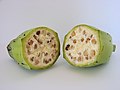 Fruits of wild-type bananas have many large, hard seeds.


| Portion | 100 g |
|---|---|
| Fiber, total dietary | 2.6 g |
| Calcium, Ca | 5 mg |
| Iron, Fe | 0.26 mg |
| Vitamin C, total ascorbic acid | 8.7 mg |
| Protein | 1.09 g |
| Total lipid (fat) | 0.33 g |
| Carbohydrate, by difference | 22.84 g |
| Energy | 89 kcal |
| Sugars, total including NLEA | 12.23 g |
| Cholesterol | 0 mg |
| Sodium, Na | 1 mg |
| Fatty acids, total saturated | 0.112 g |
| Ingredients | Bananas, raw g |
Nutritional information on Banana
 |
|
|
 |
 |
   
|
| Food Portal | Food | Nutrition | Diet | Keto | Glycemic index |
NB:Carbohydrate, by difference(total carbs-fiber) is also called net carbs
Related pages
| Types of fruits | ||||||||
|---|---|---|---|---|---|---|---|---|
|
Ad. Transform your health with W8MD Weight Loss, Sleep & MedSpa

Tired of being overweight?
Special offer:
Budget GLP-1 weight loss medications
- Semaglutide starting from $29.99/week and up with insurance for visit of $59.99 and up per week self pay.
- Tirzepatide starting from $45.00/week and up (dose dependent) or $69.99/week and up self pay
✔ Same-week appointments, evenings & weekends
Learn more:
- GLP-1 weight loss clinic NYC
- W8MD's NYC medical weight loss
- W8MD Philadelphia GLP-1 shots
- Philadelphia GLP-1 injections
- Affordable GLP-1 shots NYC
|
WikiMD Medical Encyclopedia |
Medical Disclaimer: WikiMD is for informational purposes only and is not a substitute for professional medical advice. Content may be inaccurate or outdated and should not be used for diagnosis or treatment. Always consult your healthcare provider for medical decisions. Verify information with trusted sources such as CDC.gov and NIH.gov. By using this site, you agree that WikiMD is not liable for any outcomes related to its content. See full disclaimer.
Credits:Most images are courtesy of Wikimedia commons, and templates, categories Wikipedia, licensed under CC BY SA or similar.
Translate this page: - East Asian
中文,
日本,
한국어,
South Asian
हिन्दी,
தமிழ்,
తెలుగు,
Urdu,
ಕನ್ನಡ,
Southeast Asian
Indonesian,
Vietnamese,
Thai,
မြန်မာဘာသာ,
বাংলা
European
español,
Deutsch,
français,
Greek,
português do Brasil,
polski,
română,
русский,
Nederlands,
norsk,
svenska,
suomi,
Italian
Middle Eastern & African
عربى,
Turkish,
Persian,
Hebrew,
Afrikaans,
isiZulu,
Kiswahili,
Other
Bulgarian,
Hungarian,
Czech,
Swedish,
മലയാളം,
मराठी,
ਪੰਜਾਬੀ,
ગુજરાતી,
Portuguese,
Ukrainian
