Cavendish banana
Cavendish banana is a type of banana that is widely consumed today. It is named after William Cavendish, 6th Duke of Devonshire, who acquired an early specimen, which was originally from Mauritius, and from which all contemporary commercial Cavendish cultivars are descended.
Etymology[edit]
The name "Cavendish" comes from William Cavendish, 6th Duke of Devonshire, who had a specimen of this banana variety in his possession in the 19th century. The banana itself is believed to have originated in Mauritius, an island nation in the Indian Ocean.
Description[edit]
Cavendish bananas are typically yellow when ripe, although they can be green when unripe. They are known for their sweet taste and creamy texture. The bananas are usually harvested while still green and then ripen off the tree. They are the most widely exported banana variety and are particularly popular in Europe and North America.
Cultivation[edit]
Cavendish bananas are grown in tropical regions, including parts of Asia, Africa, and Latin America. They require a warm climate with temperatures between 10 and 40 degrees Celsius. The plants are propagated using pups, which are small shoots that grow from the base of the banana plant.
Disease Resistance[edit]
Cavendish bananas are susceptible to a number of diseases, including Panama disease, which is caused by a fungus and can wipe out entire plantations. Efforts are ongoing to breed or genetically modify Cavendish bananas to be resistant to this disease.
Related Terms[edit]

This WikiMD article can only be edited by registered and verified editors. You can log in or register.
-
Cavendish banana bunch
-
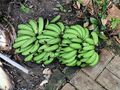 Green raw bananas
 -
Small Cavendish bananas
-
Cavendish bananas on display
-
Banana flower
-
Cavendish banana

Sponsored Health Resource

W8MD Weight Loss, Sleep & MedSpa
Looking for physician-supervised weight loss, semaglutide, tirzepatide, or GLP-1 receptor agonist options? W8MD helps eligible patients in New York City, Brooklyn, New Jersey, Connecticut, Pennsylvania, Delaware, and greater Philadelphia with medical weight loss, sleep medicine, and long-term maintenance support.
GLP-1 specials: Affordable GLP-1 injections NYC and Philadelphia starting from $29.99/week and up for semaglutide with insurance accepted for qualifying visits, and $45/week and up for tirzepatide with insurance accepted for qualifying visits. Self-pay options start from $59.99/week and up for semaglutide and $69.99/week and up for tirzepatide.
- Medical weight loss NYC
- Affordable GLP-1 injections NYC
- Budget GLP-1 weight loss shots Philadelphia
- New Jersey medical weight loss
- NYC medical weight loss blog
- Philadelphia weight loss blog
- Sleep medicine and sleep apnea services
- W8MD MedSpa and wellness
Book a W8MD appointment · View GLP-1 specials
Paid promotional message. Eligibility, pricing, insurance coverage, medication availability, and results vary. Medical evaluation required.

Medical Disclaimer: WikiMD is for informational purposes only and is not a substitute for professional medical advice. Content may be inaccurate or outdated and should not be used for diagnosis or treatment. Always consult your healthcare provider for medical decisions. Verify information with trusted sources such as CDC.gov and NIH.gov. By using this site, you agree that WikiMD is not liable for any outcomes related to its content. See full disclaimer.
Credits:Most images are courtesy of Wikimedia commons, and templates, categories Wikipedia, licensed under CC BY SA or similar.
Translate page: - East Asian
中文,
日本,
한국어,
South Asian
हिन्दी,
தமிழ்,
తెలుగు,
Urdu,
ಕನ್ನಡ,
Southeast Asian
Indonesian,
Vietnamese,
Thai,
မြန်မာဘာသာ,
বাংলা
European
español,
Deutsch,
français,
Greek,
português do Brasil,
polski,
română,
русский,
Nederlands,
norsk,
svenska,
suomi,
Italian
Middle Eastern & African
عربى,
Turkish,
Persian,
Hebrew,
Afrikaans,
isiZulu,
Kiswahili,
Other
Bulgarian,
Hungarian,
Czech,
Swedish,
മലയാളം,
मराठी,
ਪੰਜਾਬੀ,
ગુજરાતી,
Portuguese,
Ukrainian


