General visceral efferent fiber
General Visceral Efferent Fiber[edit]
The general visceral efferent fibers (GVE fibers) are a type of nerve fiber that are part of the autonomic nervous system. These fibers are responsible for conveying motor impulses to the smooth muscles, cardiac muscles, and glands. They play a crucial role in the involuntary control of bodily functions such as heart rate, digestion, and respiratory rate.
Structure[edit]
General visceral efferent fibers originate from the central nervous system (CNS) and are part of the efferent division of the peripheral nervous system. These fibers are typically associated with the autonomic ganglia, where they synapse with postganglionic neurons that extend to the target organs.
The GVE fibers are divided into two main components based on their origin and function:
- **Sympathetic nervous system fibers**: These fibers originate from the thoracolumbar region of the spinal cord (T1 to L2) and are involved in the "fight or flight" response. They prepare the body for stressful situations by increasing heart rate, dilating airways, and inhibiting digestion.
- **Parasympathetic nervous system fibers**: These fibers originate from the brainstem and the sacral spinal cord (S2 to S4) and are involved in the "rest and digest" response. They promote relaxation and recovery by decreasing heart rate, constricting airways, and stimulating digestion.
Function[edit]
The primary function of general visceral efferent fibers is to regulate the activity of the visceral organs. They achieve this by:
- **Modulating cardiac function**: GVE fibers can increase or decrease the heart rate and force of contraction, depending on whether they are part of the sympathetic or parasympathetic system.
- **Controlling smooth muscle activity**: These fibers regulate the contraction and relaxation of smooth muscles in the gastrointestinal tract, respiratory system, and urogenital system.
- **Regulating glandular secretion**: GVE fibers influence the secretion of various glands, including salivary glands, sweat glands, and digestive glands.
Clinical Significance[edit]
Dysfunction of general visceral efferent fibers can lead to a variety of clinical conditions. For example, damage to the sympathetic fibers can result in Horner's syndrome, characterized by ptosis, miosis, and anhidrosis. On the other hand, parasympathetic dysfunction can lead to issues such as bradycardia or digestive disorders.
Understanding the role of GVE fibers is crucial in diagnosing and treating autonomic nervous system disorders. Medical interventions may include pharmacological agents that target specific receptors on the effector organs to modulate their activity.
Related Pages[edit]
- Autonomic nervous system
- Sympathetic nervous system
- Parasympathetic nervous system
- Efferent nerve fiber
- Visceral organ
General_visceral_efferent_fiber[edit]
-
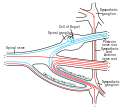 Gray799
 -
 Gray840
 -
 Gray839
 -
 1503 Connections of the Parasympathetic Nervous System


Ad. Transform your life with W8MD's
GLP-1 weight loss injections special from $29.99


W8MD Medical Weight Loss, Sleep and Medspa offers physician-supervised medical weight loss programs: NYC medical weight loss Philadelphia medical weight loss
Affordable GLP-1 Weight Loss ShotsAffordable GLP-1 Weight Loss Shots
Budget GLP-1 injections NYC (insurance & self-pay options) Popular treatments:
- Semaglutide starting from $29.99/week
- Tirzepatide starting from $45.00/week
✔ Most insurances accepted for visits ✔ Prior authorization support when eligible
Start your physician weight loss NYC journey today:
📍 NYC: Brooklyn weight loss center 📍 Philadelphia: Philadelphia weight loss center
📞 Call: 718-946-5500 (NYC) | 215-676-2334 (Philadelphia)
Tags: Affordable GLP1 weight loss NYC, Wegovy NYC, Zepbound NYC, Philadelphia medical weight loss


|
WikiMD Medical Encyclopedia |
Medical Disclaimer: WikiMD is not a substitute for professional medical advice. The information on WikiMD is provided as an information resource only, may be incorrect, outdated or misleading, and is not to be used or relied on for any diagnostic or treatment purposes. Please consult your health care provider before making any healthcare decisions or for guidance about a specific medical condition. WikiMD expressly disclaims responsibility, and shall have no liability, for any damages, loss, injury, or liability whatsoever suffered as a result of your reliance on the information contained in this site. By visiting this site you agree to the foregoing terms and conditions, which may from time to time be changed or supplemented by WikiMD. If you do not agree to the foregoing terms and conditions, you should not enter or use this site. See full disclaimer.
Credits:Most images are courtesy of Wikimedia commons, and templates, categories Wikipedia, licensed under CC BY SA or similar.
Translate this page: - East Asian
中文,
日本,
한국어,
South Asian
हिन्दी,
தமிழ்,
తెలుగు,
Urdu,
ಕನ್ನಡ,
Southeast Asian
Indonesian,
Vietnamese,
Thai,
မြန်မာဘာသာ,
বাংলা
European
español,
Deutsch,
français,
Greek,
português do Brasil,
polski,
română,
русский,
Nederlands,
norsk,
svenska,
suomi,
Italian
Middle Eastern & African
عربى,
Turkish,
Persian,
Hebrew,
Afrikaans,
isiZulu,
Kiswahili,
Other
Bulgarian,
Hungarian,
Czech,
Swedish,
മലയാളം,
मराठी,
ਪੰਜਾਬੀ,
ગુજરાતી,
Portuguese,
Ukrainian
