Neuromorphology
Neuromorphology is the study of the structure and form of neurons, the fundamental units of the nervous system. This field of study is crucial in understanding the complex processes that govern the functioning of the nervous system.
Overview[edit]
Neuromorphology is a branch of neuroscience that focuses on the study of the form and structure of neurons. It involves the examination of the shape, size, and spatial distribution of neurons, as well as their connections and pathways. This field of study is essential in understanding the complex processes that govern the functioning of the nervous system.
Importance of Neuromorphology[edit]
Neuromorphology plays a crucial role in understanding the functioning of the nervous system. The structure and form of neurons can significantly influence their function. For instance, the shape and size of a neuron can affect its ability to transmit signals. Similarly, the spatial distribution of neurons can influence the efficiency of signal transmission within the nervous system.
Techniques in Neuromorphology[edit]
Several techniques are used in neuromorphology to study the structure and form of neurons. These include:
- Microscopy: This is the most common technique used in neuromorphology. It involves the use of microscopes to visualize the structure and form of neurons.
- Electron microscopy: This technique uses a beam of electrons instead of light to visualize the structure and form of neurons. It provides a much higher resolution than light microscopy.
- Immunohistochemistry: This technique involves the use of antibodies to detect specific proteins in neurons. It can provide information about the structure and form of neurons, as well as their function.
- Neuroimaging: This technique involves the use of imaging techniques such as MRI and CT scans to visualize the structure and form of neurons in living organisms.
See Also[edit]

This WikiMD article can only be edited by registered and verified editors. You can log in or register.
-
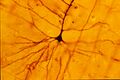 Golgi-stained pyramidal cell
 -
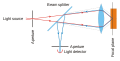 Confocal principle diagram


Advertise on WikiMD — 81,000+ full articles, ~900,000 total pages, ~250 million page views. Global reach, limited time promotional rates from $1/page/day. Learn more · View stats

Medical Disclaimer: WikiMD is for informational purposes only and is not a substitute for professional medical advice. Content may be inaccurate or outdated and should not be used for diagnosis or treatment. Always consult your healthcare provider for medical decisions. Verify information with trusted sources such as CDC.gov and NIH.gov. By using this site, you agree that WikiMD is not liable for any outcomes related to its content. See full disclaimer.
Credits:Most images are courtesy of Wikimedia commons, and templates, categories Wikipedia, licensed under CC BY SA or similar.
Translate page: - East Asian
中文,
日本,
한국어,
South Asian
हिन्दी,
தமிழ்,
తెలుగు,
Urdu,
ಕನ್ನಡ,
Southeast Asian
Indonesian,
Vietnamese,
Thai,
မြန်မာဘာသာ,
বাংলা
European
español,
Deutsch,
français,
Greek,
português do Brasil,
polski,
română,
русский,
Nederlands,
norsk,
svenska,
suomi,
Italian
Middle Eastern & African
عربى,
Turkish,
Persian,
Hebrew,
Afrikaans,
isiZulu,
Kiswahili,
Other
Bulgarian,
Hungarian,
Czech,
Swedish,
മലയാളം,
मराठी,
ਪੰਜਾਬੀ,
ગુજરાતી,
Portuguese,
Ukrainian

