Mycoplasma genitalium
Mycoplasma genitalium is a species of bacteria in the genus Mycoplasma. It is a small parasitic bacterium that lives on the ciliated epithelial cells of the urinary tract and genital tract in humans. It is one of the smallest known bacteria capable of independent growth and reproduction.
History[edit]
Mycoplasma genitalium was first isolated in 1980 from the urethral specimens of two male patients with non-gonococcal urethritis. It was described as a new species in 1983 by Tully et al. The complete genome of M. genitalium was sequenced in 1995, revealing it to have one of the smallest genomes of any free-living organism.
Morphology and Structure[edit]
Mycoplasma genitalium is a very small bacterium, with a size of approximately 200-300 nm in diameter. It lacks a cell wall, which is a characteristic feature of the class Mollicutes. This absence of a cell wall makes it resistant to antibiotics that target cell wall synthesis, such as penicillin. The cell membrane contains sterols, which are acquired from the host, and this feature is unique among bacteria.
Genomic Characteristics[edit]
The genome of Mycoplasma genitalium consists of a single circular chromosome of approximately 580,070 base pairs, encoding about 525 genes. This minimal genome is of great interest in the study of minimal life forms and synthetic biology. The small genome size is due to the loss of many genes that are not essential for survival in its specific niche.
Pathogenesis[edit]
Mycoplasma genitalium is a known pathogen of the human urogenital tract. It is associated with several sexually transmitted infections (STIs). In men, it is a cause of non-gonococcal urethritis (NGU), and in women, it is associated with cervicitis, pelvic inflammatory disease (PID), and possibly infertility. The bacterium adheres to the epithelial cells of the urogenital tract using specialized tip structures and causes damage through the production of hydrogen peroxide and other cytotoxic substances.
Clinical Manifestations[edit]
In men, infection with Mycoplasma genitalium can lead to symptoms such as urethral discharge, dysuria, and urethral irritation. In women, it can cause vaginal discharge, pelvic pain, and intermenstrual bleeding. Asymptomatic infections are also common, which can lead to undiagnosed and untreated cases, contributing to the spread of the infection.
Diagnosis[edit]
Diagnosis of Mycoplasma genitalium infection is challenging due to the lack of routine culture methods. Nucleic acid amplification tests (NAATs) are the most reliable method for detecting the presence of M. genitalium DNA in clinical specimens. These tests are highly sensitive and specific and can be performed on urine samples or swabs from the urogenital tract.
Treatment[edit]
Treatment of Mycoplasma genitalium infections is complicated by the bacterium's resistance to many common antibiotics. Azithromycin is often used as a first-line treatment, but resistance to macrolides is increasing. Moxifloxacin is an alternative treatment option, but resistance to fluoroquinolones is also emerging. It is important to perform resistance testing when possible to guide appropriate antibiotic therapy.
Prevention[edit]
Preventive measures for Mycoplasma genitalium infections include practicing safe sex, such as using condoms, and regular screening for sexually transmitted infections, especially in high-risk populations. Partner notification and treatment are also important to prevent reinfection and further transmission.
Research and Future Directions[edit]
Research on Mycoplasma genitalium continues to focus on understanding its pathogenesis, developing better diagnostic methods, and finding effective treatments. The study of its minimal genome provides insights into the essential functions required for bacterial life and has implications for synthetic biology and the development of new antimicrobial strategies.
See Also[edit]
External Links[edit]
| Microbiology: Bacteria | ||||||||||||||||||||||||
|---|---|---|---|---|---|---|---|---|---|---|---|---|---|---|---|---|---|---|---|---|---|---|---|---|
|
| Sexually transmitted diseases and infections | ||||||||||
|---|---|---|---|---|---|---|---|---|---|---|
This sexually transmitted diseases and infections related article is a stub.
|
Mycoplasma genitalium[edit]
-
 3D Whole Cell (3D-WC) model of a Mycoplasma genitalium cell
 -
 Mycoplasma genitalium
 -
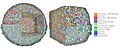 3D Whole Cell (3D-WC) model of a Mycoplasma genitalium cell Cubic section
_model_of_a_Mycoplasma_genitalium_cell.jpg)

_model_of_a_Mycoplasma_genitalium_cell_Cubic_section.jpg)
Ad. Transform your life with W8MD's
GLP-1 weight loss injections special from $29.99 with insurance
|
WikiMD Medical Encyclopedia |
Medical Disclaimer: WikiMD is for informational purposes only and is not a substitute for professional medical advice. Content may be inaccurate or outdated and should not be used for diagnosis or treatment. Always consult your healthcare provider for medical decisions. Verify information with trusted sources such as CDC.gov and NIH.gov. By using this site, you agree that WikiMD is not liable for any outcomes related to its content. See full disclaimer.
Credits:Most images are courtesy of Wikimedia commons, and templates, categories Wikipedia, licensed under CC BY SA or similar.
Translate this page: - East Asian
中文,
日本,
한국어,
South Asian
हिन्दी,
தமிழ்,
తెలుగు,
Urdu,
ಕನ್ನಡ,
Southeast Asian
Indonesian,
Vietnamese,
Thai,
မြန်မာဘာသာ,
বাংলা
European
español,
Deutsch,
français,
Greek,
português do Brasil,
polski,
română,
русский,
Nederlands,
norsk,
svenska,
suomi,
Italian
Middle Eastern & African
عربى,
Turkish,
Persian,
Hebrew,
Afrikaans,
isiZulu,
Kiswahili,
Other
Bulgarian,
Hungarian,
Czech,
Swedish,
മലയാളം,
मराठी,
ਪੰਜਾਬੀ,
ગુજરાતી,
Portuguese,
Ukrainian
