Aortic valve replacement: Difference between revisions
CSV import |
CSV import |
||
| Line 3: | Line 3: | ||
File:Gray495.png|Aortic valve replacement | File:Gray495.png|Aortic valve replacement | ||
</gallery> | </gallery> | ||
== Aortic Valve Replacement == | |||
'''Aortic valve replacement''' is a surgical procedure in which a patient's [[aortic valve]] is replaced with an artificial valve. The aortic valve is one of the four main [[heart valves]] and is responsible for regulating blood flow from the [[left ventricle]] of the heart into the [[aorta]], the main artery that carries blood to the rest of the body. | |||
== Indications == | |||
Aortic valve replacement is typically indicated for patients with severe [[aortic stenosis]] or [[aortic regurgitation]]. Aortic stenosis is a condition where the valve becomes narrowed, restricting blood flow, while aortic regurgitation occurs when the valve does not close properly, allowing blood to flow backward into the heart. | |||
== Types of Replacement Valves == | |||
There are two main types of replacement valves used in aortic valve replacement: | |||
* '''Mechanical valves''': These are made from durable materials such as titanium or carbon. They are long-lasting but require patients to take lifelong [[anticoagulant]] medication to prevent blood clots. | |||
* '''Bioprosthetic valves''': These are made from animal tissue, such as pig or cow tissue, or from human tissue. They tend to wear out faster than mechanical valves but do not usually require long-term anticoagulation. | |||
== Surgical Techniques == | |||
Aortic valve replacement can be performed using different surgical techniques: | |||
* '''Open-heart surgery''': This traditional method involves making a large incision in the chest and temporarily stopping the heart to replace the valve. | |||
* '''Minimally invasive surgery''': This approach uses smaller incisions and specialized instruments to replace the valve, potentially reducing recovery time. | |||
* '''Transcatheter aortic valve replacement (TAVR)''': This is a less invasive procedure where the new valve is inserted via a catheter through a blood vessel, often in the leg, and guided to the heart. | |||
== Recovery and Prognosis == | |||
Recovery from aortic valve replacement varies depending on the type of surgery performed. Patients who undergo open-heart surgery may require several weeks to recover, while those who have minimally invasive surgery or TAVR may recover more quickly. | |||
The prognosis after aortic valve replacement is generally good, with most patients experiencing significant improvement in symptoms and quality of life. However, regular follow-up with a [[cardiologist]] is necessary to monitor heart function and valve performance. | |||
== Complications == | |||
Potential complications of aortic valve replacement include: | |||
* Bleeding | |||
* Infection | |||
* Blood clots | |||
* Valve dysfunction or failure | |||
* Stroke | |||
== Related Pages == | |||
* [[Heart valve disease]] | |||
* [[Cardiac surgery]] | |||
* [[Transcatheter aortic valve replacement]] | |||
* [[Anticoagulant]] | |||
{{Cardiology}} | |||
{{Surgery}} | |||
[[Category:Cardiac surgery]] | |||
[[Category:Cardiology]] | |||
Latest revision as of 00:41, 19 February 2025
-
 Diagram of the human heart
 -
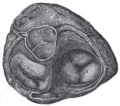 Aortic valve replacement
.svg)

Aortic Valve Replacement[edit]
Aortic valve replacement is a surgical procedure in which a patient's aortic valve is replaced with an artificial valve. The aortic valve is one of the four main heart valves and is responsible for regulating blood flow from the left ventricle of the heart into the aorta, the main artery that carries blood to the rest of the body.
Indications[edit]
Aortic valve replacement is typically indicated for patients with severe aortic stenosis or aortic regurgitation. Aortic stenosis is a condition where the valve becomes narrowed, restricting blood flow, while aortic regurgitation occurs when the valve does not close properly, allowing blood to flow backward into the heart.
Types of Replacement Valves[edit]
There are two main types of replacement valves used in aortic valve replacement:
- Mechanical valves: These are made from durable materials such as titanium or carbon. They are long-lasting but require patients to take lifelong anticoagulant medication to prevent blood clots.
- Bioprosthetic valves: These are made from animal tissue, such as pig or cow tissue, or from human tissue. They tend to wear out faster than mechanical valves but do not usually require long-term anticoagulation.
Surgical Techniques[edit]
Aortic valve replacement can be performed using different surgical techniques:
- Open-heart surgery: This traditional method involves making a large incision in the chest and temporarily stopping the heart to replace the valve.
- Minimally invasive surgery: This approach uses smaller incisions and specialized instruments to replace the valve, potentially reducing recovery time.
- Transcatheter aortic valve replacement (TAVR): This is a less invasive procedure where the new valve is inserted via a catheter through a blood vessel, often in the leg, and guided to the heart.
Recovery and Prognosis[edit]
Recovery from aortic valve replacement varies depending on the type of surgery performed. Patients who undergo open-heart surgery may require several weeks to recover, while those who have minimally invasive surgery or TAVR may recover more quickly.
The prognosis after aortic valve replacement is generally good, with most patients experiencing significant improvement in symptoms and quality of life. However, regular follow-up with a cardiologist is necessary to monitor heart function and valve performance.
Complications[edit]
Potential complications of aortic valve replacement include:
- Bleeding
- Infection
- Blood clots
- Valve dysfunction or failure
- Stroke
Related Pages[edit]
Cardiovascular disease A-Z
Most common cardiac diseases
- Cardiac arrhythmia
- Cardiogenetic disorders
- Cardiomegaly
- Cardiomyopathy
- Cardiopulmonary resuscitation
- Chronic rheumatic heart diseases
- Congenital heart defects
- Heart neoplasia
- Ischemic heart diseases
- Pericardial disorders
- Syndromes affecting the heart
- Valvular heart disease
A | B | C | D | E | F | G | H | I | J | K | L | M | N | O | P | Q | R | S | T | U | V | W | X | Y | Z
A[edit]
- Accelerated idioventricular rhythm
- Acute decompensated heart failure
- Arteriosclerotic heart disease
- Athletic heart syndrome
- Atrial flutter
- Atrioventricular fistula
- Cardiovascular disease in Australia
- Autoimmune heart disease
B[edit]
C[edit]
- Ebb Cade
- Cardiac allograft vasculopathy
- Cardiac amyloidosis
- Cardiac asthma
- Cardiac tamponade
- Cardiogenic shock
- Cardiogeriatrics
- Cardiorenal syndrome
- Cardiotoxicity
- Carditis
- Coronary artery aneurysm
- Coronary artery anomaly
- Coronary artery disease
- Spontaneous coronary artery dissection
- Coronary artery ectasia
- Coronary occlusion
- Coronary steal
- Coronary thrombosis
- Coronary vasospasm
- Cœur en sabot
- Coxsackievirus-induced cardiomyopathy
D[edit]
E[edit]
H[edit]
- Heart attack
- Heart failure
- Heart failure with preserved ejection fraction
- Heart to Heart (1949 film)
- High-output heart failure
- Hyperdynamic precordium
A | B | C | D | E | F | G | H | I | J | K | L | M | N | O | P | Q | R | S | T | U | V | W | X | Y | Z
I[edit]
- Idiopathic giant-cell myocarditis
- Interventricular dyssynchrony
- Intraventricular dyssynchrony
- Isolated atrial amyloidosis
K[edit]
L[edit]
M[edit]
- Mydicar
- Myocardial bridge
- Myocardial disarray
- Myocardial rupture
- Myocardial scarring
- Myocardial stunning
- Myocarditis
N[edit]
O[edit]
P[edit]
- Papillary fibroelastoma
- Pathophysiology of heart failure
- Postpericardiotomy syndrome
- Pulmonary vein stenosis
R[edit]
S[edit]
- Saturated fat and cardiovascular disease
- SCAR-Fc
- Shone's syndrome
- Strain pattern
- Subacute bacterial endocarditis
- Sudden cardiac death of athletes
A | B | C | D | E | F | G | H | I | J | K | L | M | N | O | P | Q | R | S | T | U | V | W | X | Y | Z
T[edit]
V[edit]
W[edit]
| Surgery | ||||
|---|---|---|---|---|
|
