Samandarin: Difference between revisions
No edit summary |
CSV import Tags: mobile edit mobile web edit |
||
| Line 22: | Line 22: | ||
[[Category:Salamanders]] | [[Category:Salamanders]] | ||
[[Category:Slovenian distilled drinks]] | [[Category:Slovenian distilled drinks]] | ||
== Samandarin == | |||
<gallery> | |||
File:Samandarine_Family.png|Samandarine Family | |||
File:Salamandra_salamandra_MHNT_1.jpg|Salamandra salamandra | |||
File:Samandarin_with_labeled_rings.png|Samandarin with labeled rings | |||
File:Biosynthesis_intermediates_of_samandarin.png|Biosynthesis intermediates of samandarin | |||
File:Chemical_synthesis_intermediates.png|Chemical synthesis intermediates | |||
</gallery> | |||
Latest revision as of 00:58, 27 February 2025
Samandarin or Samandarine is the main steroidal alkaloid secreted by the fire salamander (Salamandra salamandra). The compound is extremely toxic (LD50 = 70 µg/kg in mice). Poisoning can cause convulsions, respiratory paralysis, and eventual death. Samandarin is also believed to be the active ingredient in Salamander brandy, a Slovenian drink with purported hallucinogenic and aphrodisiac effects.
Neurotoxin[edit]
Samandarin is a natural compound found in the skin of the salamander species known as Taricha granulosa. It is a type of alkaloid and is known for its potent neurotoxic effects. Ingesting even small amounts of samandarin can result in muscle weakness, respiratory failure, and even death.
Plant distribution[edit]
The salamander species that produces samandarin is commonly found in North America, particularly in the Pacific Northwest region. The bright orange coloration of the salamander is a warning sign to predators that it is toxic and should not be eaten.
Isolation of the compound[edit]
Scientists first isolated samandarin in 1954 and have since studied its chemical properties and effects on the nervous system.
Mechanism of action[edit]
Samandarin has been found to act on voltage-gated sodium channels, which are essential for the transmission of nerve impulses. By blocking these channels, samandarin disrupts nerve function and can cause muscle weakness and paralysis. Samandarin is also known to affect the respiratory system, causing respiratory failure in severe cases. Because of its potent neurotoxic effects, samandarin has been the subject of study as a potential treatment for pain and other neurological conditions.
Therapeutic benefits[edit]
One study conducted in 2015 found that samandarin was effective in reducing pain in mice by blocking the activity of sodium channels in pain-sensing neurons. The researchers suggested that samandarin and other alkaloids found in salamanders could be used to develop new pain medications that do not have the side effects of opioids.
Toxicity[edit]
While samandarin has potential therapeutic benefits, it is important to note that it is highly toxic and should not be ingested or handled without proper precautions. Even small amounts of samandarin can cause serious harm or death, and there is no known antidote for samandarin poisoning.
 | |
|---|---|
 |
 |
Samandarin[edit]
-
 Samandarine Family
 -
 Salamandra salamandra
 -
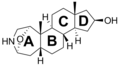 Samandarin with labeled rings
 -
 Biosynthesis intermediates of samandarin
 -
 Chemical synthesis intermediates


