Mimosine
Mimosine is a non-protein amino acid that is found in the Leucaena leucocephala plant, also known as the "koa haole" tree in Hawaii and the "ipil-ipil" tree in the Philippines. It is also found in other members of the Mimosoideae subfamily of the Fabaceae family. Mimosine has been studied for its potential uses in medicine and agriculture.
Chemical Structure and Properties[edit]
Mimosine has the chemical formula C8H10N2O4 and is also known as leucenol or 3-hydroxy-4(1H)-pyridone. It is a derivative of the amino acid tyrosine, and its structure includes a pyridone ring. Mimosine is a chelating agent, meaning it can form multiple bonds with a single metal ion. This property is believed to be responsible for some of its biological effects.
Biological Effects[edit]
Mimosine has been found to have several biological effects. It can inhibit DNA replication and cell division, which has led to its use in laboratory research as a cell cycle inhibitor. It also has the ability to induce apoptosis, or programmed cell death, in certain types of cells. In addition, mimosine has been found to have antioxidant properties, and it can protect cells from damage caused by reactive oxygen species.
Potential Uses[edit]
Due to its biological effects, mimosine has potential uses in both medicine and agriculture. In medicine, it has been studied as a potential treatment for cancer, due to its ability to inhibit cell division and induce apoptosis. In agriculture, it has been used as a natural herbicide, due to its ability to inhibit the growth of other plants. However, its use in both of these areas is currently limited by its toxicity to non-target organisms and the lack of detailed understanding of its mechanisms of action.
Toxicity[edit]
Mimosine is toxic to many organisms, including humans and livestock. In animals, consumption of mimosine-containing plants can lead to symptoms such as hair loss, reduced growth, and infertility. In humans, consumption of large amounts of mimosine can lead to symptoms such as nausea, vomiting, and diarrhea. The toxicity of mimosine is believed to be due to its ability to chelate essential metal ions, disrupting normal cellular processes.
See Also[edit]

 | This medical article is a stub. You can help WikiMD by expanding the page. |
-
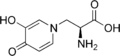 L-Mimosine
 -
L-Mimosine zwitterion ball

Sponsored Health Resource

W8MD Weight Loss, Sleep & MedSpa
Looking for physician-supervised weight loss, semaglutide, tirzepatide, or GLP-1 receptor agonist options? W8MD helps eligible patients in New York City, Brooklyn, New Jersey, Connecticut, Pennsylvania, Delaware, and greater Philadelphia with medical weight loss, sleep medicine, and long-term maintenance support.
GLP-1 specials: Affordable GLP-1 injections NYC and Philadelphia starting from $29.99/week and up for semaglutide with insurance accepted for qualifying visits, and $45/week and up for tirzepatide with insurance accepted for qualifying visits. Self-pay options start from $59.99/week and up for semaglutide and $69.99/week and up for tirzepatide.
Medical weight loss NYC | Affordable GLP-1 injections NYC | Budget GLP-1 weight loss shots Philadelphia | New Jersey medical weight loss | NYC medical weight loss | Philadelphia medical weight loss | Sleep clinic NYC | W8MD's Philadelphia GLP-1 doctor | Weight loss prescriptions NYC
Book a W8MD appointment · View GLP-1 specials
Paid promotional message. Eligibility, pricing, insurance coverage, medication availability, and results vary. Medical evaluation required.

Medical Disclaimer: WikiMD is for informational purposes only and is not a substitute for professional medical advice. Content may be inaccurate or outdated and should not be used for diagnosis or treatment. Always consult your healthcare provider for medical decisions. Verify information with trusted sources such as CDC.gov and NIH.gov. By using this site, you agree that WikiMD is not liable for any outcomes related to its content. See full disclaimer.
Credits:Most images are courtesy of Wikimedia commons, and templates, categories Wikipedia, licensed under CC BY SA or similar.
Translate page: - East Asian
中文,
日本,
한국어,
South Asian
हिन्दी,
தமிழ்,
తెలుగు,
Urdu,
ಕನ್ನಡ,
Southeast Asian
Indonesian,
Vietnamese,
Thai,
မြန်မာဘာသာ,
বাংলা
European
español,
Deutsch,
français,
Greek,
português do Brasil,
polski,
română,
русский,
Nederlands,
norsk,
svenska,
suomi,
Italian
Middle Eastern & African
عربى,
Turkish,
Persian,
Hebrew,
Afrikaans,
isiZulu,
Kiswahili,
Other
Bulgarian,
Hungarian,
Czech,
Swedish,
മലയാളം,
मराठी,
ਪੰਜਾਬੀ,
ગુજરાતી,
Portuguese,
Ukrainian


