Purine nucleoside phosphorylase deficiency
| Purine nucleoside phosphorylase deficiency | |
|---|---|

| |
| Synonyms | PNP-deficiency |
| Pronounce | N/A |
| Field | N/A |
| Symptoms | N/A |
| Complications | |
| Onset | |
| Duration | |
| Types | |
| Causes | |
| Risks | |
| Diagnosis | |
| Differential diagnosis | |
| Prevention | |
| Treatment | Allegeneic hemotopoietic stem cell transplantation (HSCT) |
| Medication | |
| Prognosis | |
| Frequency | |
| Deaths | |
Purine nucleoside phosphorylase deficiency, is a rare autosomal recessive<ref name=pnpar>,
 Direct evidence of autosomal recessive inheritance of Arg24 to termination codon in purine nucleoside phosphorylase gene in a family with a severe combined immunodeficiency patient,
 Human Genetics,

 Vol. 103(Issue: 1),
 pp. 81–85,
 DOI: 10.1007/s004390050787,
 PMID: 9737781,</ref> metabolic disorder which results in immunodeficiency.
Signs and symptoms
In addition to the symptoms associated with immunodeficiency, such as depletion of T-cells, decline of lymphocyte activity, and an abrupt proliferation of both benign and opportunistic infections — PNP-deficiency is often characterized by the development of autoimmune disorders. lupus erythematosus, autoimmune hemolytic anemia, and idiopathic thrombocytopenic purpura have been reported with PNP-deficiency.<ref name="pnpone">Markert ML,
 Purine nucleoside phosphorylase deficiency,
 Immunodefic Rev.,
 1991,
 Vol. 3(Issue: 1),
 pp. 45–81,

 PMID: 1931007,</ref>
Neurological symptoms, such as developmental decline, hypotonia, and mental retardation have also been reported.
Cause
The disorder is caused by a mutation of the purine nucleoside phosphorylase (PNP) gene, located at chromosome 14q13.1.<ref>Online Mendelian Inheritance in Man (OMIM) 164050 </ref><ref name="pmid9122228"/> This mutation was first identified by Eloise Giblett, a professor at the University of Washington, in 1975.<ref>Motulsky A, Gartler S. "Biographical Memoirs: Eloise R. Giblett". National Academy of Sciences.</ref> PNP is a key enzyme in the purine catabolic<ref>,
 Biochemistry,
 7th edition,


 ISBN 9781429229364,</ref> pathway, and is required for purine degradation. Specifically, it catalyzes the conversion of inosine to hypoxanthine and guanosine to guanine (both guanine and hypoxanthine will be made into xanthine which will then become uric acid). A deficiency of it leads to buildup of elevated deoxy-GTP (dGTP) levels resulting in T-cell toxicity and deficiency.<ref name="pmid9122228">,
 Point mutations at the purine nucleoside phosphorylase locus impair thymocyte differentiation in the mouse,
 Proc. Natl. Acad. Sci. U.S.A.,

 Vol. 94(Issue: 6),
 pp. 2522–2527,
 DOI: 10.1073/pnas.94.6.2522,
 PMID: 9122228,
 PMC: 20121,</ref><ref name="pmid16964310">,
 TAT-mediated intracellular delivery of purine nucleoside phosphorylase corrects its deficiency in mice,
 J. Clin. Invest.,

 Vol. 116(Issue: 10),
 pp. 2717–2726,
 DOI: 10.1172/JCI25052,
 PMID: 16964310,
 PMC: 1560347,</ref> In contrast to adenosine deaminase deficiency (another deficiency of purine metabolism), there is minimal disruption to B cells.<ref name="urleMedicine - Purine Nucleoside Phosphorylase Deficiency : Article by Alan P Knutsen">
eMedicine - Purine Nucleoside Phosphorylase Deficiency : Article by Alan P Knutsen(link). {{{website}}}.
</ref>
PNP deficiency is inherited in an autosomal recessive manner.<ref name=pnpar/> This means the defective gene responsible for the disorder is located on an autosome (chromosome 14 is an autosome), and two copies of the defective gene (one inherited from each parent) are required in order to be born with the disorder. The parents of an individual with an autosomal recessive disorder both carry one copy of the defective gene, but usually do not experience any signs or symptoms of the disorder.
Diagnosis
Diagnostic methods
Diagnosis is based on the clinical examination and on laboratory findings showing leukopenia, severe lymphopenia with low CD3, CD4, and CD8 counts and variable B cell function and immunoglobulin levels. Neutropenia has also been reported. Hallmark diagnostic markers of PNP deficiency include hypouricemia, complete or near complete absence of PNP activity in red blood cell lysate and increased urine or blood levels of inosine, guanosine and their deoxy forms. Diagnosis is confirmed by genetic screening of PNP.
Differential diagnosis
Differential diagnosis includes aplastic anemias, SCID, severe combined immunodeficiency due to adenosine deaminase deficiency, ataxia-telangiectasia, and viral meningoencephalitis.
Antenatal diagnosis
Measurement of T cell receptor excision circles during newborn screening for SCID can detect some patients suffering from PNP deficiency, although removal of metabolites by maternal PNP may delay the deleterious effects on PNP-deficient lymphocytes. Few newborn screening programs also measure purine metabolites in dried
Treatment
Supportive treatment, including intravenous immunoglobulin therapy, prophylaxis for Pneumocystis carinii, and physical, occupational, and speech therapy, reduces the risk of infection and may encourage optimal neurologic development for patients.
Epidemiology
PNP-deficiency is extremely rare. Only 33 patients with the disorder in the United States have been documented.<ref name="pnpone"/> In the United Kingdom only two children have been diagnosed with this disorder in 1994 and 2008.<ref>http://www.channel4.com/news/articles/society/health/boy+first+in+uk+with+rare+condition/3022087</ref>
See also
References
<references group="" responsive="1"></references>
External links
| Immune disorders: Lymphoid and complement immunodeficiency (D80–D85, 279.0–4) | ||||||||||||||||
|---|---|---|---|---|---|---|---|---|---|---|---|---|---|---|---|---|
|
| Inborn error of purine–pyrimidine metabolism (E79, 277.2) | ||||||||||||||||||
|---|---|---|---|---|---|---|---|---|---|---|---|---|---|---|---|---|---|---|
|

-
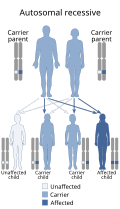 Diagram illustrating autosomal recessive inheritance pattern.
Ad. Transform your life with W8MD's Budget GLP-1 injections from $75


W8MD offers a medical weight loss program to lose weight in Philadelphia. Our physician-supervised medical weight loss provides:
- Weight loss injections in NYC (generic and brand names):
- Zepbound / Mounjaro, Wegovy / Ozempic, Saxenda
- Most insurances accepted or discounted self-pay rates. We will obtain insurance prior authorizations if needed.
- Generic GLP1 weight loss injections from $75 for the starting dose.
- Also offer prescription weight loss medications including Phentermine, Qsymia, Diethylpropion, Contrave etc.
NYC weight loss doctor appointmentsNYC weight loss doctor appointments
Start your NYC weight loss journey today at our NYC medical weight loss and Philadelphia medical weight loss clinics.
- Call 718-946-5500 to lose weight in NYC or for medical weight loss in Philadelphia 215-676-2334.
- Tags:NYC medical weight loss, Philadelphia lose weight Zepbound NYC, Budget GLP1 weight loss injections, Wegovy Philadelphia, Wegovy NYC, Philadelphia medical weight loss, Brookly weight loss and Wegovy NYC


|
WikiMD's Wellness Encyclopedia |
| Let Food Be Thy Medicine Medicine Thy Food - Hippocrates |
Medical Disclaimer: WikiMD is not a substitute for professional medical advice. The information on WikiMD is provided as an information resource only, may be incorrect, outdated or misleading, and is not to be used or relied on for any diagnostic or treatment purposes. Please consult your health care provider before making any healthcare decisions or for guidance about a specific medical condition. WikiMD expressly disclaims responsibility, and shall have no liability, for any damages, loss, injury, or liability whatsoever suffered as a result of your reliance on the information contained in this site. By visiting this site you agree to the foregoing terms and conditions, which may from time to time be changed or supplemented by WikiMD. If you do not agree to the foregoing terms and conditions, you should not enter or use this site. See full disclaimer.
Credits:Most images are courtesy of Wikimedia commons, and templates, categories Wikipedia, licensed under CC BY SA or similar.
Translate this page: - East Asian
中文,
日本,
한국어,
South Asian
हिन्दी,
தமிழ்,
తెలుగు,
Urdu,
ಕನ್ನಡ,
Southeast Asian
Indonesian,
Vietnamese,
Thai,
မြန်မာဘာသာ,
বাংলা
European
español,
Deutsch,
français,
Greek,
português do Brasil,
polski,
română,
русский,
Nederlands,
norsk,
svenska,
suomi,
Italian
Middle Eastern & African
عربى,
Turkish,
Persian,
Hebrew,
Afrikaans,
isiZulu,
Kiswahili,
Other
Bulgarian,
Hungarian,
Czech,
Swedish,
മലയാളം,
मराठी,
ਪੰਜਾਬੀ,
ગુજરાતી,
Portuguese,
Ukrainian
