Hyper-IgM syndrome type 4

Editor-In-Chief: Prab R Tumpati, MD
Obesity, Sleep & Internal medicine
Founder, WikiMD Wellnesspedia &
W8MD's weight loss doctor NYC
Philadelphia GLP-1 weight loss and GLP-1 clinic NYC
| Hyper-IgM syndrome type 4 | |
|---|---|

| |
| Synonyms | CD40 ligand deficiency |
| Pronounce | N/A |
| Specialty | Immunology |
| Symptoms | Recurrent infections, low levels of IgG, IgA, and IgE |
| Complications | N/A |
| Onset | Usually in infancy |
| Duration | Lifelong |
| Types | N/A |
| Causes | Genetic mutation in the CD40LG gene |
| Risks | Increased susceptibility to opportunistic infections |
| Diagnosis | Genetic testing, measurement of immunoglobulin levels |
| Differential diagnosis | N/A |
| Prevention | N/A |
| Treatment | Immunoglobulin replacement therapy, antibiotics for infections |
| Medication | N/A |
| Prognosis | Variable, depending on severity and treatment |
| Frequency | Rare |
| Deaths | N/A |
Hyper-IgM syndrome type 4 is a rare immunodeficiency disorder characterized by a decreased ability to fight infections. This condition is one of several types of hyper-IgM syndrome, which are all distinguished by low levels of certain types of antibodies in the blood.
Symptoms[edit]
People with Hyper-IgM syndrome type 4 have a reduced ability to produce specific types of antibodies, leading to a higher susceptibility to infections. These infections can be recurrent and can affect various parts of the body, including the respiratory system, gastrointestinal tract, and skin.
Causes[edit]
Hyper-IgM syndrome type 4 is caused by mutations in the activation-induced cytidine deaminase (AID) gene. This gene is involved in the process of class switch recombination, which is essential for the production of different types of antibodies.
Diagnosis[edit]
Diagnosis of Hyper-IgM syndrome type 4 is based on the presence of characteristic symptoms, a detailed patient history, a thorough clinical evaluation, and specialized tests such as genetic testing to identify mutations in the AID gene.
Treatment[edit]
Treatment is focused on managing the symptoms and preventing infections. This may include antibiotics, immunoglobulin therapy, and in severe cases, hematopoietic stem cell transplantation.
See also[edit]

This WikiMD article can only be edited by registered and verified editors. You can log in or register.
- Hyper-IgM_syndrome_type_4
-
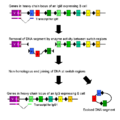 Class switch recombination


Medical Disclaimer: WikiMD is for informational purposes only and is not a substitute for professional medical advice. Content may be inaccurate or outdated and should not be used for diagnosis or treatment. Always consult your healthcare provider for medical decisions. Verify information with trusted sources such as CDC.gov and NIH.gov. By using this site, you agree that WikiMD is not liable for any outcomes related to its content. See full disclaimer.
Credits:Most images are courtesy of Wikimedia commons, and templates, categories Wikipedia, licensed under CC BY SA or similar.
Translate page: - East Asian
中文,
日本,
한국어,
South Asian
हिन्दी,
தமிழ்,
తెలుగు,
Urdu,
ಕನ್ನಡ,
Southeast Asian
Indonesian,
Vietnamese,
Thai,
မြန်မာဘာသာ,
বাংলা
European
español,
Deutsch,
français,
Greek,
português do Brasil,
polski,
română,
русский,
Nederlands,
norsk,
svenska,
suomi,
Italian
Middle Eastern & African
عربى,
Turkish,
Persian,
Hebrew,
Afrikaans,
isiZulu,
Kiswahili,
Other
Bulgarian,
Hungarian,
Czech,
Swedish,
മലയാളം,
मराठी,
ਪੰਜਾਬੀ,
ગુજરાતી,
Portuguese,
Ukrainian

