Protein–energy malnutrition: Difference between revisions
CSV import Tags: mobile edit mobile web edit |
CSV import |
||
| Line 31: | Line 31: | ||
{{Nutritional deficiencies}} | {{Nutritional deficiencies}} | ||
{{Medicine-stub}} | {{Medicine-stub}} | ||
== Protein–energy malnutrition == | |||
<gallery> | |||
File:Kwashiorkor_6180.jpg|Child with Kwashiorkor | |||
File:Protein-energy_malnutrition_world_map_-_DALY_-_WHO2004.svg|Global DALY rates for protein-energy malnutrition, WHO 2004 | |||
File:Protein-energy_malnutrition_world_map-Deaths_per_million_persons-WHO2012.svg|Global deaths per million persons due to protein-energy malnutrition, WHO 2012 | |||
</gallery> | |||
Revision as of 04:18, 18 February 2025
Protein–energy malnutrition (PEM) is a form of malnutrition that is characterized by a deficiency in dietary protein and/or energy (calories). The condition is most common in children in developing countries, but can also affect adults under certain circumstances.
Causes
PEM is primarily caused by a diet that lacks sufficient protein and/or energy. This can occur in regions where food is scarce, or where the diet is heavily based on staple foods that are low in protein and other essential nutrients. Other factors that can contribute to PEM include disease, infection, and poor digestive or absorptive function.
Types
There are two main types of PEM: kwashiorkor and marasmus. Kwashiorkor is characterized by a severe protein deficiency, while marasmus is characterized by a severe deficiency in both protein and energy. A third type, known as marasmic kwashiorkor, features characteristics of both conditions.
Symptoms
Symptoms of PEM can vary depending on the type and severity of the condition, but may include weight loss, muscle wasting, edema, and changes in skin and hair color. In severe cases, PEM can lead to stunted growth, mental retardation, and even death.
Treatment
Treatment for PEM typically involves the gradual reintroduction of protein and energy into the diet. This is often done under medical supervision to prevent refeeding syndrome, a potentially fatal condition that can occur when malnourished individuals are fed too quickly.
Prevention
Prevention of PEM involves ensuring adequate intake of protein and energy, particularly in vulnerable populations such as children and pregnant women. This can be achieved through dietary diversification, food fortification, and supplementation.
See also
| Malnutrition and related topics | ||||||||||
|---|---|---|---|---|---|---|---|---|---|---|
This malnutrition related article is a stub.
|
| Childhood Diseases | ||||||||||
|---|---|---|---|---|---|---|---|---|---|---|
This childhood diseases related article is a stub.
|
| Nutritional deficiencies | ||||||||
|---|---|---|---|---|---|---|---|---|
This nutritional deficiencies related article is a stub.
|

Protein–energy malnutrition
-
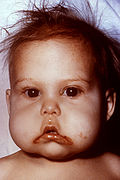 Child with Kwashiorkor
 -
 Global DALY rates for protein-energy malnutrition, WHO 2004
 -
 Global deaths per million persons due to protein-energy malnutrition, WHO 2012


