Phantom pain

Prab R. Tumpati, MD — Editor-in-Chief, WikiMD Medical Encyclopedia
Internal medicine • Obesity medicine • Sleep medicine
Professional affiliations: Founder of WikiMD and W8MD Weight Loss, Sleep & MedSpa.
Biography, credentials and affiliations • Editorial policy • Disclosure policy
| Phantom pain | |
|---|---|

| |
| Synonyms | N/A |
| Pronounce | N/A |
| Specialty | N/A |
| Symptoms | Pain in a limb or organ that is no longer present |
| Complications | N/A |
| Onset | Typically occurs soon after amputation |
| Duration | Can be chronic or acute |
| Types | N/A |
| Causes | Amputation, nerve damage, spinal cord injury |
| Risks | Amputation, trauma, surgery |
| Diagnosis | Clinical diagnosis, patient history |
| Differential diagnosis | Stump pain, neuropathic pain, complex regional pain syndrome |
| Prevention | N/A |
| Treatment | Medication, physical therapy, mirror therapy, nerve block, surgery |
| Medication | N/A |
| Prognosis | N/A |
| Frequency | Occurs in 60-80% of individuals with amputations |
| Deaths | N/A |
Phantom pain is a complex medical condition characterized by the perception of sensations, often including pain, in a limb or organ that has been amputated or removed. Despite the absence of the body part, the brain continues to receive signals, leading to the perception of pain or discomfort.
Etiology
The exact cause of phantom pain is unknown, but it is believed to originate in the central nervous system, specifically the brain and spinal cord. Following amputation, the brain continues to receive signals from nerves that originally carried impulses from the missing limb, leading to the perception of sensations from the non-existent body part.
Symptoms
Symptoms of phantom pain can vary greatly among individuals. They may include pain, tingling, itching, or even the sensation of the limb still being present. The pain can be described as shooting, stabbing, boring, squeezing, throbbing, or burning. Some people may experience "telescoping", where the phantom limb feels as if it is shortening over time.
Treatment
Treatment for phantom pain can be challenging and may involve multiple approaches. Medications such as nonsteroidal anti-inflammatory drugs (NSAIDs), antidepressants, and anticonvulsants are often used. Non-pharmacological treatments may include physical therapy, acupuncture, transcutaneous electrical nerve stimulation (TENS), and mirror therapy.
Research
Research into phantom pain is ongoing, with scientists seeking to understand the underlying mechanisms and develop more effective treatments. Studies have explored the role of the brain's neuroplasticity in phantom pain, as well as the potential for interventions such as neural blockade and deep brain stimulation.
Gallery
-
 Colored Sketch
 -
 Dr. Vilayanur S. Ramachandran with Mirror Box
 -
 Phantom pain
 -
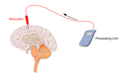 Deep Brain Stimulation Open Loop


.jpg)

See also
References
WikiMD neurology
| Neurology |
| Neurological diseases and disorders
Cerebrovascular diseases | Chronic fatigue syndrome | Congenital disorders of nervous system | Demyelinating diseases of CNS Epilepsy | Extrapyramidal and movement disorders | Inflammatory diseases of the central nervous system Motion sickness | Myoneural junction and neuromuscular diseases | Nervous system neoplasia Sleep disorders | Neurocutaneous conditions | Neurodegenerative disorders | Neurodevelopmental disorders |
External links
- Comprehensive information from the National Institute of health.
A | B | C | D | E | F | G | H | I | J | K | L | M | N | O | P | Q | R | S | T | U | V | W | X | Y | Z

This pain related article is a stub. You can help WikiMD by expanding it.
Advertise on WikiMD — 81,000+ full articles, ~900,000 total pages, ~250 million page views. Global reach, limited time promotional rates from $1/page/day. Learn more · View stats

Translate page: - East Asian
中文,
日本,
한국어,
South Asian
हिन्दी,
தமிழ்,
తెలుగు,
Urdu,
ಕನ್ನಡ,
Southeast Asian
Indonesian,
Vietnamese,
Thai,
မြန်မာဘာသာ,
বাংলা
European
español,
Deutsch,
français,
Greek,
português do Brasil,
polski,
română,
русский,
Nederlands,
norsk,
svenska,
suomi,
Italian
Middle Eastern & African
عربى,
Turkish,
Persian,
Hebrew,
Afrikaans,
isiZulu,
Kiswahili,
Other
Bulgarian,
Hungarian,
Czech,
Swedish,
മലയാളം,
मराठी,
ਪੰਜਾਬੀ,
ગુજરાતી,
Portuguese,
Ukrainian
About WikiMD • Contact • Disclaimer • Privacy • Copyright • Site statistics
Some content and images may originate from Wikimedia Commons or Wikipedia and remain subject to their stated licenses. Unless otherwise noted, eligible WikiMD content is available under CC BY-SA 4.0.
WikiMD Wellnesspedia — Free health & wellness information for patients, students, and health professionals.

