Hepatology
Hepatology is a branch of medicine concerned with the study, prevention, diagnosis and management of diseases that affect the liver, gallbladder, biliary tree and pancreas. The term hepatology is derived from the Greek words "hepar" or "hepatos" meaning 'liver', and "logia" meaning 'study'.
History[edit]
The history of hepatology dates back to ancient times. The Egyptians were the first to recognize liver disease, with the Ebers Papyrus noting the yellow discoloration of the skin in a patient with what is now known as jaundice. The Greeks also made significant contributions to the understanding of liver function and disease, with Hippocrates noting the relationship between the liver and digestion.
Scope[edit]
Hepatology encompasses the study of acute and chronic hepatitis, cirrhosis, genetic and metabolic liver diseases and their complications, liver cancer, liver transplantation, drug metabolism (which depends largely upon the liver), and immunology as it pertains to the liver.
Diseases and conditions[edit]
Hepatologists diagnose and manage diseases and disorders of the liver, gallbladder, biliary tree and pancreas. This includes but is not limited to, hepatitis, cirrhosis, liver cancer, gallstones, and pancreatitis.
Diagnosis and treatment[edit]
Hepatologists use a variety of diagnostic tools, including imaging studies like ultrasound, CT scan and MRI, as well as liver biopsy. Treatment options vary depending on the specific disease or condition, but may include medication, lifestyle changes, or in severe cases, liver transplantation.
See also[edit]
References[edit]
 | This medical article is a stub. You can help WikiMD by expanding the page. |
-
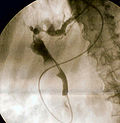 Endoscopic Retrograde Cholangiopancreatography showing a bile duct stone
 -
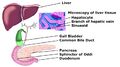 Hepato-biliary anatomy illustration
 -
 Blumberg's sign demonstration


Medical Disclaimer: WikiMD is for informational purposes only and is not a substitute for professional medical advice. Content may be inaccurate or outdated and should not be used for diagnosis or treatment. Always consult your healthcare provider for medical decisions. Verify information with trusted sources such as CDC.gov and NIH.gov. By using this site, you agree that WikiMD is not liable for any outcomes related to its content. See full disclaimer.
Credits:Most images are courtesy of Wikimedia commons, and templates, categories Wikipedia, licensed under CC BY SA or similar.
Translate page: - East Asian
中文,
日本,
한국어,
South Asian
हिन्दी,
தமிழ்,
తెలుగు,
Urdu,
ಕನ್ನಡ,
Southeast Asian
Indonesian,
Vietnamese,
Thai,
မြန်မာဘာသာ,
বাংলা
European
español,
Deutsch,
français,
Greek,
português do Brasil,
polski,
română,
русский,
Nederlands,
norsk,
svenska,
suomi,
Italian
Middle Eastern & African
عربى,
Turkish,
Persian,
Hebrew,
Afrikaans,
isiZulu,
Kiswahili,
Other
Bulgarian,
Hungarian,
Czech,
Swedish,
മലയാളം,
मराठी,
ਪੰਜਾਬੀ,
ગુજરાતી,
Portuguese,
Ukrainian

