Aliphatic compound
-
 Aliphatic compound
 -
 Aliphatic compound
 -
 Aliphatic compound
 -
 Aliphatic compound
 -
 Aliphatic compound
 -
 Aliphatic compound
 -
 Aliphatic compound
 -
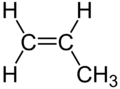 Aliphatic compound
 -
 Aliphatic compound
 -
 Aliphatic compound
 -
 Aliphatic compound
 -
 Aliphatic compound


Aliphatic Compound[edit]
An aliphatic compound is an organic compound in which carbon atoms form open chains, as opposed to aromatic compounds that contain a benzene ring or similar structure. Aliphatic compounds can be saturated, like alkanes, or unsaturated, like alkenes and alkynes.
Classification[edit]
Aliphatic compounds are classified into three main types based on the types of bonds between carbon atoms:
- Alkanes: These are saturated hydrocarbons with single bonds between carbon atoms. They follow the general formula CnH2n+2. Examples include methane, ethane, and propane.
- Alkenes: These are unsaturated hydrocarbons containing at least one carbon-carbon double bond. They follow the general formula CnH2n. Examples include ethylene and propylene.
- Alkynes: These are unsaturated hydrocarbons with at least one carbon-carbon triple bond. They follow the general formula CnH2n-2. Examples include acetylene and propyne.
Properties[edit]
Aliphatic compounds exhibit a wide range of physical and chemical properties, which depend on the length and structure of the carbon chain and the presence of functional groups. Generally, they are less dense than water and are non-polar, making them insoluble in water but soluble in organic solvents.
- Boiling and Melting Points: The boiling and melting points of aliphatic compounds increase with the length of the carbon chain due to increased van der Waals forces.
- Reactivity: Alkanes are relatively unreactive due to the strength of the C-C and C-H bonds. Alkenes and alkynes are more reactive due to the presence of double and triple bonds, which can participate in addition reactions.
Applications[edit]
Aliphatic compounds are used in a variety of applications:
- Fuels: Many aliphatic hydrocarbons are used as fuels. For example, propane and butane are used in liquefied petroleum gas (LPG).
- Industrial Chemicals: Alkenes like ethylene and propylene are important feedstocks in the production of plastics and other chemicals.
- Solvents: Aliphatic compounds such as hexane are used as solvents in industrial and laboratory settings.
Related Pages[edit]
| Organic compounds | ||||||||||
|---|---|---|---|---|---|---|---|---|---|---|
This organic compounds related article is a stub.
|
Advertise on WikiMD — 81,000+ full articles, ~900,000 total pages, ~250 million page views. Global reach, limited time promotional rates from $1/page/day. Learn more · View stats

Medical Disclaimer: WikiMD is for informational purposes only and is not a substitute for professional medical advice. Content may be inaccurate or outdated and should not be used for diagnosis or treatment. Always consult your healthcare provider for medical decisions. Verify information with trusted sources such as CDC.gov and NIH.gov. By using this site, you agree that WikiMD is not liable for any outcomes related to its content. See full disclaimer.
Credits:Most images are courtesy of Wikimedia commons, and templates, categories Wikipedia, licensed under CC BY SA or similar.
Translate page: - East Asian
中文,
日本,
한국어,
South Asian
हिन्दी,
தமிழ்,
తెలుగు,
Urdu,
ಕನ್ನಡ,
Southeast Asian
Indonesian,
Vietnamese,
Thai,
မြန်မာဘာသာ,
বাংলা
European
español,
Deutsch,
français,
Greek,
português do Brasil,
polski,
română,
русский,
Nederlands,
norsk,
svenska,
suomi,
Italian
Middle Eastern & African
عربى,
Turkish,
Persian,
Hebrew,
Afrikaans,
isiZulu,
Kiswahili,
Other
Bulgarian,
Hungarian,
Czech,
Swedish,
മലയാളം,
मराठी,
ਪੰਜਾਬੀ,
ગુજરાતી,
Portuguese,
Ukrainian

