East Asian tea ceremony
East Asian Tea Ceremony is a traditional ritual influenced by Zen Buddhism in which powdered green tea, or matcha, is ceremonially prepared by a skilled practitioner and served to a small group of guests in a tranquil setting. The tea ceremony, also known as the Way of Tea, is a cultural activity involving the ceremonial preparation and presentation of tea. It is prevalent in various forms among the East Asian countries of Japan, China, Korea, and Taiwan.
History[edit]
The East Asian tea ceremony has its roots in the Tang Dynasty of China, where tea was a common commodity and was used for medicinal purposes as well as for the simple pleasure of drinking. The practice was later brought to Japan by Buddhist monks who had visited China for studies. Over time, the ceremony evolved in each country, reflecting their unique cultures and traditions.
Components[edit]
The East Asian tea ceremony involves several components, including the tea, the utensils, and the procedure. The tea used is typically a type of green tea known as matcha. The utensils used in the ceremony often include a tea bowl, tea whisk, tea scoop, and tea caddy. The procedure involves the host meticulously cleaning each utensil in the presence of the guests in a precise order and manner.
Cultural Significance[edit]
The East Asian tea ceremony is not just about drinking tea, but is also a spiritual experience. It is a blend of many aspects of East Asian culture, such as Zen Buddhism, calligraphy, ceramics, and floral arrangement. The ceremony promotes aesthetics, the art of slow living, mindfulness, and respect towards others.
Variations[edit]
While the basic premise of the tea ceremony remains the same, there are variations in the ceremony as practiced in different East Asian countries. The Japanese tea ceremony, also known as Chado or Sado, is characterized by its rigor and somberness. The Chinese tea ceremony, also known as Gongfu Cha, emphasizes the taste of the tea above everything else. The Korean tea ceremony, or Darye, is known for its simplicity and flexibility.
See Also[edit]
| Tea (Camellia sinensis) | ||||||||||||||||||
|---|---|---|---|---|---|---|---|---|---|---|---|---|---|---|---|---|---|---|
* Category
|
| East Asia topics | ||||||||||
|---|---|---|---|---|---|---|---|---|---|---|
This East Asia-related article is a stub. You can help WikiMD by expanding it.
|

-
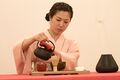 Japanese tea ceremony
 -
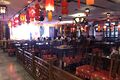 Performance hall of Laoshe Teahouse
 -
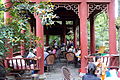 Teahouse in Baihuatan Park, Chengdu, China
 -
 Japanese Edo Period Tea House
 -
 Gyokusenen Kanazawa, Ishikawa
 -
 Interior of a Korean tea house
 -
 Seoul Insadong Tea House

.jpg)


Medical Disclaimer: WikiMD is for informational purposes only and is not a substitute for professional medical advice. Content may be inaccurate or outdated and should not be used for diagnosis or treatment. Always consult your healthcare provider for medical decisions. Verify information with trusted sources such as CDC.gov and NIH.gov. By using this site, you agree that WikiMD is not liable for any outcomes related to its content. See full disclaimer.
Credits:Most images are courtesy of Wikimedia commons, and templates, categories Wikipedia, licensed under CC BY SA or similar.
Translate page: - East Asian
中文,
日本,
한국어,
South Asian
हिन्दी,
தமிழ்,
తెలుగు,
Urdu,
ಕನ್ನಡ,
Southeast Asian
Indonesian,
Vietnamese,
Thai,
မြန်မာဘာသာ,
বাংলা
European
español,
Deutsch,
français,
Greek,
português do Brasil,
polski,
română,
русский,
Nederlands,
norsk,
svenska,
suomi,
Italian
Middle Eastern & African
عربى,
Turkish,
Persian,
Hebrew,
Afrikaans,
isiZulu,
Kiswahili,
Other
Bulgarian,
Hungarian,
Czech,
Swedish,
മലയാളം,
मराठी,
ਪੰਜਾਬੀ,
ગુજરાતી,
Portuguese,
Ukrainian

