Korean tea ceremony
The Korean Tea Ceremony, also known as Darye or Etiquette for Tea, is a traditional part of Korean culture that involves the ceremonial preparation and presentation of tea. The ceremony is a significant cultural event in Korea, reflecting the country's history, philosophy, and aesthetics.
History[edit]
The Korean Tea Ceremony has a history that dates back to the Goryeo Dynasty (918–1392), when tea was a crucial part of religious ceremonies in Buddhist temples. Tea culture continued to prosper under the Joseon Dynasty (1392–1897). During this period, the ceremony evolved to include not just the religious, but also the artistic and intellectual elite of Korean society.
Procedure[edit]
The Korean Tea Ceremony is a meticulous process that requires careful attention to detail. The ceremony begins with the preparation of the tea set, followed by the brewing of the tea, and finally the serving and drinking of the tea. The tea used in the ceremony is typically green tea, although other types of tea can also be used.
Philosophy[edit]
The philosophy behind the Korean Tea Ceremony is deeply rooted in Buddhism, Confucianism, and Taoism. The ceremony is seen as a form of meditation, promoting mindfulness, tranquility, and a connection with nature.
Influence[edit]
The Korean Tea Ceremony has had a significant influence on other aspects of Korean culture, including art, literature, and philosophy. It has also played a role in the development of Korean ceramics, as the tea set is a crucial part of the ceremony.
See also[edit]
-
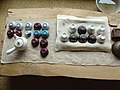 Korean Pottery
 -
 Korean Tea Ceremony Table


Medical Disclaimer: WikiMD is for informational purposes only and is not a substitute for professional medical advice. Content may be inaccurate or outdated and should not be used for diagnosis or treatment. Always consult your healthcare provider for medical decisions. Verify information with trusted sources such as CDC.gov and NIH.gov. By using this site, you agree that WikiMD is not liable for any outcomes related to its content. See full disclaimer.
Credits:Most images are courtesy of Wikimedia commons, and templates, categories Wikipedia, licensed under CC BY SA or similar.
Translate page: - East Asian
中文,
日本,
한국어,
South Asian
हिन्दी,
தமிழ்,
తెలుగు,
Urdu,
ಕನ್ನಡ,
Southeast Asian
Indonesian,
Vietnamese,
Thai,
မြန်မာဘာသာ,
বাংলা
European
español,
Deutsch,
français,
Greek,
português do Brasil,
polski,
română,
русский,
Nederlands,
norsk,
svenska,
suomi,
Italian
Middle Eastern & African
عربى,
Turkish,
Persian,
Hebrew,
Afrikaans,
isiZulu,
Kiswahili,
Other
Bulgarian,
Hungarian,
Czech,
Swedish,
മലയാളം,
मराठी,
ਪੰਜਾਬੀ,
ગુજરાતી,
Portuguese,
Ukrainian

