Soybean sprout
Soybean sprouts are the sprouts that grow from soybean seeds, which are the product of the soy plant (Glycine max). They are a common ingredient in Asian cuisine, particularly in Korean cuisine, Chinese cuisine, and Japanese cuisine. Soybean sprouts are valued for their nutritional content, including high levels of protein, vitamin C, and folate. They are also a good source of fiber and contain various antioxidants.
Cultivation[edit]
Soybean sprouts are grown by soaking the soybeans in water until they germinate. The process typically takes about a week, during which the beans are kept in a dark, moist environment to encourage sprouting. The resulting sprouts can be several inches long, with a crunchy texture and a slightly nutty flavor.
Culinary Uses[edit]
In the kitchen, soybean sprouts can be used in a variety of dishes. They are often added to soups, such as the Korean dish kongnamul guk, and salads for a crunchy texture. They can also be stir-fried with other vegetables and meats or used as a topping in dishes like bibimbap. It's important to cook soybean sprouts thoroughly to reduce the risk of foodborne illness, as they can harbor bacteria.
Nutritional Benefits[edit]
Soybean sprouts are a nutritious addition to the diet. They are particularly high in protein, making them a popular choice among vegetarians and vegans. The sprouts are also a good source of vitamin C, which is important for immune system function, and folate, which is crucial for DNA synthesis and repair. Additionally, they contain antioxidants that can help protect the body from damage by free radicals.
Health Considerations[edit]
While soybean sprouts offer several health benefits, they should be consumed with caution due to the risk of contamination with bacteria such as E. coli and Salmonella. It is recommended to wash the sprouts thoroughly and cook them well to minimize health risks. People with compromised immune systems should avoid eating raw sprouts.
In Culture[edit]
Soybean sprouts have a significant place in many Asian cultures, where they have been consumed for centuries. They are especially prominent in Korean cuisine, where they are used in a variety of traditional dishes. The sprouts are celebrated for their health benefits and are often included in meals as a symbol of health and vitality.

-
 Soybean sprout
 -
 Kongnamul bulgogi (marinated pork with soybean sprout)
 -
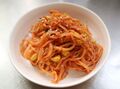 Kongnamul muchim (soybean sprouts)
 -
 Soybean sprout
 -
 Bajirak kongnamul guk
 -
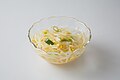 Kongnamulnaengguk (cold soybean sprout soup)
 -
 Kongnamulgukbap (soybean sprout hangover soup)
 -
 Soybean sprout
_Merr.,_1804.jpg)
.jpg)
.jpg)


.jpg)
_(soybean_sprout_hangover_soup).jpg)


Medical Disclaimer: WikiMD is for informational purposes only and is not a substitute for professional medical advice. Content may be inaccurate or outdated and should not be used for diagnosis or treatment. Always consult your healthcare provider for medical decisions. Verify information with trusted sources such as CDC.gov and NIH.gov. By using this site, you agree that WikiMD is not liable for any outcomes related to its content. See full disclaimer.
Credits:Most images are courtesy of Wikimedia commons, and templates, categories Wikipedia, licensed under CC BY SA or similar.
Translate page: - East Asian
中文,
日本,
한국어,
South Asian
हिन्दी,
தமிழ்,
తెలుగు,
Urdu,
ಕನ್ನಡ,
Southeast Asian
Indonesian,
Vietnamese,
Thai,
မြန်မာဘာသာ,
বাংলা
European
español,
Deutsch,
français,
Greek,
português do Brasil,
polski,
română,
русский,
Nederlands,
norsk,
svenska,
suomi,
Italian
Middle Eastern & African
عربى,
Turkish,
Persian,
Hebrew,
Afrikaans,
isiZulu,
Kiswahili,
Other
Bulgarian,
Hungarian,
Czech,
Swedish,
മലയാളം,
मराठी,
ਪੰਜਾਬੀ,
ગુજરાતી,
Portuguese,
Ukrainian

