List of stretch-curd cheeses
Stretch-curd cheeses are a type of cheese made using a unique process that involves heating the curd to a high temperature and stretching it. This process gives the cheese its characteristic texture and flavor. The most well-known stretch-curd cheeses include Mozzarella, Provolone, and Caciocavallo.
Process[edit]
The process of making stretch-curd cheeses, also known as pasta filata process, begins with the formation of curd from milk. The curd is then cut into small pieces and heated to a high temperature, usually between 60 and 85 degrees Celsius. This heating process causes the curd to become elastic and stretchable. The curd is then stretched and kneaded, either by hand or using a machine, until it reaches the desired consistency. The cheese is then shaped and cooled, which allows it to retain its shape.
Types of Stretch-Curd Cheeses[edit]
There are many types of stretch-curd cheeses, each with its own unique flavor and texture.
Mozzarella[edit]
Mozzarella is a soft, white cheese that originated in Italy. It is made from the milk of water buffalos or cows. Mozzarella is known for its mild flavor and elastic texture, which makes it ideal for use in dishes like pizza and lasagna.
Provolone[edit]
Provolone is an Italian cheese that is similar to mozzarella but has a stronger flavor. It is often aged for a longer period of time, which gives it a more intense flavor. Provolone is commonly used in sandwiches and salads.
Caciocavallo[edit]
Caciocavallo is a type of cheese that originated in Southern Italy. It is made from cow's milk and is known for its firm texture and strong flavor. Caciocavallo is often used in pasta dishes and can also be grilled or fried.
See Also[edit]
| Cheese | ||||||||||
|---|---|---|---|---|---|---|---|---|---|---|
|
| Dairy products | ||||||||||
|---|---|---|---|---|---|---|---|---|---|---|
This dairy products related article is a stub.
|
This is a non-exhaustive food and drink related list.

-
 Bocconcini
 -
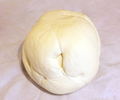 Quesillo de Oaxaca
 -
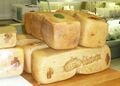 Ragusano Cheese
 -
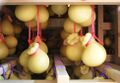 Caciocavallo
 -
 Parenica
 -
 Sulguni Cheese
 -
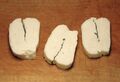 Halloumi
 -
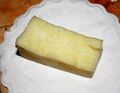 Kashkaval


Medical Disclaimer: WikiMD is for informational purposes only and is not a substitute for professional medical advice. Content may be inaccurate or outdated and should not be used for diagnosis or treatment. Always consult your healthcare provider for medical decisions. Verify information with trusted sources such as CDC.gov and NIH.gov. By using this site, you agree that WikiMD is not liable for any outcomes related to its content. See full disclaimer.
Credits:Most images are courtesy of Wikimedia commons, and templates, categories Wikipedia, licensed under CC BY SA or similar.
Translate page: - East Asian
中文,
日本,
한국어,
South Asian
हिन्दी,
தமிழ்,
తెలుగు,
Urdu,
ಕನ್ನಡ,
Southeast Asian
Indonesian,
Vietnamese,
Thai,
မြန်မာဘာသာ,
বাংলা
European
español,
Deutsch,
français,
Greek,
português do Brasil,
polski,
română,
русский,
Nederlands,
norsk,
svenska,
suomi,
Italian
Middle Eastern & African
عربى,
Turkish,
Persian,
Hebrew,
Afrikaans,
isiZulu,
Kiswahili,
Other
Bulgarian,
Hungarian,
Czech,
Swedish,
മലയാളം,
मराठी,
ਪੰਜਾਬੀ,
ગુજરાતી,
Portuguese,
Ukrainian

