Egyptian cheese
Egyptian Cheese is a broad term that encompasses a variety of cheeses produced in Egypt. The country has a rich history of cheese-making, dating back to ancient times. The types of cheese produced in Egypt are diverse, ranging from soft fresh cheeses to hard, aged varieties.
History[edit]
The history of cheese-making in Egypt dates back to the ancient Egyptian civilization. Archaeological evidence suggests that cheese was being produced in Egypt as early as 2000 BC. The ancient Egyptians made cheese from the milk of a variety of animals, including cows, goats, and sheep.
Types of Egyptian Cheese[edit]
There are several types of cheese that are traditionally made in Egypt.
Domiati[edit]
Domiati cheese, also known as white cheese, is the most popular cheese in Egypt. It is a soft, white cheese made from cow or buffalo milk. Domiati cheese is typically salted and often has a slightly tangy flavor.
Rumi[edit]
Rumi is a hard, aged cheese that is also popular in Egypt. It is made from cow's milk and has a strong, sharp flavor. Rumi cheese is often used in cooking and is a common ingredient in many traditional Egyptian dishes.
Mish[edit]
Mish is a type of aged cheese that is made by fermenting cheese with salt and spices. The result is a strong, pungent cheese that is often eaten with bread.
Production[edit]
The production of cheese in Egypt is a significant part of the country's agriculture and economy. Many Egyptian cheeses are still made using traditional methods, although modern cheese-making techniques are also used.
Cultural Significance[edit]
Cheese plays an important role in Egyptian cuisine. It is used in a variety of dishes, from appetizers to desserts, and is often served with bread as a simple meal. Cheese is also a common ingredient in many traditional Egyptian dishes, such as molokhia and kushari.
See Also[edit]

Egyptian_cheese[edit]
-
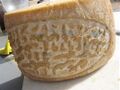 Arabic cheese
 -
Egyptian cheese
-
Water buffalo and cow in Egypt
-
Mesh cheese
-
Egyptian cheese

Advertise on WikiMD — 81,000+ full articles, ~900,000 total pages, ~250 million page views. Global reach, limited time promotional rates from $1/page/day. Learn more · View stats


Translate page: - East Asian
中文,
日本,
한국어,
South Asian
हिन्दी,
தமிழ்,
తెలుగు,
Urdu,
ಕನ್ನಡ,
Southeast Asian
Indonesian,
Vietnamese,
Thai,
မြန်မာဘာသာ,
বাংলা
European
español,
Deutsch,
français,
Greek,
português do Brasil,
polski,
română,
русский,
Nederlands,
norsk,
svenska,
suomi,
Italian
Middle Eastern & African
عربى,
Turkish,
Persian,
Hebrew,
Afrikaans,
isiZulu,
Kiswahili,
Other
Bulgarian,
Hungarian,
Czech,
Swedish,
മലയാളം,
मराठी,
ਪੰਜਾਬੀ,
ગુજરાતી,
Portuguese,
Ukrainian
About WikiMD • Contact • Disclaimer • Privacy • Copyright • Site statistics
Some content and images may originate from Wikimedia Commons or Wikipedia and remain subject to their stated licenses. Unless otherwise noted, eligible WikiMD content is available under CC BY-SA 4.0.
WikiMD Wellnesspedia — Free health & wellness information for patients, students, and health professionals.


