Paleolithic diet
Can refer either to the eating habits of humans during the Paleolithic era, or of modern dietary plans purporting to be based on these habits. The Paleolithic Diet, often referred to as the Paleo Diet or the Caveman Diet, is a modern dietary regimen that endeavors to mirror the eating habits of human ancestors from the Paleolithic era. The underlying principle is that human physiology is better adapted to the diet of our Paleolithic ancestors, which consisted of hunting and gathering, rather than the agricultural diet that came after the Neolithic Revolution.
Premise[edit]
The Paleolithic Diet is based on the concept that modern humans are genetically adapted to the diet of their Paleolithic ancestors and that human genetics have scarcely changed since the dawn of agriculture, and therefore that an ideal diet for human health and well-being is one that resembles this ancestral diet.
Dietary Components[edit]
The Paleolithic Diet predominantly includes:
- Lean Meats: Paleo proponents recommend lean meats, particularly game meats and grass-fed beef, given their higher omega-3 fatty acid content compared to grain-fed livestock.
- Fish: Fish, especially those rich in omega-3 fatty acids, are a crucial part of the diet.
- Fruits and Vegetables: These are a significant part of the Paleo diet.
- Nuts and Seeds: Except peanuts, which are legumes, most nuts and seeds are part of the diet.
- Healthy Fats from sources like avocados, olive oil, coconut oil, and certain nuts and seeds.
Food groups that are excluded:
- Grains: This includes wheat, oats, barley, and others.
- Legumes: All beans, lentils, peas, and peanuts are excluded.
- Dairy Products: These are excluded due to the lack of dairy in the Paleolithic era.
- Refined Sugars and Processed Foods: These modern food items are avoided.
Health Implications[edit]
Supporters of the Paleolithic Diet argue that it can lead to significant weight loss and major improvements in health. However, critics argue that it may lead to nutritional deficiencies, and it is not suitable for everyone. Scientific research is ongoing about its long-term health implications.
Controversies[edit]
The Paleo Diet is not without controversy. Some nutrition experts assert that while it's beneficial to eliminate highly processed foods and sugars, the exclusion of whole grains and dairy can lead to deficiencies in some essential nutrients.
References[edit]

This WikiMD article can only be edited by registered and verified editors. You can log in or register.
| Human nutrition and healthy diets | ||||||||||||||||||||||
|---|---|---|---|---|---|---|---|---|---|---|---|---|---|---|---|---|---|---|---|---|---|---|
: Diet : Dieting : Cuisine : Dietitian : Hunger : Leptin : Meal : Nutrition : Obesity : Staple food
|
-
Paleolithic diet
-
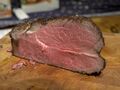 Roast beef
 -
Melvin Konner

- ↑ Eaton SB, Eaton SB 3rd, Konner MJ (January 1997). "Paleolithic nutrition revisited: a twelve-year retrospective on its nature and implications". European Journal of Clinical Nutrition. 51 (4): 207–16. doi:10.1038/sj.ejcn.1600389. PMID 9104571.
- ↑ Kowalski LM, Bujko J (2019). "Evaluation of Biological and Clinical Potential of Paleolithic Diet". Roczniki Panstwowego Zakladu Higieny. 70 (1): 9–17. doi:10.32394/rpzh.2019.0070. PMID 30868514.

Medical Disclaimer: WikiMD is for informational purposes only and is not a substitute for professional medical advice. Content may be inaccurate or outdated and should not be used for diagnosis or treatment. Always consult your healthcare provider for medical decisions. Verify information with trusted sources such as CDC.gov and NIH.gov. By using this site, you agree that WikiMD is not liable for any outcomes related to its content. See full disclaimer.
Credits:Most images are courtesy of Wikimedia commons, and templates, categories Wikipedia, licensed under CC BY SA or similar.
Translate page: - East Asian
中文,
日本,
한국어,
South Asian
हिन्दी,
தமிழ்,
తెలుగు,
Urdu,
ಕನ್ನಡ,
Southeast Asian
Indonesian,
Vietnamese,
Thai,
မြန်မာဘာသာ,
বাংলা
European
español,
Deutsch,
français,
Greek,
português do Brasil,
polski,
română,
русский,
Nederlands,
norsk,
svenska,
suomi,
Italian
Middle Eastern & African
عربى,
Turkish,
Persian,
Hebrew,
Afrikaans,
isiZulu,
Kiswahili,
Other
Bulgarian,
Hungarian,
Czech,
Swedish,
മലയാളം,
मराठी,
ਪੰਜਾਬੀ,
ગુજરાતી,
Portuguese,
Ukrainian


