Magnesium in biology
Magnesium in biology is a crucial element that plays a significant role in various biological processes. Magnesium is the eleventh most abundant element by mass in the human body and is essential to all cells and some 300 enzymes.
Function[edit]
Magnesium ions interact with polyphosphate compounds such as ATP, DNA, and RNA. Hundreds of enzymes require magnesium ions to function. Magnesium compounds are used medicinally as common laxatives, antacids (e.g., milk of magnesia), and in a number of situations where stabilization of abnormal nerve excitation and blood vessel spasm is required (e.g., to treat eclampsia).
Dietary sources, recommended intakes, and supplementation[edit]
Green vegetables such as spinach provide magnesium because the center of the chlorophyll molecule contains magnesium. Nuts (especially almonds and cashews), seeds, and whole grains are also good sources. In general, foods containing dietary fiber provide magnesium.
The Recommended Dietary Allowance (RDA) for magnesium varies depending on age and gender, but is generally around 300-400 mg/day. Magnesium dietary supplements are available, but it is best to obtain any needed vitamins and minerals through food, as excess supplementation can lead to side effects.
Deficiency[edit]
Magnesium deficiency (hypomagnesemia) is rare, but it can be caused by excessive alcohol consumption, prolonged diarrhea, malnutrition or high calcium intake. The symptoms are subtle and can include muscle cramps, fatigue, and irregular heartbeat.
Toxicity[edit]
Although magnesium is an essential nutrient, too much of it can be toxic. The most common symptoms of magnesium toxicity, also known as hypermagnesemia, are nausea and vomiting, reduced blood pressure, slowed heart rate, deficiencies of other minerals, and in severe cases, difficulty breathing and heart attack.
See also[edit]
- Minerals (nutrient)
- Dietary element
- Essential nutrient
- List of macronutrients
- List of micronutrients

Magnesium in biology[edit]
-
 Комплекс MgАТФ 2-
 -
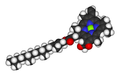 Chlorophyll-a 3D vdW
 -
 Food Sources Of Magnesium
 -
 Whole plant Mg transport
 -
 Magnesium in plant cell


Advertise on WikiMD — 81,000+ full articles, ~900,000 total pages, ~250 million page views. Global reach, limited time promotional rates from $1/page/day. Learn more · View stats


Translate page: - East Asian
中文,
日本,
한국어,
South Asian
हिन्दी,
தமிழ்,
తెలుగు,
Urdu,
ಕನ್ನಡ,
Southeast Asian
Indonesian,
Vietnamese,
Thai,
မြန်မာဘာသာ,
বাংলা
European
español,
Deutsch,
français,
Greek,
português do Brasil,
polski,
română,
русский,
Nederlands,
norsk,
svenska,
suomi,
Italian
Middle Eastern & African
عربى,
Turkish,
Persian,
Hebrew,
Afrikaans,
isiZulu,
Kiswahili,
Other
Bulgarian,
Hungarian,
Czech,
Swedish,
മലയാളം,
मराठी,
ਪੰਜਾਬੀ,
ગુજરાતી,
Portuguese,
Ukrainian
About WikiMD • Contact • Disclaimer • Privacy • Copyright • Site statistics
Some content and images may originate from Wikimedia Commons or Wikipedia and remain subject to their stated licenses. Unless otherwise noted, eligible WikiMD content is available under CC BY-SA 4.0.
WikiMD Wellnesspedia — Free health & wellness information for patients, students, and health professionals.

