Euonymus europaeus: Difference between revisions
CSV import Tags: mobile edit mobile web edit |
CSV import Tags: mobile edit mobile web edit |
||
| Line 28: | Line 28: | ||
{{Europe-topic}} | {{Europe-topic}} | ||
{{Tree-stub}} | {{Tree-stub}} | ||
== Euonymus europaeus == | |||
<gallery> | |||
File:Illustration_Euonymus_europaea0.jpg|Illustration of Euonymus europaeus | |||
File:Euonymus_europaeus_2024_G1.jpg|Euonymus europaeus in garden | |||
File:Euonymus_europaeus_1a.JPG|Close-up of Euonymus europaeus | |||
File:Celastraceae_-_Euonymus_europaeus-2.JPG|Euonymus europaeus with fruit | |||
File:Celastraceae_-_Euonymus_europaeus.JPG|Euonymus europaeus plant | |||
File:Celastraceae_-_Euonymus_europaeus-3.JPG|Euonymus europaeus leaves | |||
File:Euonymus_europaeus_Wzwz_3.jpg|Euonymus europaeus in the wild | |||
File:Euonymus_europaeus_in_alpine_habitat.jpg|Euonymus europaeus in alpine habitat | |||
</gallery> | |||
Latest revision as of 12:16, 18 February 2025
Euonymus europaeus, commonly known as the European spindle, is a deciduous shrub or small tree native to much of Europe. It is a member of the Celastraceae family and is known for its vibrant autumn colours and distinctive pink and orange fruits.
Description[edit]
The Euonymus europaeus typically grows to a height of 3-6 metres, with a similar spread. It has a rounded, bushy habit and is often multi-stemmed. The leaves are opposite, lanceolate to elliptical, and have finely serrated edges. They are dark green in summer, turning to a striking red or purple in autumn.
The flowers of the Euonymus europaeus are small, greenish-white and appear in late spring or early summer. They are followed by distinctive pink fruits which split open to reveal bright orange seeds, a feature that has led to the plant's alternative name, the spindle tree.
Distribution and habitat[edit]
The Euonymus europaeus is native to much of Europe, from the UK and Ireland in the west, to Russia in the east, and from Scandinavia in the north to the Mediterranean in the south. It is typically found in hedgerows, woodlands and scrubland, often on calcareous soils.
Uses[edit]
The wood of the Euonymus europaeus is hard and dense, and was traditionally used to make spindles for spinning wool, hence the common name spindle tree. The fruits are toxic to humans but are eaten by some birds, which disperse the seeds.
Cultivation[edit]
The Euonymus europaeus is a popular choice for gardens due to its vibrant autumn colours and distinctive fruits. It is hardy and adaptable, tolerating a range of soil types and aspects. It can be grown as a standalone specimen or as part of a mixed hedge.
Conservation status[edit]
The Euonymus europaeus is not currently considered to be at risk. However, like all native species, it is affected by changes in land use and habitat loss.
See also[edit]
| Europe topics | ||||||||
|---|---|---|---|---|---|---|---|---|
This Europe related article is a stub.
|

Euonymus europaeus[edit]
-
 Illustration of Euonymus europaeus
 -
 Euonymus europaeus in garden
 -
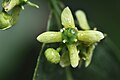 Close-up of Euonymus europaeus
 -
 Euonymus europaeus with fruit
 -
 Euonymus europaeus plant
 -
 Euonymus europaeus leaves
 -
 Euonymus europaeus in the wild
 -
 Euonymus europaeus in alpine habitat


