Cancer treatment: Difference between revisions
CSV import |
CSV import |
||
| Line 46: | Line 46: | ||
File:Renal_cell_carcinoma.jpg | File:Renal_cell_carcinoma.jpg | ||
File:Walkingexercise.jpg | File:Walkingexercise.jpg | ||
</gallery> | |||
<gallery> | |||
File:Patient_prepared_for_radiation_therapy.jpg|Patient prepared for radiation therapy | |||
File:Renal_cell_carcinoma.jpg|Renal cell carcinoma | |||
File:Walkingexercise.jpg|Walking exercise | |||
</gallery> | </gallery> | ||
Revision as of 04:10, 18 February 2025
Cancer treatment refers to the methods of medical intervention used to manage and control the growth of cancer cells in the human body. The primary goal of cancer treatment is to achieve complete remission of the disease, where the patient is free of symptoms for a prolonged period.
Types of Cancer Treatment
There are several types of cancer treatment, including surgery, radiation therapy, chemotherapy, immunotherapy, targeted therapy, hormone therapy, stem cell transplant, and precision medicine. The type of treatment a patient receives depends on the type and stage of cancer, as well as the patient's overall health.
Surgery
Surgery is often used to remove the cancerous tumor and surrounding tissue. It is typically used for solid tumors that are localized to one area of the body.
Radiation Therapy
Radiation therapy uses high-energy particles or waves to destroy or damage cancer cells. It can be used alone or in combination with other treatments.
Chemotherapy
Chemotherapy is a type of cancer treatment that uses drugs to kill cancer cells. It can be systemic (reaching cancer cells throughout the body) or regional (targeted to a specific area of the body).
Immunotherapy
Immunotherapy is a type of treatment that uses the body's immune system to fight cancer. It can be used to boost the body's natural defenses or to train the immune system to specifically attack cancer cells.
Targeted Therapy
Targeted therapy is a type of treatment that uses drugs or other substances to identify and attack specific cancer cells without harming normal cells.
Hormone Therapy
Hormone therapy is a treatment that removes, blocks, or adds hormones to treat certain types of cancer, such as breast and prostate cancer.
Stem Cell Transplant
Stem cell transplant is a procedure that restores blood-forming stem cells in patients who have had theirs destroyed by very high doses of chemotherapy or radiation therapy.
Precision Medicine
Precision medicine, also known as personalized medicine, is a treatment approach that takes into account individual variability in genes, environment, and lifestyle for each person.
Choosing a Cancer Treatment
The choice of treatment depends on the type and stage of cancer, potential side effects, and the patient's overall health, preferences, and personal values. It is important for patients to discuss all treatment options with their healthcare team.
Side Effects of Cancer Treatment
All cancer treatments can cause side effects. These can vary from patient to patient and can include fatigue, pain, nausea, vomiting, and changes in skin and hair.
Cancer Treatment Research
Research into new cancer treatments is ongoing and includes clinical trials that test new treatments in patients. These trials help to determine if new treatments are safe and effective or better than the standard treatment.
| Oncology | ||||||||||
|---|---|---|---|---|---|---|---|---|---|---|
This oncology-related article is a stub.
|


-
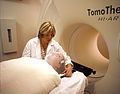 Patient prepared for radiation therapy
 -
 Renal cell carcinoma
 -
 Walking exercise

