Omega-3 fatty acid
Omega-3 fatty acids are a type of polyunsaturated fat that is essential in the human diet. They play a crucial role in body function, including energy production and tissue growth.[1] Omega-3s are most commonly found in fish oil, but can also be sourced from certain plant and nut oils.
Overview[edit]
Omega-3 fatty acids are a type of essential fatty acid, meaning they cannot be produced by the body and must be obtained through the diet. There are three main types of omega-3 fatty acids: alpha-linolenic acid (ALA), eicosapentaenoic acid (EPA), and docosahexaenoic acid (DHA). ALA is primarily found in plant oils, while EPA and DHA are most commonly found in fish and other seafood.[2]
Function[edit]
Omega-3 fatty acids play several important roles in the body. They are integral to cell membranes and affect the function of the cell receptors in these membranes. They also provide the starting point for making hormones that regulate blood clotting, contraction and relaxation of artery walls, and inflammation. Omega-3s also bind to receptors in cells that regulate genetic function.[3]
Health Benefits[edit]
Research has shown that omega-3 fatty acids can reduce inflammation, and may help lower risk of chronic diseases such as heart disease, cancer, and arthritis.[4] They are also essential for brain health, contributing to neurogenesis, neuroplasticity, and neuroprotection.[5]
Dietary Sources[edit]
Common dietary sources of omega-3 fatty acids include:
- Fish and other seafood, especially cold-water fatty fish like salmon, mackerel, tuna, herring, and sardines.
- Nuts and seeds, such as flaxseeds, chia seeds, and walnuts.
- Plant oils, like flaxseed oil, soybean oil, and canola oil.
Summary[edit]
Omega-3 fatty acid is a main component of fats used by the body for energy and tissue growth. Omega-3s are essential fatty acids in the human diet; they are found in fish oil and certain plant and nut oils.
See also[edit]
- Polyunsaturated fat
- Essential fatty acid
- Fish oil
- Alpha-linolenic acid
- Eicosapentaenoic acid
- Docosahexaenoic acid
Further reading[edit]
External links[edit]
- American Heart Association - Fish and Omega-3 Fatty Acids
- National Institutes of Health Office of Dietary Supplements - Omega-3 Fatty Acids

This WikiMD article can only be edited by registered and verified editors. You can log in or register.
| Types of lipids | ||||||||||
|---|---|---|---|---|---|---|---|---|---|---|
|
-
 Alpha-linolenic acid (ALA) structure
 -
 Eicosapentaenoic acid (EPA) structure
 -
 Docosahexaenoic acid (DHA) structure
 -
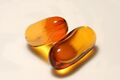 Fish oil capsule
 -
Krill oil capsules
-
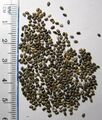 Chia seeds
 -
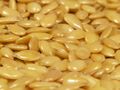 Flax seeds
 -
 Vegan omega-3 supplements


- ↑ "Omega-3 fatty acids in health and disease".Journal of the American College of Nutrition.
- ↑ "Sources and bioavailability of omega-3 fatty acids".Nutrition Reviews.
- ↑ "Functions of omega-3 fatty acids and their role in human health".Journal of Clinical Lipidology.
- ↑ "Omega-3 fatty acids and inflammatory processes".Nutrients.
- ↑ "Omega-3 fatty acids and brain health".Journal of Clinical Psychiatry.

Medical Disclaimer: WikiMD is for informational purposes only and is not a substitute for professional medical advice. Content may be inaccurate or outdated and should not be used for diagnosis or treatment. Always consult your healthcare provider for medical decisions. Verify information with trusted sources such as CDC.gov and NIH.gov. By using this site, you agree that WikiMD is not liable for any outcomes related to its content. See full disclaimer.
Credits:Most images are courtesy of Wikimedia commons, and templates, categories Wikipedia, licensed under CC BY SA or similar.
Translate page: - East Asian
中文,
日本,
한국어,
South Asian
हिन्दी,
தமிழ்,
తెలుగు,
Urdu,
ಕನ್ನಡ,
Southeast Asian
Indonesian,
Vietnamese,
Thai,
မြန်မာဘာသာ,
বাংলা
European
español,
Deutsch,
français,
Greek,
português do Brasil,
polski,
română,
русский,
Nederlands,
norsk,
svenska,
suomi,
Italian
Middle Eastern & African
عربى,
Turkish,
Persian,
Hebrew,
Afrikaans,
isiZulu,
Kiswahili,
Other
Bulgarian,
Hungarian,
Czech,
Swedish,
മലയാളം,
मराठी,
ਪੰਜਾਬੀ,
ગુજરાતી,
Portuguese,
Ukrainian


