Healthcare in India
India has a complex healthcare system with a combination of government sponsored healthcare and private hospitals. However, the government sponsored healthcare is plagued by poor quality and lack of funding in most areas. The private hospitals, clinics, and nursing homes provide the vast majority of care in India.
Health Expenditure[edit]
3% of GDP
Maternal mortality ratio[edit]
145 deaths/100,000 live births (2017 est.)
Infant mortality rate[edit]
total: 39.55 deaths/1,000 live births
male: 39.47 deaths/1,000 live births
female: 39.63 deaths/1,000 live births (2021 est.)
Life expectancy at birth[edit]
total population: 70.03 years
male: 68.71 years
female: 71.49 years (2021 est.)
Total fertility rate[edit]
2.28 children born/woman (2021 est.)
Contraceptive prevalence rate[edit]
53.5% (2015/16)
Drinking water source[edit]
improved: urban: 96.9% of population
rural: 94.7% of population
total: 95.5% of population
unimproved: urban: 3.1% of population
rural: 5.3% of population
total: 4.5% of population (2020 est.)
Current Health Expenditure[edit]
3% (2019)
Physicians density[edit]
0.86 physicians/1,000 population (2018)
Hospital bed density[edit]
0.5 beds/1,000 population (2017)
Sanitation facility access[edit]
improved: urban: 98.6% of population
rural: 75.2% of population
total: 83.4% of population
unimproved: urban: 1.4% of population
rural: 24.8% of population
total: 16.6% of population (2020 est.)
HIV/AIDS - adult prevalence rate[edit]
0.2% (2017 est.)
HIV/AIDS - people living with HIV/AIDS[edit]
2.3 million (2020 est.)
HIV/AIDS - deaths[edit]
69,000 (2017 est.)
Major infectious diseases[edit]
degree of risk: very high (2020)
food or waterborne diseases: bacterial diarrhea, hepatitis A and E, and typhoid fever
vectorborne diseases: dengue fever, Crimean-Congo hemorrhagic fever, Japanese encephalitis, and malaria
water contact diseases: leptospirosis
animal contact diseases: rabies
Obesity - adult prevalence rate[edit]
3.9% (2016)
Source:CIA world fact book
External links[edit]
|
|
This article is a stub You can help WikiMD by registering and expanding it with useful details, internal links, formatting, and categories. Editing is available only to registered and verified users. WikiMD is a comprehensive, free health and wellness encyclopedia. |

| Social issues in India | ||||||||||
|---|---|---|---|---|---|---|---|---|---|---|
|
 Health and Healthcare in India Health and Healthcare in India |
||||||||||||||
|---|---|---|---|---|---|---|---|---|---|---|---|---|---|---|
|
| Mental health and healthcare in India |
||||||||||
|---|---|---|---|---|---|---|---|---|---|---|
|
-
 AIIMS central lawn
 -
 Apollo Proton Cancer Centre, Chennai
 -
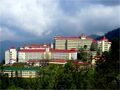 IGMC Shimla
 -
Maulana Azad Medical College, New Delhi
-
JIPMER admin block
-
Government Hospital Chennai
-
 Osmania General Hospital Hyderabad
 -
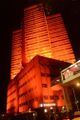 Hinduja Hospital, Mahim, Mumbai
 -
 Max Building
 -
 NIMHANS garden
 -
Kerala Institute of Medical Sciences Thiruvananthapuram
-
World Health Day Prevention of Blindness


Advertise on WikiMD — 81,000+ full articles, ~900,000 total pages, ~250 million page views. Global reach, limited time promotional rates from $1/page/day. Learn more · View stats


Translate page: - East Asian
中文,
日本,
한국어,
South Asian
हिन्दी,
தமிழ்,
తెలుగు,
Urdu,
ಕನ್ನಡ,
Southeast Asian
Indonesian,
Vietnamese,
Thai,
မြန်မာဘာသာ,
বাংলা
European
español,
Deutsch,
français,
Greek,
português do Brasil,
polski,
română,
русский,
Nederlands,
norsk,
svenska,
suomi,
Italian
Middle Eastern & African
عربى,
Turkish,
Persian,
Hebrew,
Afrikaans,
isiZulu,
Kiswahili,
Other
Bulgarian,
Hungarian,
Czech,
Swedish,
മലയാളം,
मराठी,
ਪੰਜਾਬੀ,
ગુજરાતી,
Portuguese,
Ukrainian
About WikiMD • Contact • Disclaimer • Privacy • Copyright • Site statistics
Some content and images may originate from Wikimedia Commons or Wikipedia and remain subject to their stated licenses. Unless otherwise noted, eligible WikiMD content is available under CC BY-SA 4.0.
WikiMD Wellnesspedia — Free health & wellness information for patients, students, and health professionals.


