Fever

Prab R. Tumpati, MD — Editor-in-Chief, WikiMD Medical Encyclopedia
Internal medicine • Obesity medicine • Sleep medicine
Professional affiliations: Founder of WikiMD and W8MD Weight Loss, Sleep & MedSpa.
Biography, credentials and affiliations • Editorial policy • Disclosure policy
| Fever | |
|---|---|

| |
| Synonyms | N/A |
| Pronounce | N/A |
| Specialty | N/A |
| Symptoms | Elevated body temperature, sweating, shivering, headache, muscle aches |
| Complications | Seizures, dehydration, delirium |
| Onset | Rapid |
| Duration | Variable, often a few days |
| Types | N/A |
| Causes | Infection, inflammation, heat exhaustion, medications |
| Risks | Young children, elderly, immunocompromised individuals |
| Diagnosis | Physical examination, thermometry |
| Differential diagnosis | Hyperthermia, heat stroke, thyroid storm |
| Prevention | N/A |
| Treatment | Antipyretics, hydration, rest |
| Medication | Paracetamol, ibuprofen |
| Prognosis | N/A |
| Frequency | Common |
| Deaths | Rare, unless associated with severe underlying conditions |
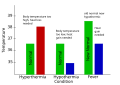
A fever, also known as pyrexia, is a temporary increase in body temperature above the normal range. While normal body temperature can vary from person to person, it is typically around 98.6°F (37°C). Although a fever is not a disease in itself, it is usually a sign that the body is fighting an illness or infection.
Causes[edit]
There are various factors that can cause a fever, including:
- Infections: Most fevers result from viral or bacterial infections, such as the flu, a cold, or a urinary tract infection. The body raises its temperature to make it more difficult for the pathogens to survive and to activate the immune system.
- Medications: Some medicines, including certain antibiotics, blood pressure medications, and anti-seizure medicines, can cause fevers as a side effect.
- Heat illness: Overexposure to high temperatures or excessive physical exertion in hot weather can lead to heat-related illnesses, such as heat exhaustion or heat stroke, which may cause a fever.
- Cancers: Certain types of cancer, like leukemia and lymphoma, can cause fevers.
- Autoimmune diseases: Conditions like lupus, rheumatoid arthritis, and inflammatory bowel disease can lead to fevers due to the immune system attacking the body's own tissues.
- Immunizations: Some childhood vaccinations may cause a mild fever as the body responds to the vaccine.
Symptoms[edit]
In addition to an elevated body temperature, fevers can cause a range of symptoms, such as:
- Sweating
- Shivering
- Headache
- Muscle aches
- Weakness
- Loss of appetite
- Dehydration
- Increased heart rate
Diagnosis[edit]
A fever can be diagnosed using a thermometer to measure body temperature. Thermometers can be placed in various locations, including the mouth (oral), ear (tympanic), armpit (axillary), or rectum (rectal).
Treatment[edit]
The treatment for a fever depends on the underlying cause. In cases of mild to moderate fever, the following measures can help alleviate symptoms:
- Over-the-counter medications: Acetaminophen, ibuprofen, or naproxen can help lower a fever and relieve associated discomfort. Aspirin is an option for adults but should not be given to children with fevers, as it can cause Reye's syndrome, a rare but serious condition.
- Fluid intake: Drinking plenty of fluids, such as water, juice, or broth, can help prevent dehydration caused by fever and sweating.
- Rest: Adequate rest allows the body to focus its energy on fighting the infection or illness causing the fever.
When to Seek Medical Attention[edit]
It is important to consult a healthcare provider if:
- The fever is unusually high (over 103°F or 39.4°C) or lasts for more than a few days.
- The fever is accompanied by severe symptoms, such as difficulty breathing, chest pain, or a stiff neck.
- The person with the fever is very young, elderly, or has a weakened immune system.
Prevention[edit]
To reduce the risk of developing a fever, it is essential to take measures to prevent infections, such as:
- Washing hands regularly with soap and water
- Keeping up-to-date with vaccinations
- Maintaining good hygiene practices
- Avoiding close
- contact with individuals who are sick
- Practicing safe food handling and storage
- Staying hydrated and getting adequate rest to maintain overall health
Images[edit]
-
 Conceptual Illustration of Fever
 -
 Febris by Virgil Solis


References[edit]
- MedlinePlus. (2021). Fever. U.S. National Library of Medicine. Retrieved from https://medlineplus.gov/fever.html
- Mayo Clinic. (2020). Fever. Retrieved from https://www.mayoclinic.org/diseases-conditions/fever/symptoms-causes/syc-20352759
- American Academy of Pediatrics. (2018). Fever and Your Child. Retrieved from
- National Institute of Allergy and Infectious Diseases. (2018). Preventing the Spread of Infectious Diseases. Retrieved from https://www.niaid.nih.gov/research/preventing-spread-infectious-diseases

This WikiMD article can only be edited by registered and verified editors. You can log in or register.
| Symptoms and signs that are general or constitutional | ||||||
|---|---|---|---|---|---|---|
|
Advertise on WikiMD — 81,000+ full articles, ~900,000 total pages, ~250 million page views. Global reach, limited time promotional rates from $1/page/day. Learn more · View stats

Translate page: - East Asian
中文,
日本,
한국어,
South Asian
हिन्दी,
தமிழ்,
తెలుగు,
Urdu,
ಕನ್ನಡ,
Southeast Asian
Indonesian,
Vietnamese,
Thai,
မြန်မာဘာသာ,
বাংলা
European
español,
Deutsch,
français,
Greek,
português do Brasil,
polski,
română,
русский,
Nederlands,
norsk,
svenska,
suomi,
Italian
Middle Eastern & African
عربى,
Turkish,
Persian,
Hebrew,
Afrikaans,
isiZulu,
Kiswahili,
Other
Bulgarian,
Hungarian,
Czech,
Swedish,
മലയാളം,
मराठी,
ਪੰਜਾਬੀ,
ગુજરાતી,
Portuguese,
Ukrainian
About WikiMD • Contact • Disclaimer • Privacy • Copyright • Site statistics
Some content and images may originate from Wikimedia Commons or Wikipedia and remain subject to their stated licenses. Unless otherwise noted, eligible WikiMD content is available under CC BY-SA 4.0.
WikiMD Wellnesspedia — Free health & wellness information for patients, students, and health professionals.

