Atribacterota
Atribacterota
Atribacterota is a phylum of bacteria that was first proposed based on metagenomic data. This phylum is part of the domain Bacteria and is known for its presence in various anaerobic environments. The members of Atribacterota are of significant interest due to their unique metabolic capabilities and ecological roles.
Taxonomy[edit]
Atribacterota was initially identified through environmental sequencing and metagenomic studies. It was recognized as a distinct lineage within the bacterial domain based on phylogenetic analyses of ribosomal RNA genes and other conserved genetic markers.
Classification[edit]
The classification of Atribacterota is as follows:
- Domain: Bacteria
- Phylum: Atribacterota
The phylum Atribacterota is further divided into several classes, orders, and families, although the exact classification is still under active research and may change as new data becomes available.
Characteristics[edit]
Atribacterota are primarily anaerobic bacteria, meaning they thrive in environments devoid of oxygen. They are often found in deep-sea sediments, hot springs, and other extreme environments. These bacteria are known for their ability to degrade complex organic compounds, contributing to the carbon cycle in anaerobic ecosystems.
Metabolism[edit]
Members of Atribacterota exhibit diverse metabolic pathways. They are capable of fermentative metabolism, utilizing a variety of organic substrates. Some species are also involved in syntrophic relationships, where they cooperate with other microorganisms to degrade compounds that are otherwise difficult to break down.
Ecological Importance[edit]
Atribacterota play a crucial role in the degradation of organic matter in anaerobic environments. By breaking down complex organic compounds, they contribute to the recycling of nutrients and the maintenance of ecosystem functions. Their activities are particularly important in environments such as marine sediments and anoxic zones of freshwater bodies.
Research and Applications[edit]
Research on Atribacterota is ongoing, with scientists exploring their potential applications in biotechnology and environmental remediation. Their ability to degrade recalcitrant organic compounds makes them candidates for use in waste treatment and bioenergy production.
Also see[edit]
| Microbiology: Bacteria | ||||||||||||||||||||||||
|---|---|---|---|---|---|---|---|---|---|---|---|---|---|---|---|---|---|---|---|---|---|---|---|---|
|
-
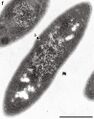 Atribacterota


Medical Disclaimer: WikiMD is for informational purposes only and is not a substitute for professional medical advice. Content may be inaccurate or outdated and should not be used for diagnosis or treatment. Always consult your healthcare provider for medical decisions. Verify information with trusted sources such as CDC.gov and NIH.gov. By using this site, you agree that WikiMD is not liable for any outcomes related to its content. See full disclaimer.
Credits:Most images are courtesy of Wikimedia commons, and templates, categories Wikipedia, licensed under CC BY SA or similar.
Translate page: - East Asian
中文,
日本,
한국어,
South Asian
हिन्दी,
தமிழ்,
తెలుగు,
Urdu,
ಕನ್ನಡ,
Southeast Asian
Indonesian,
Vietnamese,
Thai,
မြန်မာဘာသာ,
বাংলা
European
español,
Deutsch,
français,
Greek,
português do Brasil,
polski,
română,
русский,
Nederlands,
norsk,
svenska,
suomi,
Italian
Middle Eastern & African
عربى,
Turkish,
Persian,
Hebrew,
Afrikaans,
isiZulu,
Kiswahili,
Other
Bulgarian,
Hungarian,
Czech,
Swedish,
മലയാളം,
मराठी,
ਪੰਜਾਬੀ,
ગુજરાતી,
Portuguese,
Ukrainian

