Anti–Saccharomyces cerevisiae antibody
-
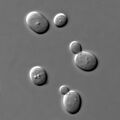 S. cerevisiae under DIC microscopy
 -
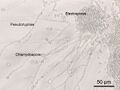 C. albicans


Anti–Saccharomyces cerevisiae antibody[edit]
Anti–Saccharomyces cerevisiae antibodies (ASCA) are a type of antibody directed against Saccharomyces cerevisiae, a species of yeast commonly used in baking and brewing. These antibodies are of clinical interest because they are often found in patients with certain inflammatory bowel diseases (IBD), particularly Crohn's disease.
Structure and Function[edit]
ASCA are typically of the IgA and IgG classes of antibodies. They are produced by the immune system in response to antigens from Saccharomyces cerevisiae. The exact role of ASCA in the pathogenesis of Crohn's disease is not fully understood, but their presence is thought to reflect an abnormal immune response to intestinal microbiota.
Clinical Significance[edit]
ASCA are used as a serological marker in the diagnosis and differentiation of IBD. They are more commonly associated with Crohn's disease than with ulcerative colitis. The presence of ASCA can help distinguish Crohn's disease from ulcerative colitis, as ASCA are found in approximately 60-70% of patients with Crohn's disease but are less common in those with ulcerative colitis.
Diagnostic Use[edit]
The detection of ASCA is performed using enzyme-linked immunosorbent assay (ELISA) or immunofluorescence. The presence of ASCA, along with other serological markers such as perinuclear anti-neutrophil cytoplasmic antibodies (pANCA), can aid in the diagnosis and classification of IBD. A positive ASCA test, especially when combined with a negative pANCA test, is suggestive of Crohn's disease.
Pathophysiology[edit]
The pathophysiology of ASCA in Crohn's disease involves an abnormal immune response to the yeast Saccharomyces cerevisiae. It is hypothesized that in genetically susceptible individuals, exposure to certain antigens from the yeast may trigger an immune response that contributes to the chronic inflammation seen in Crohn's disease. However, the exact mechanisms remain an area of active research.
Limitations[edit]
While ASCA are useful in the context of IBD diagnosis, they are not definitive. Not all patients with Crohn's disease will have ASCA, and some healthy individuals may test positive for ASCA without having any symptoms of IBD. Therefore, ASCA testing should be used in conjunction with other diagnostic methods, including clinical evaluation and endoscopy.
Related pages[edit]
- Crohn's disease
- Ulcerative colitis
- Inflammatory bowel disease
- Antibody
- Enzyme-linked immunosorbent assay
| Immunology | ||||||||||
|---|---|---|---|---|---|---|---|---|---|---|
This immunology-related article is a stub.
|
| Health science - Medicine - Gastroenterology - edit |
|---|
| Diseases of the esophagus - stomach |
| Halitosis | Nausea | Vomiting | GERD | Achalasia | Esophageal cancer | Esophageal varices | Peptic ulcer | Abdominal pain | Stomach cancer | Functional dyspepsia | Gastroparesis |
| Diseases of the liver - pancreas - gallbladder - biliary tree |
| Hepatitis | Cirrhosis | NASH | PBC | PSC | Budd-Chiari | Hepatocellular carcinoma | Acute pancreatitis | Chronic pancreatitis | Pancreatic cancer | Gallstones | Cholecystitis |
| Diseases of the small intestine |
| Peptic ulcer | Intussusception | Malabsorption (e.g. Coeliac, lactose intolerance, fructose malabsorption, Whipple's) | Lymphoma |
| Diseases of the colon |
| Diarrhea | Appendicitis | Diverticulitis | Diverticulosis | IBD (Crohn's, Ulcerative colitis) | IBS | Constipation | Colorectal cancer | Hirschsprung's | Pseudomembranous colitis |
Sponsored Health Resource

W8MD Weight Loss, Sleep & MedSpa
Looking for physician-supervised weight loss, semaglutide, tirzepatide, or GLP-1 receptor agonist options? W8MD helps eligible patients in New York City, Brooklyn, New Jersey, Connecticut, Pennsylvania, Delaware, and greater Philadelphia with medical weight loss, sleep medicine, and long-term maintenance support.
GLP-1 specials: Affordable GLP-1 injections NYC and Philadelphia starting from $29.99/week and up for semaglutide with insurance accepted for qualifying visits, and $45/week and up for tirzepatide with insurance accepted for qualifying visits. Self-pay options start from $59.99/week and up for semaglutide and $69.99/week and up for tirzepatide.
Medical weight loss NYC | Affordable GLP-1 injections NYC | Budget GLP-1 weight loss shots Philadelphia | New Jersey medical weight loss | NYC medical weight loss | Philadelphia medical weight loss | Sleep clinic NYC | W8MD's Philadelphia GLP-1 doctor | Weight loss prescriptions NYC
Book a W8MD appointment · View GLP-1 specials
Paid promotional message. Eligibility, pricing, insurance coverage, medication availability, and results vary. Medical evaluation required.

Medical Disclaimer: WikiMD is for informational purposes only and is not a substitute for professional medical advice. Content may be inaccurate or outdated and should not be used for diagnosis or treatment. Always consult your healthcare provider for medical decisions. Verify information with trusted sources such as CDC.gov and NIH.gov. By using this site, you agree that WikiMD is not liable for any outcomes related to its content. See full disclaimer.
Credits:Most images are courtesy of Wikimedia commons, and templates, categories Wikipedia, licensed under CC BY SA or similar.
Translate page: - East Asian
中文,
日本,
한국어,
South Asian
हिन्दी,
தமிழ்,
తెలుగు,
Urdu,
ಕನ್ನಡ,
Southeast Asian
Indonesian,
Vietnamese,
Thai,
မြန်မာဘာသာ,
বাংলা
European
español,
Deutsch,
français,
Greek,
português do Brasil,
polski,
română,
русский,
Nederlands,
norsk,
svenska,
suomi,
Italian
Middle Eastern & African
عربى,
Turkish,
Persian,
Hebrew,
Afrikaans,
isiZulu,
Kiswahili,
Other
Bulgarian,
Hungarian,
Czech,
Swedish,
മലയാളം,
मराठी,
ਪੰਜਾਬੀ,
ગુજરાતી,
Portuguese,
Ukrainian

