Pakistani cuisine
Pakistani cuisine is a rich and diverse range of dishes, which have been influenced by the country's history, geography, and culture. The cuisine varies greatly from region to region, reflecting the country's ethnic, cultural and culinary diversity. Pakistani cuisine is known for its rich flavours, aromatic spices, and a variety of dishes like biryani, nihari, haleem, and kebab.
History
The history of Pakistani cuisine can be traced back to the Indus Valley Civilization, which was characterized by well-planned cities and a diet based on cereals. The cuisine has been influenced by various cultures that invaded the region, including the Persians, Greeks, Mughals, and British. The Mughals introduced rich, aromatic dishes, while the British brought with them their own culinary traditions.
Regional Variations
Pakistani cuisine varies greatly from region to region. The cuisine of the Punjab region is characterized by rich and buttery flavours, with dishes like butter chicken and tandoori chicken. The cuisine of Sindh is known for its spicy dishes and seafood. The cuisine of Balochistan is known for its meat dishes, while the cuisine of Khyber Pakhtunkhwa is known for its dairy products and breads.
Ingredients
The main ingredients used in Pakistani cuisine include wheat, rice, lentils, chickpeas, meat, dairy products, fruits and vegetables. Spices and herbs like turmeric, cumin, coriander, chilli, ginger, and garlic are used extensively to give the dishes their unique flavours.
Popular Dishes
Some of the popular dishes in Pakistani cuisine include biryani, a spicy rice dish with meat; nihari, a slow-cooked meat stew; haleem, a dish made with meat, lentils and pounded wheat; and kebab, a dish made with minced meat.
See Also
References
<references />
 | This medical article is a stub. You can help WikiMD by expanding the page. |
-
 Pakistani cuisine
 -
 Pakistani cuisine
 -
 Pakistani cuisine
 -
 Pakistani cuisine
 -
 Pakistani cuisine
 -
 Pakistani cuisine
 -
 Pakistani cuisine
 -
 Pakistani cuisine
 -
 Pakistani cuisine
 -
 Pakistani cuisine
 -
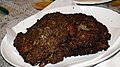 Pakistani cuisine
 -
 Pakistani cuisine


Medical Disclaimer: WikiMD is for informational purposes only and is not a substitute for professional medical advice. Content may be inaccurate or outdated and should not be used for diagnosis or treatment. Always consult your healthcare provider for medical decisions. Verify information with trusted sources such as CDC.gov and NIH.gov. By using this site, you agree that WikiMD is not liable for any outcomes related to its content. See full disclaimer.
Credits:Most images are courtesy of Wikimedia commons, and templates, categories Wikipedia, licensed under CC BY SA or similar.
Translate this page: - East Asian
中文,
日本,
한국어,
South Asian
हिन्दी,
தமிழ்,
తెలుగు,
Urdu,
ಕನ್ನಡ,
Southeast Asian
Indonesian,
Vietnamese,
Thai,
မြန်မာဘာသာ,
বাংলা
European
español,
Deutsch,
français,
Greek,
português do Brasil,
polski,
română,
русский,
Nederlands,
norsk,
svenska,
suomi,
Italian
Middle Eastern & African
عربى,
Turkish,
Persian,
Hebrew,
Afrikaans,
isiZulu,
Kiswahili,
Other
Bulgarian,
Hungarian,
Czech,
Swedish,
മലയാളം,
मराठी,
ਪੰਜਾਬੀ,
ગુજરાતી,
Portuguese,
Ukrainian
