Bangladeshi cuisine
Bangladeshi cuisine is the national cuisine of Bangladesh. It is dominated by Bengali cuisine and has been shaped by the diverse history and riverine geography of Bangladesh. The country has a tropical monsoon climate.
History[edit]
Bangladeshi cuisine has over the centuries been influenced by the Mughal Empire, the British Empire, and the neighboring regional cuisines of India and Burma. During the Mughal rule in the Bengal region, the cuisine was influenced by Middle Eastern cooking techniques. The British influence came from the British Raj, when western cooking techniques and dishes were introduced.
Ingredients[edit]
The staple food in Bangladesh is rice, with a large variety of vegetables, lentils, fish and meats as part of the diet. Spices play a crucial role in Bangladeshi cuisine, with the use of chili pepper, turmeric, garlic, ginger, cumin, coriander, and mustard seed.
Dishes[edit]
Some of the most popular dishes in Bangladeshi cuisine include Biryani, Korma, Rozala, Kebab, Pitha, Halwa, and Payesh. These dishes are often served during special occasions and festivals.
Regional Variations[edit]
There are regional variations in Bangladeshi cuisine, with dishes in the eastern regions like Sylhet and Chittagong differing from those in the western regions like Dhaka and Rajshahi.
See Also[edit]
References[edit]

This WikiMD article can only be edited by registered and verified editors. You can log in or register.
-
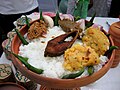 Panta Ilish
 -
 Bangladeshi Prawn Curry
 -
 Samucha - Mohakhali, Dhaka
 -
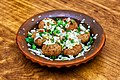 Fucka Bangla Food
 -
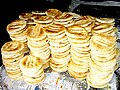 Sukaruti
 -
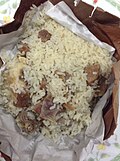 Haji Biriyani
 -
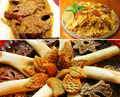 Bangladeshi Cuisine
 -
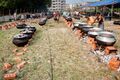 Mezbani
 -
 Kaptai Lake, Peda Ting Ting
 -
 Bograr Dahi
 -
 Seven Color Tea
 -
 Nad, Shaln


Medical Disclaimer: WikiMD is for informational purposes only and is not a substitute for professional medical advice. Content may be inaccurate or outdated and should not be used for diagnosis or treatment. Always consult your healthcare provider for medical decisions. Verify information with trusted sources such as CDC.gov and NIH.gov. By using this site, you agree that WikiMD is not liable for any outcomes related to its content. See full disclaimer.
Credits:Most images are courtesy of Wikimedia commons, and templates, categories Wikipedia, licensed under CC BY SA or similar.
Translate page: - East Asian
中文,
日本,
한국어,
South Asian
हिन्दी,
தமிழ்,
తెలుగు,
Urdu,
ಕನ್ನಡ,
Southeast Asian
Indonesian,
Vietnamese,
Thai,
မြန်မာဘာသာ,
বাংলা
European
español,
Deutsch,
français,
Greek,
português do Brasil,
polski,
română,
русский,
Nederlands,
norsk,
svenska,
suomi,
Italian
Middle Eastern & African
عربى,
Turkish,
Persian,
Hebrew,
Afrikaans,
isiZulu,
Kiswahili,
Other
Bulgarian,
Hungarian,
Czech,
Swedish,
മലയാളം,
मराठी,
ਪੰਜਾਬੀ,
ગુજરાતી,
Portuguese,
Ukrainian

