Migraine: Difference between revisions
CSV import |
No edit summary |
||
| Line 1: | Line 1: | ||
'''Migraine''' is a neurological disease characterized primarily by intense and disabling episodic headaches. Migraine headaches often involve severe pain on one or both sides of the head and may be accompanied by photophobia (hypersensitivity to light), phonophobia (hypersensitivity to sound), and nausea. The term "migraine" is derived from the French word "migraine" and the Greek word "hemicrania," both of which mean "only half the head." | '''Migraine''' is a neurological disease characterized primarily by intense and disabling episodic headaches. Migraine headaches often involve severe pain on one or both sides of the head and may be accompanied by photophobia (hypersensitivity to light), phonophobia (hypersensitivity to sound), and nausea. The term "migraine" is derived from the French word "migraine" and the Greek word "hemicrania," both of which mean "only half the head." | ||
[[File:Migraine.jpg|Migraine|thumb]] | |||
[[File:Fortifikation (Migräne).jpg|Fortifikation (Migräne)|thumb]] | |||
[[File:Gesichtsfeldausfall (Brandenburger Tor Blaue Stunde) 1.jpg|Gesichtsfeldausfall (Brandenburger Tor Blaue Stunde)|thumb]] | |||
== Signs and Symptoms == | == Signs and Symptoms == | ||
Migraine signs and symptoms vary among patients, so the experiences of one individual may not be the same as another's. The following four phases are common among migraine sufferers, although not everyone will experience all of them: | Migraine signs and symptoms vary among patients, so the experiences of one individual may not be the same as another's. The following four phases are common among migraine sufferers, although not everyone will experience all of them: | ||
| Line 81: | Line 83: | ||
In some cases, Botox injections may be used as a preventive treatment for chronic migraines. | In some cases, Botox injections may be used as a preventive treatment for chronic migraines. | ||
== | == Gallery == | ||
<gallery> | <gallery> | ||
File:Gray786.png|Gray's Anatomy illustration | File:Gray786.png|Gray's Anatomy illustration | ||
File:Cortical spreading depression.gif|Cortical spreading depression | File:Cortical spreading depression.gif|Cortical spreading depression | ||
| Line 148: | Line 91: | ||
File:Trepanated skull of a woman-P4140363-black.jpg|Trepanated skull of a woman | File:Trepanated skull of a woman-P4140363-black.jpg|Trepanated skull of a woman | ||
</gallery> | </gallery> | ||
== External links == | |||
* General Information | |||
** [http://www.ninds.nih.gov/disorders/headache/detail_headache.htm Migraine Information from the US National Institute of Neurological Disorders and Stroke]{{stub}} | |||
{{health}} | |||
[[Category:Headaches]] | |||
[[Category:Genetic disorders|Migraine]] | |||
[[Category:Migraine|*]] | |||
Revision as of 10:30, 27 March 2025
Migraine is a neurological disease characterized primarily by intense and disabling episodic headaches. Migraine headaches often involve severe pain on one or both sides of the head and may be accompanied by photophobia (hypersensitivity to light), phonophobia (hypersensitivity to sound), and nausea. The term "migraine" is derived from the French word "migraine" and the Greek word "hemicrania," both of which mean "only half the head."

.jpg)
_1.jpg)
Signs and Symptoms
Migraine signs and symptoms vary among patients, so the experiences of one individual may not be the same as another's. The following four phases are common among migraine sufferers, although not everyone will experience all of them:
- The prodrome phase, which occurs hours or days before the headache
- The aura phase, which immediately precedes the headache
- The headache phase
- The postdrome phase
Prodrome Phase
The prodrome phase occurs in 40% to 60% of migraine patients. This phase consists of altered mood, irritability, depression or euphoria, fatigue, yawning, excessive sleepiness, cravings for certain foods (e.g., chocolate), and other vegetative symptoms. These symptoms typically precede the headache phase by several hours or days, and patients or observant family members may learn to recognize them as signs of an impending migraine attack.
Aura Phase
The migraine aura consists of focal neurological phenomena that precede or accompany the attack. These phenomena appear gradually over 5 to 20 minutes and typically subside just before the headache begins. Migraine aura symptoms are usually sensory in nature.
The most common neurological event is visual aura, which involves disturbances of vision such as unformed flashes of white or multicolored lights (photopsia), or dazzling zigzag lines (teichopsia). Other patients may experience blurred, shimmering, or cloudy vision, as though looking through thick or smoked glass, or tunnel vision. The somatosensory aura of migraine consists of digitolingual or cheiro-oral paresthesias—pins-and-needles sensations experienced in the hand, arm, nose, and mouth areas.
Headache Phase
The typical migraine headache is unilateral, throbbing, moderate to severe, and can be aggravated by physical activity. Not all of these features are necessary, and the pain may be bilateral at the onset or start on one side and become generalized. The pain usually alternates sides from one attack to the next, with a gradual onset and a peak followed by a subsiding period. In adults, the headache typically lasts between 4 and 72 hours, while in children, it lasts 1 to 48 hours. The frequency of attacks varies greatly, from a few in a lifetime to several times a week. On average, a migraine patient experiences one to three headaches per month.
The pain of a migraine is often accompanied by other symptoms. Anorexia is common, and nausea occurs in nearly 90% of patients, while vomiting occurs in about one-third of patients. Many individuals experience sensory hyperexcitability, which may manifest as photophobia, phonophobia, or osmophobia, causing them to seek out dark, quiet rooms. Additional symptoms during the headache phase may include blurred vision, nasal stuffiness, diarrhea, polyuria, pallor, sweating, localized edema of the scalp or face, scalp tenderness, prominence of a vein or artery in the temple, or stiffness and tenderness of the neck. Impairment of concentration and mood are also common, along with lightheadedness (rather than true vertigo) and a sensation of faintness. Patients may have cold, moist extremities.
Postdrome Phase
Following a migraine attack, patients may feel tired, "washed out," irritable, listless, and have difficulty concentrating. Scalp tenderness or mood changes may persist. Some individuals may feel unusually refreshed or euphoric after an attack, while others may experience depression or malaise. Occasionally, minor headache phase symptoms, such as anorexia, photophobia, and lightheadedness, may continue into the postdrome phase.
Pathophysiology
The exact cause of migraine headaches remains unclear, but researchers generally agree that blood flow changes in the brain play a key role. Individuals who experience migraines appear to have blood vessels that overreact to various triggers.
One theory of migraine pathophysiology posits that the nervous system responds to a trigger, such as stress, by causing a spasm of the nerve-rich arteries at the base of the brain. This spasm constricts several arteries supplying blood to the brain, including the scalp artery and the carotid (neck) arteries.
As these arteries constrict, blood flow to the brain is reduced. Simultaneously, blood-clotting particles called platelets clump together, a process believed to release the neurotransmitter serotonin. Serotonin acts as a powerful constrictor of arteries, further reducing blood flow to the brain.
Decreased blood flow results in a reduced oxygen supply to the brain. Neurological symptoms signaling a headache, such as distorted vision or speech, may then occur, similar to stroke symptoms.
Triggers and Risk Factors
Various factors can trigger migraine attacks in susceptible individuals. Identifying and avoiding these triggers can help reduce the frequency and intensity of migraine episodes. Common migraine triggers include:
- Stress and anxiety
- Hormonal changes in women, such as those related to menstruation, pregnancy, or menopause
- Changes in sleep patterns, including too much or too little sleep
- Skipping meals or fasting
- Certain foods and food additives, such as aged cheeses, chocolate, alcohol, and monosodium glutamate (MSG)
- Caffeine intake or withdrawal
- Bright lights, loud noises, or strong odors
- Weather changes, including changes in barometric pressure
- Dehydration
- Medications, such as oral contraceptives or vasodilators
Diagnosis
Migraine diagnosis is based primarily on a patient's medical history and reported symptoms. No specific diagnostic test exists for migraines, but imaging tests like CT scans or MRIs may be performed to rule out other causes of headaches, such as tumors or structural abnormalities.
The International Headache Society has established diagnostic criteria for migraines. According to these criteria, a patient must have experienced at least five headache episodes lasting 4 to 72 hours, with at least two of the following characteristics:
- Unilateral location
- Pulsating quality
- Moderate to severe pain intensity
- Aggravation by routine physical activity
Additionally, during the headache, at least one of the following must be present:
- Nausea and/or vomiting
- Photophobia and phonophobia
Treatment
Migraine treatment can be divided into two main categories: acute (abortive) treatment and preventive (prophylactic) treatment.
Acute Treatment
Acute treatment aims to stop or reduce the severity of a migraine attack once it has begun. Medications for acute treatment include:
- Over-the-counter pain relievers, such as aspirin, acetaminophen, or ibuprofen
- Prescription nonsteroidal anti-inflammatory drugs (NSAIDs)
- Triptans, which are serotonin receptor agonists
- Ergotamine derivatives
- Anti-nausea medications
It is important to take acute medications as soon as a migraine attack begins to maximize their effectiveness.
Preventive Treatment
Preventive treatment focuses on reducing the frequency and severity of migraine attacks. These treatments may be recommended for individuals who experience frequent or debilitating migraines. Preventive treatments include:
- Medications, such as beta-blockers, antidepressants, anticonvulsants, or calcium channel blockers
- Lifestyle changes, including stress management, regular exercise, and maintaining a consistent sleep schedule
- Nutritional supplements, such as magnesium, riboflavin, or coenzyme Q10
- Biofeedback or relaxation techniques
- Cognitive-behavioral therapy
In some cases, Botox injections may be used as a preventive treatment for chronic migraines.
Gallery
-
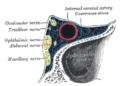 Gray's Anatomy illustration
 -
 Cortical spreading depression
 -
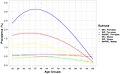 Chalmer 2023
 -
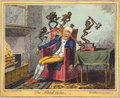 The Head Ache by Cruikshank
 -
 Trepanated skull of a woman


External links
- General Information
 | |
|---|---|
 |
 |
| Health Topics > A | B | C | D | E | F | G | H | I | J | K | L | M | N | O | P | Q | R | S | T | U | V | W | X | Y | Z |
| View All Health Topics in one page! | Health Encyclopedia | Index of health articles |
Professions:Medicine | Nursing | Pharmacy | Healthcare science | Dentistry | Allied health professions | Healthcare
