Peripheral neuropathy: Difference between revisions
CSV import Tag: Replaced |
CSV import |
||
| Line 30: | Line 30: | ||
{{Medicine}} | {{Medicine}} | ||
{{Neurology-stub}} | {{Neurology-stub}} | ||
<gallery> | |||
File:Vasculitic_neuropathy_-_plastics_-_intermed_mag.jpg|Vasculitic neuropathy - plastics - intermediate magnification | |||
</gallery> | |||
Revision as of 01:01, 17 February 2025
Peripheral neuropathy refers to a range of conditions that involve damage to the peripheral nervous system, the vast communication network that transmits information between the central nervous system (the brain and spinal cord) and every other part of the body.
Peripheral nerves send sensory information back to the brain and spinal cord, such as a message that the feet are cold. They also carry signals from the brain and spinal cord to the muscles to generate movement. Damage to the peripheral nervous system interferes with these vital connections.
Causes
Peripheral neuropathy can result from traumatic injuries, infections, metabolic problems, inherited causes and exposure to toxins. One of the most common causes is diabetes mellitus.
Symptoms
Symptoms of peripheral neuropathy often start with numbness, prickling or tingling in the toes or fingers. It can spread up to the legs or hands and cause burning, freezing, throbbing and/or shooting pain that can be worse at night.
Diagnosis
The diagnosis of peripheral neuropathy is determined based on medical history, physical examination, and if necessary, specific laboratory tests. The medical history may include questions about lifestyle, exposure to toxins, alcohol use, risk of infectious diseases and family history of neurological diseases.
Treatment
Treatment for peripheral neuropathy depends on the cause. For instance, therapy for peripheral neuropathy caused by diabetes involves control of the diabetes. In some cases, over-the-counter pain relievers can provide temporary relief.
See also
 | This article about a neurology is a stub. You can help Wikipedia by adding missing information. |
-
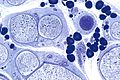 Vasculitic neuropathy - plastics - intermediate magnification

