Lepidium meyenii: Difference between revisions
CSV import Tags: mobile edit mobile web edit |
CSV import |
||
| Line 25: | Line 25: | ||
{{Peru-stub}} | {{Peru-stub}} | ||
{{Plant-stub}} | {{Plant-stub}} | ||
<gallery> | |||
File:Lepidium_meyenii,_Tsaghkadzor,_in_culture.jpg|Lepidium meyenii in culture | |||
File:Macae2.JPG|Lepidium meyenii | |||
File:Alpacas_at_Monks_Park_-_geograph.org.uk_-_765582.jpg|Alpacas at Monks Park | |||
File:(1R,_3S)-1-methyltetrahydro-carboline-3-carboxylic_acid.png|Chemical structure of (1R, 3S)-1-methyltetrahydro-carboline-3-carboxylic acid | |||
File:Macae1.JPG|Lepidium meyenii | |||
</gallery> | |||
Latest revision as of 04:51, 18 February 2025
Lepidium meyenii, commonly known as maca, is a plant native to the high Andes of Peru. It is a member of the Brassicaceae family, which includes cruciferous vegetables such as cabbage, broccoli, and kale. The plant is grown for its fleshy hypocotyl, which is used as a root vegetable and a medicinal herb.
Description[edit]
Lepidium meyenii is a perennial plant that grows up to 20 cm in height. The leaves are pinnately divided and the flowers are white and small. The hypocotyl, which forms a swollen axis, is the part of the plant that is typically consumed. It can be red, purple, cream, yellow, or black in color.
Cultivation[edit]
Lepidium meyenii is adapted to the harsh conditions of the Andean highlands, withstanding frost, hail, and intense sunlight. The plant prefers well-drained soils and is resistant to many pests and diseases. It is typically sown in October and harvested in June.
Uses[edit]
The hypocotyl of Lepidium meyenii is rich in carbohydrates, protein, dietary fiber, and lipids. It also contains essential minerals such as calcium, magnesium, and iron, and vitamins such as vitamin C and B vitamins. The hypocotyl is typically dried and can be ground into a powder that can be added to various foods. It is also used in traditional medicine for its supposed benefits to fertility and libido.
Research[edit]
While Lepidium meyenii has been used in traditional medicine for centuries, scientific research into its potential health benefits is still in its early stages. Some studies suggest that it may improve sexual function, fertility, mood, memory, and energy levels, but more research is needed to confirm these effects and understand their mechanisms.
See also[edit]
| Medicinal plants | ||||||||
|---|---|---|---|---|---|---|---|---|
This medicinal plants related article is a stub.
|
| Root Vegetables | ||||||||
|---|---|---|---|---|---|---|---|---|
This root vegetable-related article is a stub.
|


-
 Lepidium meyenii in culture
 -
 Lepidium meyenii
 -
 Alpacas at Monks Park
 -
 Chemical structure of (1R, 3S)-1-methyltetrahydro-carboline-3-carboxylic acid
 -
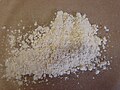 Lepidium meyenii


-1-methyltetrahydro-carboline-3-carboxylic_acid.png)

